
Syria to Greece: A mother worries about her son and the prospect of his livelihood as a sex worker
Written by: The Journeys Project
A woman saw us talking to the previous research participant. She approached the interpreter to ask if I was a journalist. The interpreter said no; I am a researcher (and then had to explain the difference). The woman waited a small distance from us until the previous conversation ended. "Can I talk to you now?" she asked. She sat down and asked me a lot of detailed questions about what I do. I did mention that my background was in gender-based violence. She said, "Maybe you can help the boys in this park." This became the entry point of the conversation. Her son (15 years old) is an only child. This woman is in Greece with her son alone, but she has banded together with other women.
"A few days ago, a journalist came to the camp to ask questions about boys having sex with older men for money. I became really worried. My son goes out of the camp at night with the other teenage boys. I didn't think anything was wrong. People come in and out of the camp all the time. I worry more about the men in the camp than out. So many are troublemakers. They start fires, they pile up trash, they drink, they do drugs. Especially the Moroccans, Algerians, and Tunisians.
"My son was fine—he was my rock. My husband died in Syria. My sister told me I had to leave immediately or we would all die too. I didn't want to die. I didn't want my son to die. I just had to leave. We all sold things, whatever we could—we just wanted money immediately to pay to leave.
"Our neighbors left before us. We were in contact via WhatsApp (a mobile phone-based communication system) and Facebook (a web-based communication system). After a while, Facebook became difficult, and people got scared. But you always find a way. Our neighbors told us who would help us get here. They sent us phone numbers and updates of which borders were open. I called the man and told him our situation. My voice was shaking. I packed two suitcases and got ready to leave. I don't know if I will ever see that house again. When the man came to pick us up, he told me I couldn't bring the suitcases."
When I ask which route they took, she declined to say and seemed scared to share details.
"The first time, the driver said we had to change plans. We had to go to a nearby town and spend the night there. We were there about a week. I didn't know anybody there. Then one day, the driver said we could start at the Turkish border and said, 'Now walk.' I said, 'Which way?' and my son said, 'Mum, there's GPS. Kids are always smarter than you.'
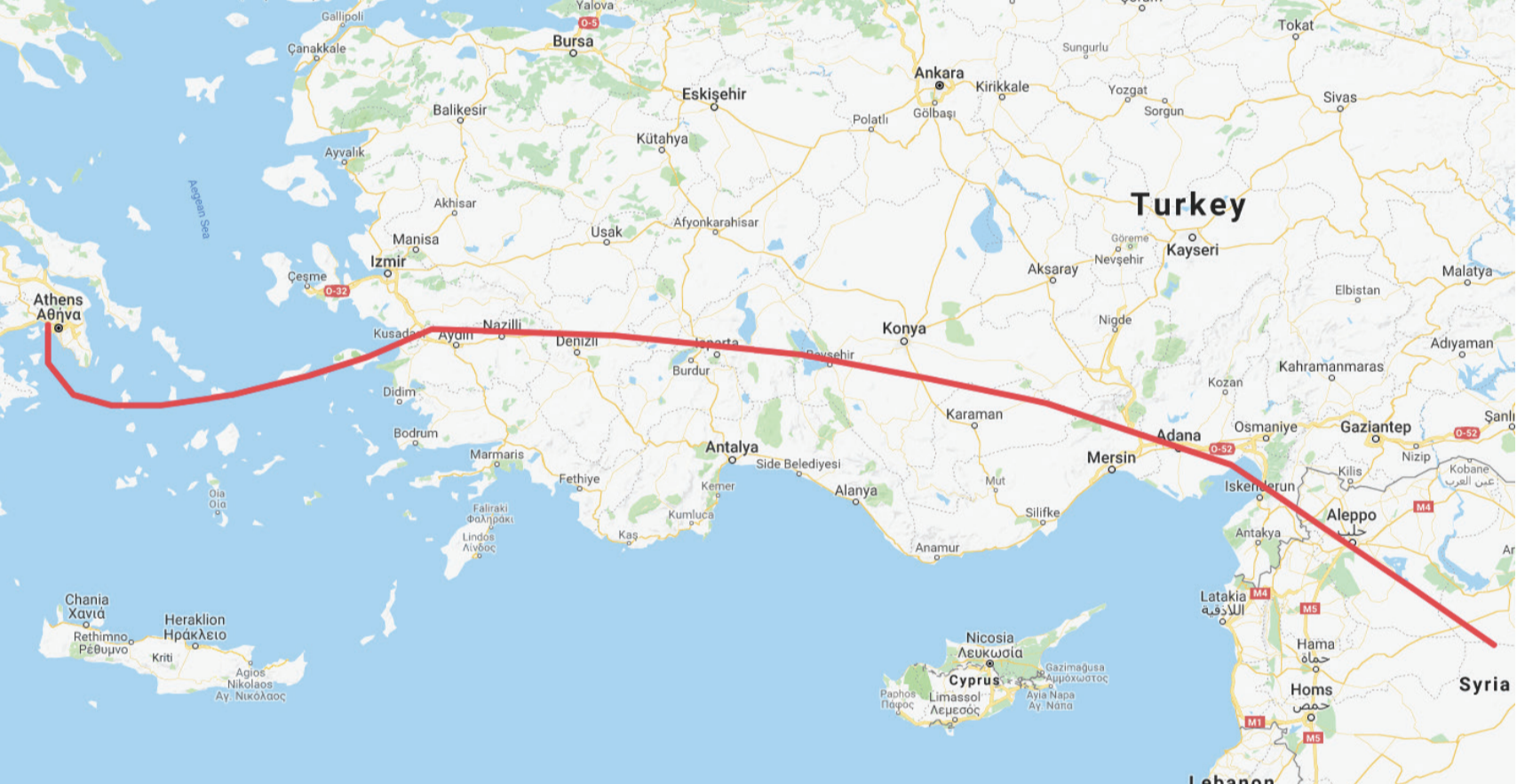
"When we walked to Turkey, they asked my son a lot of questions. They let us pass. I met some other women in the camp, and they all wanted to leave. Some had family in Europe. I joined three of them. Some had husbands, some had kids. You make a lot of friends when you are a refugee. You share a misery and a joy. Where you are from matters less.
"We all tried to find smugglers. The smugglers aren't used to dealing with women. But they take our money just like other people's money. They sometimes tried to talk to my son, but I said, 'No, you are dealing with me!' The first boat we tried was a failure. We got caught by the Turkish police. They threatened to throw my son in jail, and I said, 'No, he's only 14!' We went to the police station, and they let me wait inside with water and food. They let us go when it was dark.
"The second time, we made it to Samos. From Samos, we took the boat to Piraeus. When I looked at the Piraeus place where all the refugees are, I knew we couldn't stay there. They offered to move us to the camps. I don't understand any of their names. Nobody knew where the camps were. A few of the other women were worried that we would be sent outside the city or that they wouldn't let us leave—that's what they heard from some of the volunteers. In the end, I decided to go into the camps because I didn't have much money left. In the camps, you get food and a place to sleep.
"I started joining the women near Victoria Square because I heard that sometimes Greeks look for help—cleaning ladies, nurses, taking care of old people. That's not what I did in Syria, though. I was a teacher.
"In Victoria Square, I noticed all the men. We don't trust them. I try not to talk to them. If one of us has to talk to them, we all go together, and we bring the kids. Then one day, a journalist showed up at the camp and started asking us questions about the men in the parks. We thought she was asking about the men who help. She said she heard there were men having sex with children.
"I did not believe it, but some of the other women did. They said it happened to boys who left the camp at night and that they did it to make money to pay the smugglers and leave. Some of the women said they thought their sons did that. We all started wondering about the girls too. We all started asking our kids. 'Do you have children? No? One day you will understand. One day, you are in your house in Syria with your family. The next day, your husband dies. And now your son has sex with old men.'"
I didn't say anything and let the silence hang. "I don't think my son does it. But I don't know; I'm worried. So now we are all staying up at night to see. And I wanted to come here today to see if there are old men in the park. This is what the journalist said happens. One day, I hope to get to Germany. That's where my husband wanted to go before he was killed. I want my son to be smart and finish school."
📝 This article was originally published in a collection of biographies by the Henry J. Leir Institute at The Fletcher School of Law & Diplomacy and Tufts University.
You can Download the original collection below ⬇️