
Afghanistan to Greece: A plucky, determined family transforms its identity to reach Germany, while banking on assets back home
Written by: The Journeys Project
Interview with Rami (42) and Z (43), husband and wife, Uzbeks from Afghanistan. Rami was planning to send two or three family members at a time to Germany. They have children—five in the camp with them—under 18 years of age. One is still in Kabul with her husband. Rami's older brother has been in Holland for the past twenty years. Z's younger brother lives in Germany.
"We owned one shop and three houses in northern Afghanistan. We sold one house for about $100,000 to get money for our journey—didn't have to borrow; the second house is now being rented for $300 a month.
"We decided to leave due to insecurity reasons and the safety of our children. We were threatened by the Taliban. They said our sons would be abducted and released for ransom because they were wealthy. We left Afghanistan six months ago through the route suggested by a smuggler we found in Mazar-e-Sharif.
"The smuggler suggests a route depending on how much money we were willing to spend. First, I wanted to go to Turkey on my own [and send for my family later] and tried to get Turkish visas for everyone in my family. Initially, I had paid $5,000 for one Turkish visa and waited for two months until it was rejected. It is very difficult to get a visa to Turkey legally.
"After failing attempt to get Turkish visas, I paid $1,000 to a smuggler for each Iranian visa totaling $7,000 for seven family members [$1,000 per member]—that included the visa fee and their flights to Tehran.
"We flew to Tehran from Mazar-e-Sharif. In Tehran, we were picked up from the airport in a car by another smuggler and were directly taken to the Turkish border. The smugglers transferred us to a van with others (20 people in total) from the Iranian border at night and drove very fast. First, we were brought to Tabriz and from there to the border town in Turkey. From there, we got in an ambulance and were transferred to a town called Mardin in Turkey, where we stayed overnight.
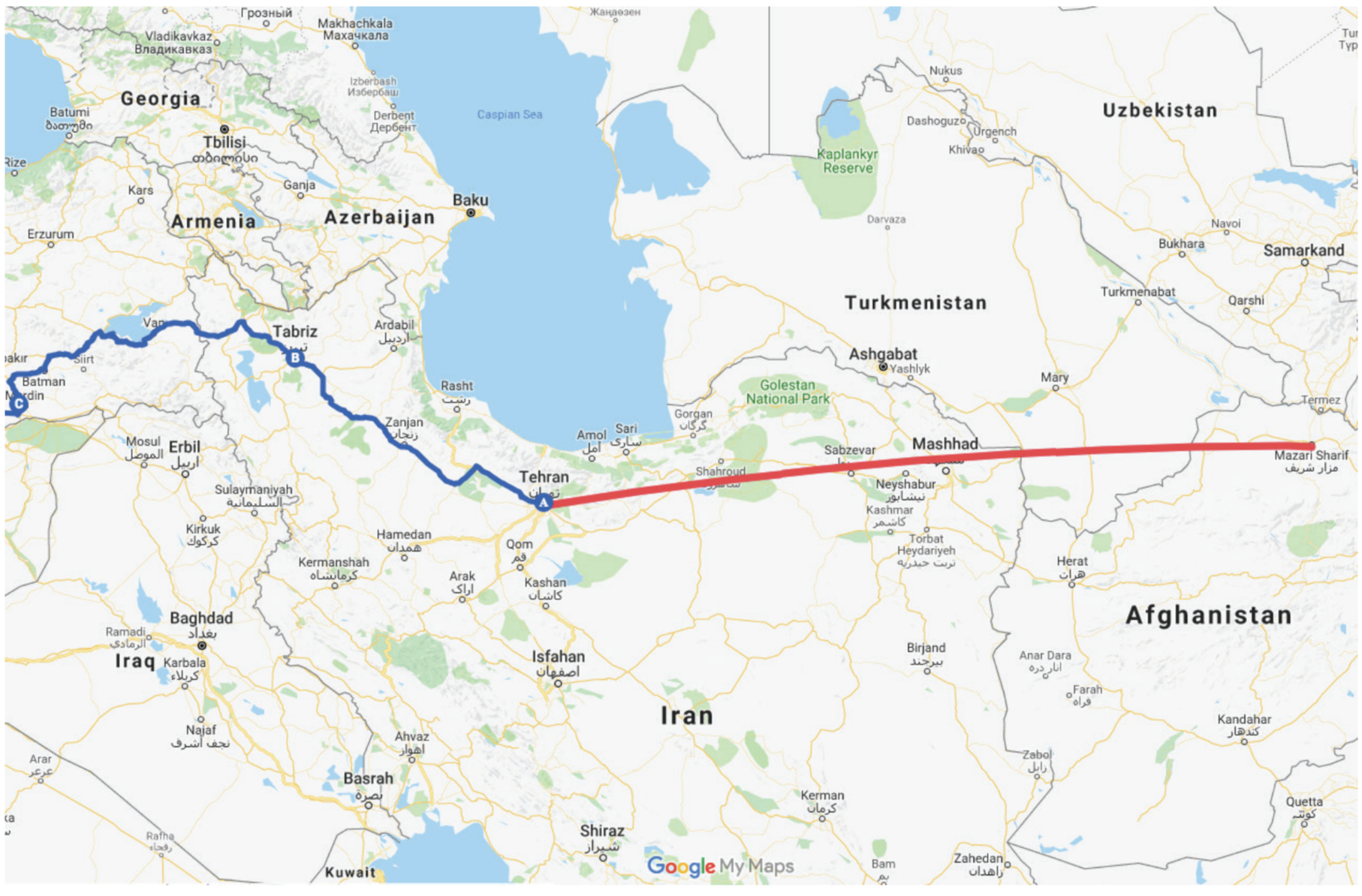
"In Mardin, we gave cash to the smuggler to bring us food and tea (I loved my stomach and needed to feed it with meat) and spent the night at a safe house. We washed up and rinsed our dirty and muddy clothes and prepared to depart the next day. I bought a SIM card for 50 Turkish liras and used my cell phone brought from Afghanistan.
"The next day I was asked for the name of the smuggler who sent them, and we were split up into different groups and cars which were assigned by smugglers' names. From the border town, it took about 22 hours to get to Istanbul by car—with stops for food and prayers on the way. We made a stop in a town called Gumruk on the way to Istanbul.
"Once we reached Istanbul, we released payment to the smuggler using a saraf in Kabul. In Istanbul, we stayed for a week at a house found by a smuggler. There, we exchanged US dollars to Turkish liras and used the money mainly for food.
"From Istanbul we took the Bandirma-Yenikapi ferry to Bandirma." (They bought their own tickets for the ferry.) "And from there we took a taxi in the evening to Izmir. The next day we arrived to a town called Çeşme.
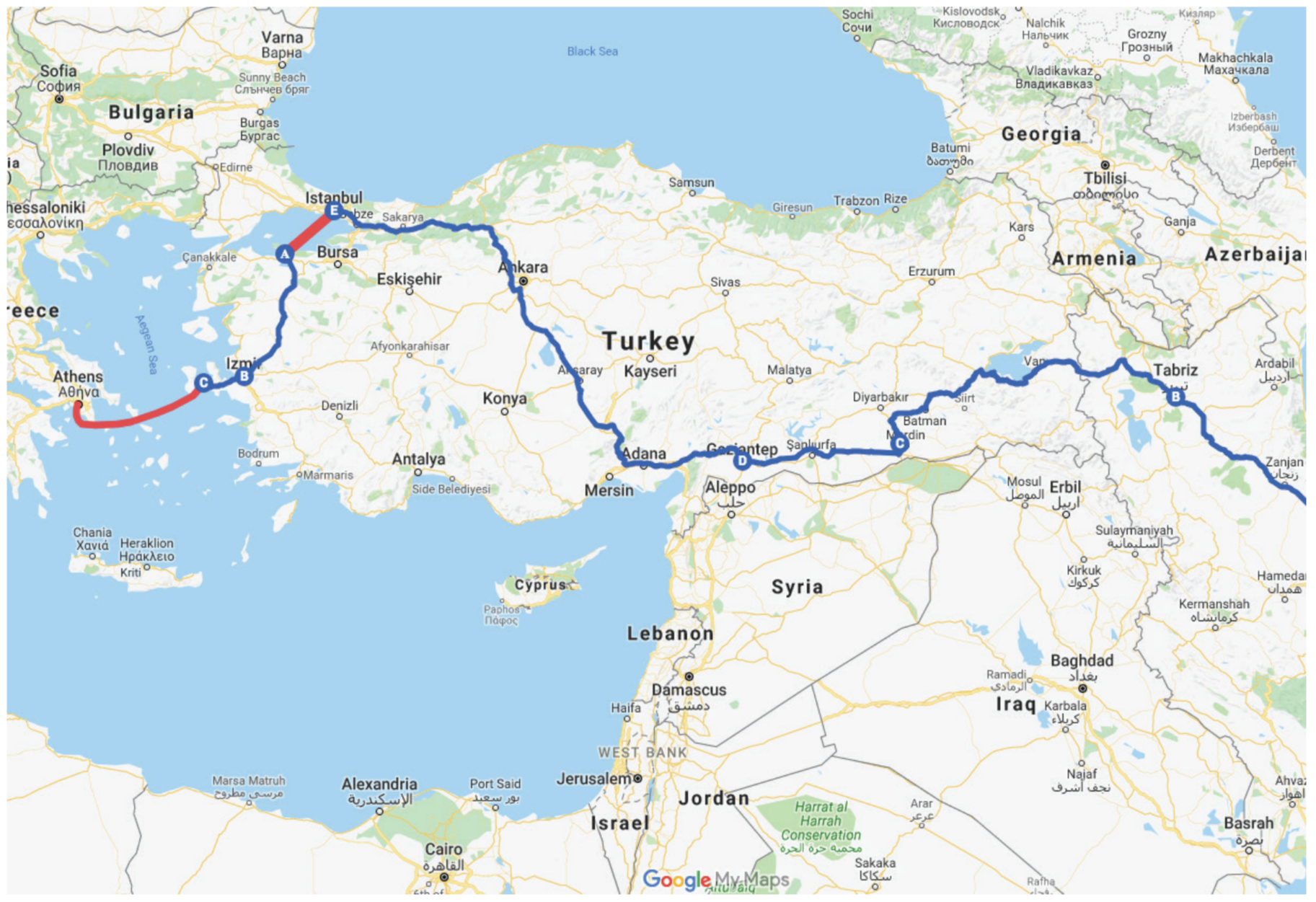
"Once we reached Çeşme, we walked for about two hours, and when we reached the shore, we could see the Greek island from there. The smuggler brought us to the boat. The boat was new. I inserted the wood panels [into the inflatable raft] myself with the help of four other people and got to inspect the boat beforehand.
"I took a shot of whiskey and didn't care if I died or not. . . and drank to have some calmness on the boat. I bought life jackets for each family member for 100 lira ($18) each. There were about 45 other people in the boat, and we were fortunate that our boat did not deflate or have a hole. Nobody except for me and my youngest son could swim.
"We left at night. I had a flashlight and kept flashing it so that others would notice our boat. Once we reached the territory, the Greek police saw us. They came to the rescue and transferred everyone from our boat to a ship.
"We had placed money with a saraf (sarofee in Dari), and the saraf released payment to the smugglers once we had reached each of our destinations. The smuggler has people in each location who transfer refugees along pre-determined routes. The smuggler doesn't get paid if anyone is deported—only if the destination is reached.
"The saraf (or sarofee) is usually in a 'do'kon' [store or shop].
"In Greece, we received blankets, food and shelter. We spent about $7,000 in total for all family members from Mazar-e-Sharif to Tehran and another $7,000 from Tehran to Athens."
Pointing to a safe in their tent, he said, "Here is my bank where we keep our valuables (about €5,000). Thankfully, we have been safe and didn't experience any theft. I wrapped $2,000 around the waist of my two children in order to transfer the cash as we cross the sea.
I asked, "In case you needed more money, how could it be transferred from Afghanistan?"
He replied, "I have a bank account at Afghanistan International Bank (Baynalminal) and a debit card which I can use anywhere outside Afghanistan to withdraw money with my passport.
"We arrived in Greece in spring of 2016. We didn't stay on the island for more than a couple of days and bought tickets to Athens. My wife offered to show our paperwork, which has the arrival stamp on it with the date. We spent one week at a hotel in Athens (€50 per night) initially before going to the camp."
It was heartwarming to see this family's excitement after meeting me, a fellow Uzbek. (Even though I am not from Afghanistan, they all admired and had very positive impressions of Uzbekistan—Rami shared his experiences and time spent in Uzbekistan. One of his sisters lived in Tashkent for many years before moving to London.) I was showered with their hospitality and was even invited to a homemade dinner they had prepared on my last day at the camp. I was also touched when Z gave me a surprise gift and insisted I take it after I kindly kept saying no. It was a pair of new shiny pink shoes. She made me try them on, assuring me that they fit me perfectly even though they were a size small. I was so touched. I assume they had bought the shoes as an extra pair in preparation of their 15-year-old daughter's departure to Europe (I will call her P). P had shaved her very hairy arms in preparation for her flight to Geneva, which she was soon to take along with her younger brother. Rami had paid a smuggler about €3,000 for P and her brother to have forged passports with pictures that looked almost exactly like them. P said their father took them shopping for modern clothing so that they could blend in with the crowd at the airport—the father confirmed and joked about buying them clothes that make them look just like Europeans (knee-high skirts or pants, hair down, nail polish, etcetera).
📝 This article was originally published in a collection of biographies by the Henry J. Leir Institute at The Fletcher School of Law & Diplomacy and Tufts University.
You can Download the original collection below ⬇️