
Cameroon toward the US via South and Central America: A passionate teacher and his family flee conflict to face the brutality of the Darién Gap.
Written by: The Journeys Project
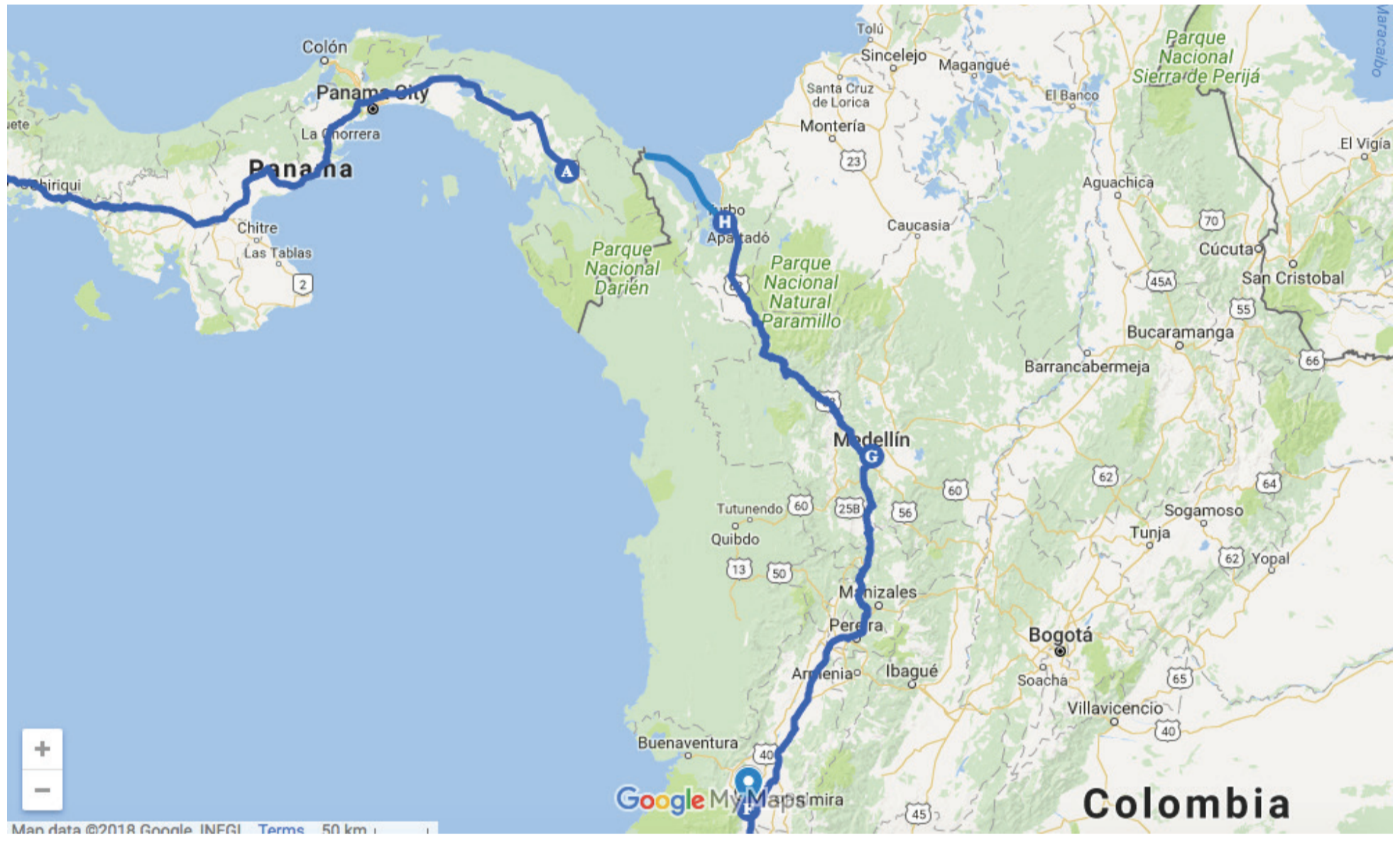
David's journey, like so many others, has been meandering, treacherous, and relentless. The pressure to leave his native Cameroon came in 2017 when his village was attacked and torched, causing him to lose his family's whereabouts and flee. He traveled first to Nigeria and then to Ghana before deciding to head to the United States. He flew from Ghana to Ecuador, where he slowly began making his way northward. For two weeks, David was stuck in the coastal town of Turbo, where he ended up learning some vital survival techniques that would serve him well for the challenges ahead.
David did not want to leave his native country of Cameroon. He had a wife and a child. He relished African dishes. He enjoyed his job as an educator, teaching grade-school children African history.
"I have a passion for teaching. I like educating people, because every time I'm educating children, I'm educating myself," he said to me as we sat enjoying a cold beverage on a hot and humid afternoon at a gas station not far from Costa Rica's northern migrant camp.
He also believed that the act of migration was not something to be taken on a whim. "Only under pressure, duress, or when lives are in danger should people migrate," he said. He seemed tired, slightly irritated by how grueling his journey had been, and yet he knew he had a long way to go before reaching his final destination.
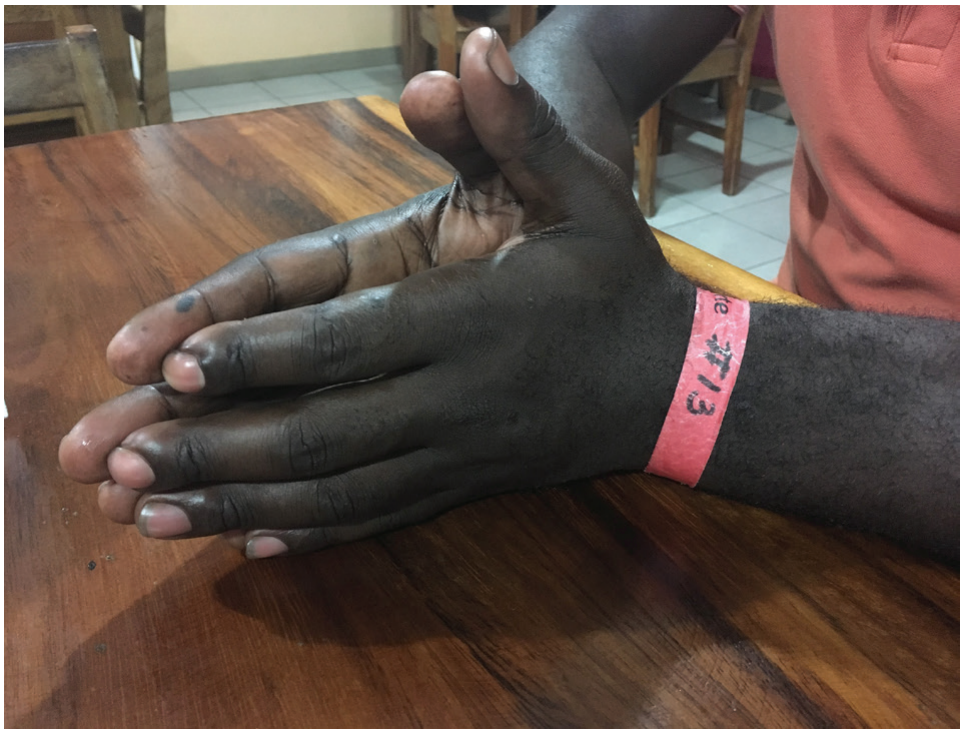
I could sense that at various points throughout his journey David had stopped to ask himself whether he would do it all over again, whether the reasons that led to his departure validated the risks he had taken thus far. Though the final verdict is still out and will likely remain out for quite some time, it became evident that although what he had endured so far certainly would justify his turning back, he has chosen to press forward.
David's journey, like so many others, has been meandering, treacherous, and relentless. Even as we sat, he seemed eager to move, ready to hop on the next boat if he had to, especially if it brought him that much closer to his destination. I asked him where his story began, and immediately he talked about his home: southwest Cameroon. For David, the pressure to leave came in 2017 when his village was attacked and torched, causing him to lose his family's whereabouts and flee to nearby Nigeria with just $50 in his pocket and a credit card. The turmoil started in late 2016 when Anglophone lawyers and teachers began demanding reforms to address what they say is the marginalization of the country's English-speaking minority by French-speakers. The situation spiraled into all-out conflict as separatists demanded independence for the two English-speaking regions.
The torching of villages began in late 2017, causing nearly 20,000 Anglophone Cameroonians like David to seek refuge in Nigeria.¹ Who was starting the fires is unclear; the Cameroonian military says armed separatist rebels are responsible, whereas residents say the fires were set by the military after the attackers had fled.²
David lasted a few weeks in Nigeria, staying just long enough to find a job selling items on commission at a local market in Lagos. He moved on to Accra, Ghana, where life was even more difficult, and after two weeks, he decided he wanted to go to a place where he could truly make a good life for himself and eventually his family. He set his eyes on the United States after learning from friends about a route that would take him from South America northward. Within days, he was able to purchase a flight from Ghana to Ecuador by contacting a friend in Cameroon who booked it online. He mentioned that he drafted a research program based on his studies in archeology in order to obtain an Ecuadorian visa.
In Ecuador, he found work at a supermarket unpacking shipments and stocking new items. For three months, he worked, studied Spanish, and saved money. Then, he made his move northward. While still in Ecuador, David found an agent who would get him into Colombia. He paid the agent $250 and was escorted all the way to Posto, Colombia, about two hours from the border. To get to Cali, he paid $30 to a taxi driver, who bought a bus ticket for him. Everyone who enters Colombia illegally does it this way, David said. Again, in Cali he paid someone to buy him a ticket to Medellin. In Medellin, a Cameroonian friend who already had made it to Mexico put him in contact with an agent who could help him get to Turbo. "Turbo," David said, staring directly at me, his voice growing sterner. "It was there where I discovered the true colors of Colombia."
For two weeks, David was stuck in the coastal town of Turbo, where thousands of migrants pay to take a boat across the Gulf of Urabá to Capurganá. Almost immediately, he found someone charging $2,200 to take 11 people at $200 a head. He signed up to go, and on the night they were supposed to embark, someone came to them pretending to be the agent, collected their money, and ran away, never to be seen again. "It was a damn bad country," he said, visibly irritated just remembering the event. "We have to erase it from the map. Everyone there is mafia."
Devastated, David didn't know what to do. Smiling for a moment, he recalled a "kind person" giving him $20 to keep going. This small act of charity, he said, helped him figure out a new tactic that would enable him to withstand such setbacks in the future. He learned to employ goodwill as a way of currying favor with people. He started first by developing a relationship with the boatman, promising to bring him ten people to make the trip from Turbo to Capurganá. After two weeks, he brought him sixteen people instead, earning himself not just a discount for the boat ride but also a free pass into the jungle once they reached Capurganá. In addition, he had earned about $160 in those two weeks running errands for people on the streets of Turbo.
Even with these new coping mechanisms in hand, nothing had prepared David for what lay ahead. Describing his trek through the Darién Gap from Colombia to Panama caused his eyes to well up with tears, remembering individuals they lost along the way. "That's the worst thing I've encountered in my life. Nothing has been as deadly in my life. I don't know how to paint the picture of that jungle, but no matter how I describe it, you'll never understand because you've never been there." Like many migrants traversing this route, David had not been made aware of all the dangers he would confront along the way. The most information that anyone had given him was that it might take up to eighteen hours to cross. "We were in there for nine days," he said flatly.
For those nine days, David and his group endured various bouts of hunger, thirst, and exhaustion. At night, they feared being attacked by animals. During the day, they feared that robbers would steal their few remaining possessions. Two members of their group, migrants from India, got lost as they walked in pitch-black darkness to avoid being detected by thieves, which David called "the mafia." The most difficult moment came on the seventh and eighth days, when their guide abandoned them, and they were lost. Everyone was very tired, hungry, and angered by their situation. Frustration began to set in. Then, as one of the women jumped down from a steep ledge along the path, she fell and broke her leg. She was unable to walk. In telling me this story, David paused for a moment and drew a deep breath. "It's tough because we aren't a family. We didn't know each other. We were all doing this for different reasons," he said, trying to rationalize in his own mind what had taken place. "We had spent a lot of money to do this." As a fellow African, David said he felt especially sorry for her. After a few minutes of discussion, the group was forced to leave her behind.
A long moment of silence fell between David and me as we finished our beverages. The restaurant we were in was empty, too early for anyone to be eating dinner. The sun had lowered closer to the horizon, bringing the temperature down a bit. I stopped writing and waited for David to regain his thoughts. "I don't think I can advise anyone to take this journey," he finally said. "If you know what it's like to sleep in a jungle, hearing the animals, sleeping on leaves, getting wet . . . I can't wish that upon anyone—even my enemies."
David's group eventually arrived at a camp in Panama. By working various odd jobs at nearby farms, he was able to make his way up to Costa Rica. Recently, he attempted to cross illegally into Nicaragua by boat, but was caught by authorities and sent back to La Cruz, Costa Rica. He said he would try again the following day. I asked him where he would like to end up. "I'm not sure where I'll go once I get to the United States," he responded. "I've heard Texas is a Republican state, so I've thought about going to Maryland, because it is a Democrat state."
As we finished our beverages, I asked David how he navigates risks and how he had determined whom to trust along the way. He described how he has always known when to trust people and when to be guarded with information, such as when he was caught in Nicaragua—he didn't offer them his real name. He said he was eighteen years old. He continued, "I have always lived that kind of life, like I was hot cake. People treasure you; they like you. When you can divert people's minds, people will always want you. They'll pay you." He spent a few minutes sharing with me details about his life back home, how much he missed his family and his profession as a teacher. He recounted some side jobs he did working for a political party, boasting of his ability to draw a crowd.
For a brief moment, I noticed he was smiling, perhaps taking comfort in recounting good memories and forgetting to worry about the next leg in his journey.
📝 This article was originally published in a collection of biographies by the Henry J. Leir Institute at The Fletcher School of Law & Diplomacy and Tufts University.
You can Download the original collection below ⬇️