
Written by: Padmini Baruah
Table of Contents
Introduction
Racism—the delineation of people as the "other," as inferior on the basis of race or ethnic identity—is neither new nor unique. This form of discrimination is formed and upheld by societal and political structures invested in maintaining differences between people who hold different identities, to the benefit of the dominant group. Faced with racism, targeted groups face challenges in almost every aspect of life, including the mundane; racism has been found to have adverse effects on "self-concepts, health and well-being, and life trajectories" for minorities. (Svetaz et al. 2018).
This problem takes on a special dimension when combined with the forces leading to displacement and migration. Natural disasters, conflict, and economic insecurity are increasingly coalescing to displace people from their homelands. Those who make the difficult choice to move and are able to reach other countries against all odds are then confronted with the reality of their precariousness. When these realities combine with the forces of racism, often deeply embedded within the national consciousness of host countries, migrants find that they are rendered exponentially vulnerable.
What are the lived experiences of migrants when they confront racism in their lives after moving to host countries? While much has been written about the racist encounters migrants have with the state and society in Europe, such accounts are much less visible for the "other" forms of migration between countries that are not always at the focus of international attention, but in no small way contribute to migratory flows worldwide. We sought to explore the journeys of migrants outside the framework of the Western hemisphere. Our exploration led us to migrants in three different countries, namely Tunisia, Jordan, and Mexico. Our examination of the forms of racism—through the state and otherwise—that migrants were experiencing emerged from interviews that focused on livelihoods and financial health. While we received rich details around their experiences in building back new ways of survival, we saw a consistent pattern of racism as a systemic barrier in their integration.
This paper explores racist acts of discrimination faced by migrants, detailing in their own words such encounters against the larger context of livelihood-building. It is hoped that through this discussion, some of the concerns around the racialized rights and experiences of migrants are rendered visible, especially in regions of the world that are not often part of mainstream discourse on the subject.
Overview of South-South Migration and Racism
There is no dearth of literature dealing with the question of racism in migration in certain contexts. Much of the writing centers on Europe, highlighting the tensions fraught between the notion of the desirable citizen and the undesirable migrant. Today, Europe absorbs 76 million international migrants (UNDESA 2015), of which nearly 37 million were born outside the EU. (European Commission 2020). Present-day European society is fraught with tension around the question of migration. Liz Fekete, the Director of the Institute for Race Relations, points towards the key structural reason behind the emergence of a strong anti-refugee culture, namely the role of "western security agencies, supranational global bodies, intergovernmental organisations and national governments [who] mobilise against migratory movements". As a result of these forces, the predominant rhetoric has been of migrants as "bogus, as illegal...scrounging at capital's gate and threatening capital culture." (Fekete 2009) These concerns often find roots in anxieties that have become part and parcel of all discussions around migration—unemployment, loss of culture, and threat to national identity. (Triandafyllidou 2000). Ambalavaner Sivanandan has used the term "xeno-racism" to describe a "racism that is not just directed at those with darker skins, from the former colonial territories, but at the newer categories of the displaced, the dispossessed and the uprooted who are beating at Western Europe's doors." (Sivanandan 2001).¹
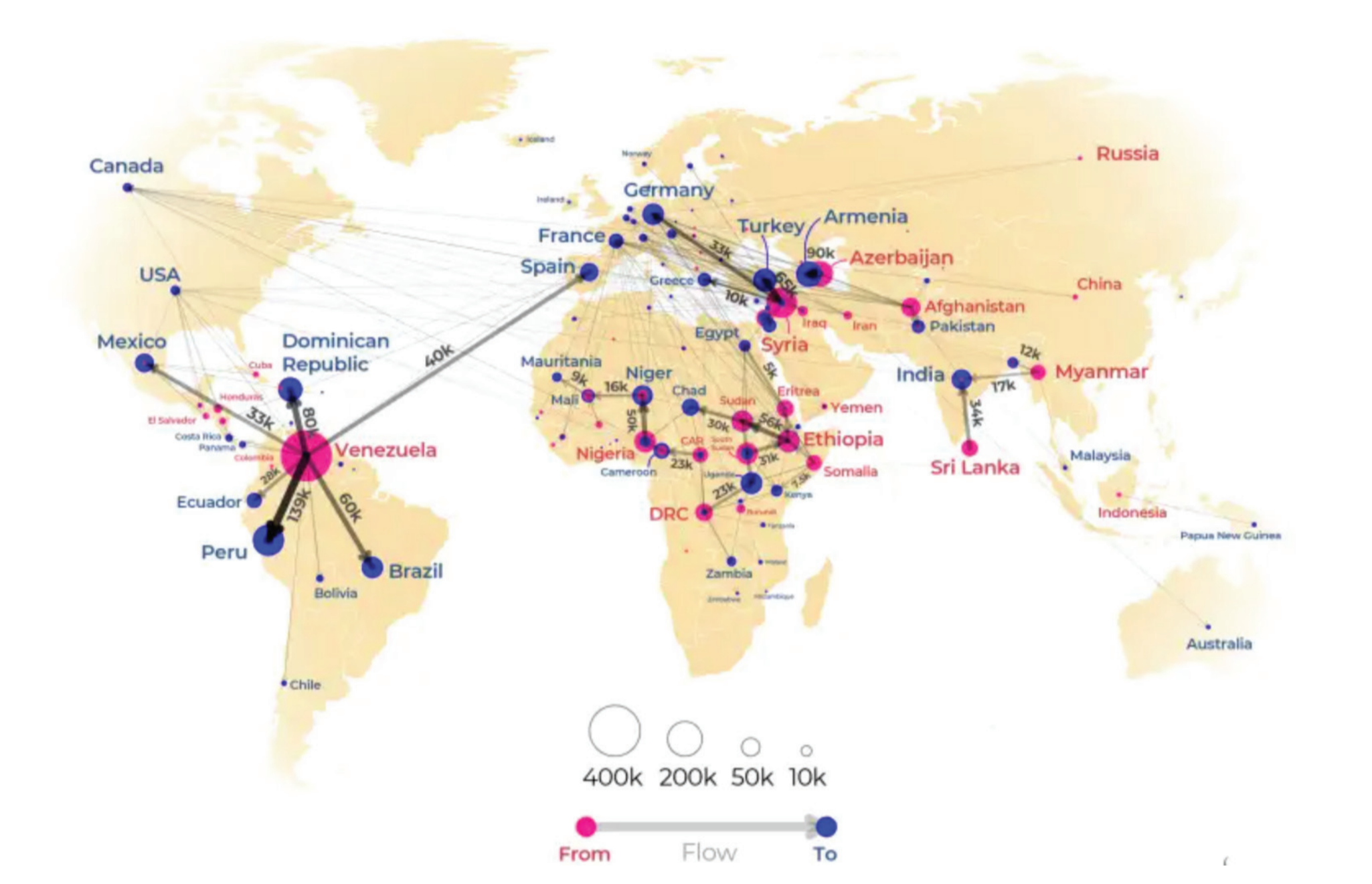
This context from Europe is important, yet it does not adequately capture the nuances of the issue outside Europe, where xeno-racism seems to be alarmingly prevalent. "South-South migration," as the movement between developing countries has come to be known in popular parlance, has taken on a life of its own over the past few decades, with over 82 million migrants identified under this category. (OECD n.d.). Yet, as many have argued, the fact that the host country is a developing country has little impact on the treatment of migrants. (Crush and Ramachandran 2010). These countries have also witnessed the rise of xenophobia, the "fear of difference embodied in persons or groups" (Berezin 2006), which has gone hand in hand with racism to disadvantage those who are most vulnerable. A survey conducted among migrants in ten regions of the world brought some stark findings to light. More than two-thirds of the respondents indicated they faced some form of xenophobia, with 80% of the respondents globally indicating that they faced xenophobia in their place of employment and 62% in finding housing. (Non-Governmental Organization Committee on Migration 2021). Surveys of the host population echo the underlying sentiment. A study conducted in Peru, for instance, revealed that the perception of Peruvians towards Venezuelan migrants was deteriorating, with 81% of respondents agreeing, in 2019, that Venezuelans were responsible for criminal activities in Peru. (Freier and Pérez 2021). Studies have also shown that certain forms of unskilled labor are increasingly becoming racialized, with “dirty, dangerous and difficult” jobs becoming associated with foreign workers. (Jureidini 2005).
While these exclusionary policies and practices are being brought to international attention, there is a need to center and understand the day-to-day experiences of migrants. How do migrants, regular and irregular, encounter racism in their everyday lives? What harms are they subject to as a result of state policy? How do they find strategies for survival?
The impetus to search for answers to the question of how racism impacts the lives of migrants was born from the experiences of different respondents interviewed as part of the Financial Inclusion in Displacement (FIND) Study. The goal of this study was to uncover the experiences of migrants traveling onerous, often perilous routes in an attempt to move towards greater safety and security in Jordan, Kenya, Uganda, Mexico, Tunisia, and Ethiopia. Yet, as we uncovered these details about people's lives, it increasingly became clear that migrants were facing racial discrimination at the hands of the state and the people in their host countries across the world.
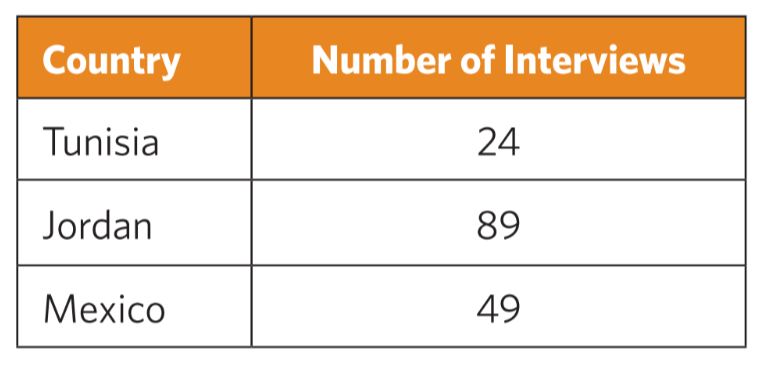
The three countries this paper examines are Tunisia, Jordan, and Mexico. Not only were we able to conduct interviews in great depth and breadth in these countries (see table), but we also saw patterns emerge in the differential treatment meted out to migrants on account of their race or ethnic identity. These patterns merit a comparative analysis through a closer look at the stories of people's lives contained in these interviews. Through qualitative analysis, this paper examines the experience of racism by migrant communities in their host countries through their reflections on their livelihoods.
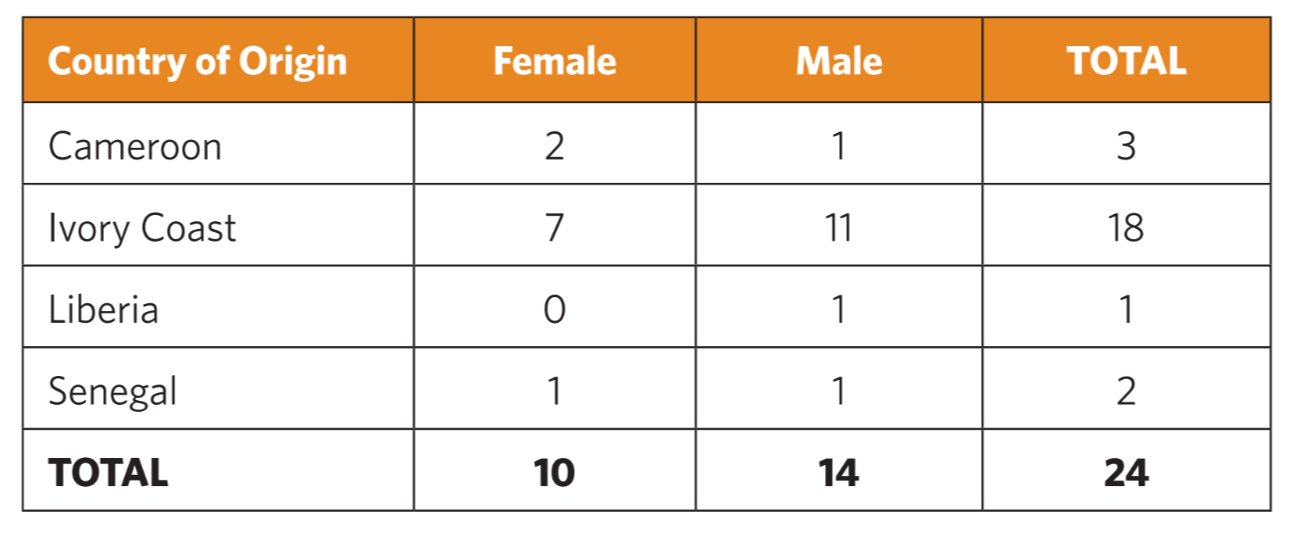
The 24 interviews in Tunisia were conducted among "economic migrants," i.e., students and migrants who had left their country of origin in search of financial opportunities. Several migrants had an interest in continuing their journey to Europe. The table below contains general demographic information of our respondents. Consistent with overall migrant profiles in Tunisia, most respondents come from Ivory Coast. (See table below)
In Jordan, interviews were conducted by local researchers, including members of the refugee community. Three rounds of interviews were conducted, with 89 respondents (74 stayed through all three rounds). These three rounds allowed us to "...understand an individual's financial circumstances and decision-making over time." (Dhawan and Zademach 2021). Interviews were also conducted with key informants, i.e., "organisations supporting refugees including international and local NGOs, faith-based organisations, small business support programmes, mobile payments service providers, and microfinance institutions". The study methods borrowed from grounded theory, where no hypotheses were tested so that conceptual theories and frameworks could emerge from the empirical evidence surfacing from the interviews. These interviews focused on the experiences of refugees who arrived in Jordan in the last eight to nine years from countries other than Syria—specifically Sudan, Somalia, Yemen, and Iraq.
In Mexico, 37 qualitative, in-depth interviews were conducted in Tijuana with migrants from Burkina Faso, El Salvador, Guatemala, Haiti, Honduras, Mexico (internal migrant), and Venezuela, as well as 13 interviews with key informants from consular offices, banks, shelters, churches, government agencies, non-profit organizations, and international organizations. Among these groups, it was difficult to find clear lines of distinction between refugees and other migrants. (FIND, 2021).
While interviews focused on financial and livelihood strategies, what became increasingly clear was that, compounding the hardships associated with the migratory journey—an endeavor that is already deeply perilous—migrants experienced an added layer of difficulty once they reached their host country. Through the different interviews, we pieced together a revealing tale. Despite the differences in culture, context, geographical location, and ethnicity, our respondents were united by their similar experience of racism and xenophobia. While consistently present, our respondents experienced xeno-racism in different instances as they attempted to settle in new countries.
In the next section, the analysis reveals the different ways in which racism affected the lives of people interviewed. Narratives from Tunisia, Jordan, and Mexico bring to the fore the ways in which xeno-racism has become a part of the lives of our respondents. In the section that follows, findings have been presented for each of these countries.
Country-Specific Findings
Tunisia
“In Tunisia we don’t really have racism”
– Bank Manager, Major National Bank, Tunis, 2020
It was the rise of the Arab Spring that threw racism and the experiences of Black minority groups into sharp focus in Tunisia. (King 2021). Democratization "freed up previously repressed racist sentiments" and normalized the public stigmatization of people based on their identity. (Natter 2021). Tunisia's existing societal structures and perceptions are heavily skewed against Black people. To add a layer of complication to this existing social divide, Tunisia has also emerged as a major immigration and transit country. Migrants from sub-Saharan Africa and the Maghreb often utilize Tunisia as a stepping stone to the EU. (IOM n.d.). Scholars have found that the "influx of tens of thousands of Black African migrants" to the area has left a significant impact on race relations in the country. (King 2021). Tunisia, in the period between 2004 and 2014, saw a two-thirds increase in the number of non-Tunisians living in the country. (Migrants & Refugees Section n.d.) This has led to demographic changes that have accentuated the challenges of being different.
In particular, sub-Saharan refugees have generally been painted in a negative light by both the Tunisian people and public institutions. (Pastore and Roman 2020). It has, unsurprisingly, been found that sub-Saharan migrants experience acts of racist discrimination in Tunisia. For instance, Arab refugees enjoy favorable status in terms of being absorbed into Tunisian society, while sub-Saharan migrants are left longer in camps. (Scaglioni 2017). Sub-Saharan migrants reported facing verbal violence, racist slurs ("They...call us monkeys") and even physical assaults.
In Tunisia, the migrants we interviewed included students and informal workers, who had had to overcome gargantuan hurdles in reaching and making a livelihood in Tunisia. Our research found that migrants arriving in Tunisia, in particular those from underprivileged socio-economic backgrounds, struggled to survive. Notably, while entry into Tunisia has been described as made relatively easy by short-term visa facilities (Ahmed 2018), sustaining a livelihood proved to be difficult. Resident permits, allowing people the security of stay in Tunisia, are not easily acquired. This poses difficulty in finding legal avenues for employment, rendering migrants susceptible to exploitation and trafficking. This is particularly true for migrants who are sub-Saharan women.
It seems that one's status as "legal" or "illegal" has little bearing on the perception of Tunisians. (Boitiaux 2018). Even those migrants who legally migrated live in fear of being singled out and targeted as the "other." For instance, Malik, one of our respondents from Ivory Coast, was a student, legally permitted to be in the country to pursue his education. He had even received a scholarship from the Tunisian government to pursue his studies. Despite these advantages, he was quick to point out that the question of racism had been at the forefront of his decision-making at the moment he found out that he had indeed gotten the scholarship. "[The Tunisian government] told me about a Black student who had been killed in Bizerte in a racist attack. I was a bit scared, but I thought I'd go anyways." He described how racism was seeping into the ordinary events of his life:
"Sometimes I get into a shared cab, and I'm called 'Kahla.' (feminine of "Black" in Tunisian, commonly used derogatory term for dark-skinned Tunisians and foreigners). I didn't say anything back and the driver told me to ignore him. That day it really hurt me. It made me upset. But when I insulted him back in Arabic he apologized. You know, if you can show them you understand them, they change. Sometimes they can't tell whether I'm a Black Tunisian or a foreigner."
This is not an isolated instance. Conversations with our respondents brought up day-to-day instances of racism. Clara, a young undergraduate student, talked about facing similar exclusions:
"One time a taxi said he wouldn't take me in because he didn't take in Black people. There are some student halls where they even said they didn't take Blacks.... Last year, I had a professor who refused to speak French although he could speak it very well—it's the official language they're supposed to teach in. But he started speaking Arabic only so we wouldn't understand. When we asked him to speak French, he asked us to learn Arabic because other students couldn't understand French."
She went on to elaborate that these episodes were causing her to retreat more and more into her own community—she had not "really made Tunisian friends.... We've closed up; we don't want to try anymore."
This experience speaks to the complicated nexus of identities at work in Tunisia. For irregular migrants, their existing insecurity is compounded by this aspect of racism. Even Malik, with his own experience of discrimination, did not hesitate to put distance between himself and irregular workers. "I don't interact with migrant workers at all here. I feel scared of them, I'm afraid they will make trouble to me because they are irregular."
This specific brand of racism is also gendered. Clara put into words the demeaning assumptions made about her:
"We are taken for sexual objects. They disrespect us and even approach us and offer us money as if we were prostitutes—sorry for the term! I think that even if we complained to the police, they wouldn't do much."
This brand of harassment specifically singles out migrant women and dehumanizes them, often with heavy costs to personal dignity.
Institutionally, racial discrimination against sub-Saharan migrants manifests itself in the letter of the law. Already holding precarious status, sub-Saharan migrants work without legal protections and are often exploited by Tunisian employers. Even when able to work, migrants witness explicit forms of racism which hurt their ability to make the most of what scant opportunities they are given. Emanuelle, a young Black migrant from the Ivory Coast, struggled to find employment:
"[I]t was really hard to get an internship. When I called companies and when they realized I was Black because of my French accent, they would hang up on me. I'm not sure why. One time, I was on the phone with someone working at Nestle they asked me if I was African. When I said yes, they hang up on me."
Respondents put forward different strategies for surviving these day-to-day indignities. Often, the strategy is to keep moving forward despite negative treatment at the hands of Tunisians. Migrants often mentioned the tactic of trying to assimilate in different ways. Adam, a student from the Ivory Coast, presented this outlook:
"I think you just have to dare to try doing towards people [sic] rather than just expect everything to come to you, while you're just there judging people and making assumptions. You have to just go for it, try to get into the masse, act like them and you'll be fine.... There are Tunisians who of course are racist, they call me names etc. So be it! I know my worth, so I don't care. I just look away and don't waste my attention on this."
There is evidence of some political action that has emerged around this shared experience. For instance, following widespread media coverage of attacks on Black Congolese students, a law around racial discrimination was passed. (Natter 2021). However, this was not accompanied by a simultaneous change in the laws and policies aimed at supporting migrants. In Tunisia, living at the intersection of both these identities leads to immense challenges in accessing a life with dignity. When interviewed, Sami Adouani, the Director of the West and North Africa Migration Project, described Tunisians as having a "natural instinct towards racism." In our interviews, this point of view was echoed by most of our respondents; Black migrants, whether they were students, refugees, or irregular migrants, faced racism in their everyday lives. For irregular migrants, several layers of insecurity were added as they faced insurmountable hurdles in acquiring work permits and faced penalties for irregular stay. Discrimination is an unpleasant common staple in their lives.
Jordan
“Jordanians are racist, but they don’t admit it. And if they don’t admit it, how can the problem be solved? We will continue to suffer from discrimination on a daily basis.”
–Gasem, Sudanese refugee, interview to The Equal Times
Jordan is an immigration hotspot with 89 refugees per 1000 inhabitants. It receives the second-highest share of refugees with respect to population. (UNHCR 2018).
While there has been a strong focus on Syrian refugees, they are not the only displaced community that Jordan hosts. According to data from the 2015 census, there are over 700,000 refugees from Africa in Jordan. (Waja 2021). Largely from Sudan and Somalia, these refugees have described feeling overlooked. Reports abound of mistreatment embedded in the legal and policy structures around migration. The UN Committee on the Elimination of Racial Discrimination itself has noted that in Jordan, non-citizens are not receiving adequate protections. This is directly tied to the fact that Jordan is not a signatory to the 1951 UN Refugee Convention and lacks legislation for the protection of asylum seekers and refugees. (UNHCR 2021). Moreover, Jordan has a complicated history around Blackness—a significant number of Jordanians are of African descent, and there is a pre-existing population of Afro-Palestinian refugees as well. (Waja 2021).
Beyond the existing racist frameworks, the addition of xeno-racism towards African refugees has led to impediments in their daily survival. There have been reports of verbal targeting, with Sudanese refugees being called racist slurs and persistent discrimination in treatment. (Jesuit Relief Services 2012). The term "Sudania" itself is thrown as a slur. (Vidal 2019) Women raped, men beaten. In Jordan, we just stay at home, but it also feels like war. Discrimination. Not being able to work. It's just like war," says Abdul*, who fled Darfur in 2010. He is among the more than 4,000 Sudanese people who – fleeing war and persecution – have found refuge in Jordan. Most come from Darfur, a region where at least 300,000 people have been killed, and three million people have been displaced since violence broke out.
In terms of policy, non-Syrian refugees, unlike Syrian refugees, do not have access to apply for work permits, pushing them towards irregular—both informal and illegal—employment through which they are barely able to meet their needs. This systemic discrimination drove protests by Sudanese refugees in front of the UNHCR office in Amman against differential treatment in the provision of humanitarian aid (the protestors were deported by the authorities). (Vidal, 2019).
The research we conducted in Jordan revealed that our respondents were living out the implications of some of these issues. Among our interviewees, more Syrian refugees reported having one stable source of income in proportion to non-Syrian refugees. The non-Syrian refugees spoke of the perils of irregular labor which they often performed at great personal risk:
"When police detain Somali refugees, they are investigated and treated unfairly as if they killed someone. Somalis have not done anything wrong except working illegally to cover their living expenses. This makes us feel bad as if we are guilty of a big crime. The police officers disrespect us, and it is difficult to talk to them."
Women in particular attempted to circumvent the restrictions of the system by taking up forms of income that were not highly visible to the public eye, such as daily-wage work, cleaning houses, or providing beauty services on demand at clients' homes. One of our respondents, a Sudanese woman named Amina, spoke about how she attempted to integrate and eke out a living despite facing instances of racism—she "adapted her Arabic to the Jordanian dialect to expand local networks and gain more acceptance among Jordanians. She chose to live in a non-refugee neighbourhood where Jordanians and migrants lived. She made friends with a Filipino migrant who managed a nail salon and worked there on-demand. Her clients were mostly Jordanian, and after the COVID lockdown, to help her, they promoted her services on social media." (Dhawan and Zademach 2021).
Non-Syrians in Jordan have also found it challenging of late to enter the country and acquire refugee status from the UN. In 2019, the Jordanian authorities barred the UNHCR from providing asylum status to those who had officially entered the country through another visa. This pushes migrants into a state of insecurity, invisibility, and obscurity, which they are quick to articulate. In the words of a group of unregistered Somali women:
"Our goal after our arrival in Jordan was to get registered with UNHCR, but they gave us long appointments. We cannot consider working as we have children. Who will look after them? What if we are jailed? UNHCR will not be able to help us. So, we are forced to seek help from the bakeries to get free bread to feed our kids. Other Somalis helped us in the first few months. But we are on our own now. When we are not able to pay rent, we are evicted. We feel we are trapped here. We cannot move freely. Our children cannot study because we cannot pay fees. We cannot afford medical care. Our relatives back home or abroad also cannot help us with all these expenses."
These instances of legislative maneuvering appear as signs of state-racism against specific categories of migrants. The state is not seen as benevolent, and migrants are encouraged to maintain distance. In the words of one of our respondents, "Even human rights organizations are not able to help us. They advise us to avoid dealing with police. Some of their employees told me that if I see a police officer, I should run, and try to not get out of my neighborhood."
Within this context, resilience is situated in the networks that migrants are able to build to survive. Respondents, particularly Somali respondents, built strong interpersonal networks to share information and support. A female Yemeni-Somali participant spoke about the strategies her household was adopting: "My Somali neighbor is a big help and support to me. She lends me money, takes me to the hospital, makes me food. Also, my husband's Egyptian friend helps him to find casual jobs." These social networks allow them to access financial and other forms of support, key to their survival.
Mexico
While the dominant US rhetoric focuses on migrants coming out from Mexico, the reality is that the country is a hub for migrants coming in. Mexico hosted 1.1 million immigrants in 2020, with migrants coming in from Guatemala, Honduras, and Haiti, among others. (UNDESA 2021). It has been described as a racial state, with an element of racialized securitization with respect to migrants, which "often ran along an Indigenous/non-Indigenous binary, with an intentional erasure of Blackness." Light-skinned Mexican women, for instance, did not experience the need to carry identity documents every day, while Indigenous Mexicans did. (Ybarra 2019). Those perceived as not being Mexican thus face the risk of profiling, exclusion, and discrimination.
Racism in Mexico is rooted deeply in the ideology of mestizaje, a term that reflects a dynamic conception of ostensible racial unity in a racially mixed nation. (Julien 2019). In reality, it upholds the dominance of whiteness that erases indigeneity and Blackness. (Wade 1993). This idea spills over into the lives of immigrants who come to Mexico in desperate circumstances from Haiti and Central American countries like Honduras and Guatemala. The experience of racism is a universal constant for migrants, albeit experienced in different forms at different times for people belonging to different communities. In 2016, for instance, Haitian immigrants arriving in Tijuana were helped by the locals, even as migrants from Central America were explicitly denied such help. (Julien 2019). One of our respondents, the director of a migrant shelter in Tijuana, spoke to how these perceptions had shifted over time:
"In 2016, the community in Tijuana was welcoming Haitians, I don't want to say that completely because I know that there was still racism. In the beginning the authorities were saying the same things as Central Americans, the language that they would use that Haitians and Central Americans are coming in big 'hordes,' like an invasion and 'they're all pushing each other and are disorganized.' 'They coming here demanding things.'"
He also acknowledged the fact that in his experience, Central Americans were clearly being sidelined on all counts, on account of being foreigners:
"I've been asking myself why there is more racism against Central Americans than Haitians. I wouldn't say that there's no racism, it's just been more open with Central Americans. It's been a more open rejection.... I feel like Mexican authorities are targeting more Central Americans. I think the goal was to detain any undocumented migrants and so Haitians are more visible because they're Black. And though I feel like Central Americans are treated worse, Haitians can also be very affected by this."
Honduran respondents faced a particularly staggering amount of discrimination and were often profiled as criminals. A Honduran respondent was angered by his reality:
"There are many racist people who mistreat us, look down on us, and judge us as soon as they find out we're Honduran. They think we're all the same. I acknowledge that some Hondurans have come to Tijuana and messed up. They've been disrespectful and have done bad things. But because of one, ten are misjudged. Because of ten, one hundred are misjudged. Just like there are bad people, though, there are also good people. Racism even gets in the way of us accessing certain jobs because employers will say, 'Oh, he's Honduran? We won't hire him.' If they do hire us, they want to pay us less."
He mentions being aghast at the kind of stereotyping he was encountering, which he thinks runs counter to what Mexico voices in the international arena:
"When Donald Trump said Mexicans were the worst plague and discriminated against them, Mexicans were up in arms, calling him racist. Now, Mexicans are doing the same thing to Hondurans and Haitians. I think that is very hypocritical."
Another Honduran respondent laid bare his experience, where he was made aware of his identity with no provocation:
"One day, I was eating at a restaurant where a friend of mine works. A patron was going on and on about migrants to her and I was listening but remained quiet. After a while, my friend told the patron that based on the migrants she knows, not all of them are the same. The patron was saying we were invaders and were coming into her country to make it our own, to destroy things and get high, to steal... My friend then pointed at me and said, 'He's Central American and he's not like that....'"
Most of the migrants we spoke to carried similar stories which revealed a profound depth of suffering. An El Salvadoran woman spoke of frequent racism and discrimination, even at the hands of church authorities giving aid who viewed her with suspicion.
This kind of perception strikes at the heart of the structural vulnerability of migrants and can be extremely disheartening, and even perilous. When coupled with the oppressive actions of the state, it can disempower and invalidate the legitimacy of migrant identities.
While Central American migrants do face immense challenges in Mexico, for Africans, the experience can be equally, if not more, challenging on account of race-based discrimination. One of our respondents, who was a migrant from Burkina Faso in West Africa, told another story of direct discrimination, this time at the hands of the state processing his claim:
"I was detained for a week. To be a migrant doesn't mean that you're a criminal. I didn't like being locked up or [how] [the authorities at Tijuana] treated us. They lined up the people from South America, Hondurans, and Guatemalans up first to go eat. Then they allowed the Africans, Haitians, Bangladeshi, and Indians to eat last. I didn't understand that. I believed it was racism. In the morning they woke us and made us go into the courtyard while they gave the Central Americans the right to shower and eat. They wouldn't allow us Africans to shower before they went. "
Migrants adopted different responses to deal with these circumstances. One respondent talked about how people in his community mostly retreated into their own spaces:
"The majority of Africans don't want to stay here, they all just want to go straight to the U.S. They don't make enough money to support their families back home. One peso is only 93 francs [$0.00054] and $1 is equal to 1,843 francs so of course they want to leave. As long as I get my papers, I'm going to stay. But I don't ever see Africans mingling with Mexicans. They are within their own groups. They go out and check on their number and come right back home. They live in a community together and the only thing they care out is getting into the United States."
This is unsurprising in the face of explicit instances of unfair treatment meted out to Haitians. A 50-something-year-old Haitian man we spoke to in Tijuana talked about how, despite having qualifications, Haitians were finding it difficult to find employment:
"[I]t's because of this same racist system. The bosses never check the level of education the Haitian employees are coming in with. They just give you a form to fill out, but it doesn't go into detail about your previous experience. It's like we're a bunch of slaves who've come to be put to work at the lowest levels. Not knowing the language also hurts us a lot."
Interestingly, we also found strategies people were adopting to assimilate. One of our respondents, a 30-year-old woman who was eking out her livelihood through various jobs, spoke to the importance of knowing the language:
"Of course, you'll find some racists but I haven't had any problems.... Speaking Spanish helps also, because if someone says something bad about me, I can defend myself. People that complain about racism here, often don't understand the language. When you don't understand, anyone talking could seem like they're talking about you and get you upset when it really means nothing at all. This happened to me, actually. I saw a Haitian woman get into a discussion with a Mexican because when the Mexican spoke Spanish, she didn't understand her and thought she was saying something bad when she wasn't. Not speaking the language is an issue, especially when locals are hiring. Not every employer is patient, and they don't want to be repeating themselves all the time for someone who doesn't understand. But Haitians who don't speak the language are able to catch on by interpreting the gestures people make and things like that. Those that don't speak find a way, because Haitians are a very intelligent people, and we always find a way to adapt. I personally don't have any problems with the locals."
This kind of attitude did not seem to be completely out of place among other migrants. Another respondent, also a Haitian, echoed similar sentiments around assimilating without stirring trouble:
"[W]hen the Haitians first arrived, they too were victims of racism and discrimination. People would call them 'monkeys with malaria.' What I admire is that they remained silent through it all and simply showed Mexicans who they really are. Therefore, the only advice I can give to anyone you may talk to is to behave. Be loyal to the people who have helped you."
Another young migrant, a 22-year-old man looking for ways to transit into the US, patiently bore the weight of his problems:
"At least I have not hurt anyone here. I have even helped Mexicans, and some have not appreciated my help. That's what I want to do, to help change the perception people have of us. I try to ignore people when they are discriminating me."
All of these experiences point to the human struggles embodied by the crisis unfolding in Mexico. This is only likely to be exacerbated over the coming years. The US's "Remain in Mexico" Policy, whereby asylum-seekers seeking to enter the United States will have to stay in Mexico pending proceedings, is poised to be reinstated. (Wade 1993). The number of migrants Mexico holds is only likely to increase. Racism threatens to worsen their pre-existing challenges in undergoing these journeys, as evident from these testimonials.
Conclusion
This project had its roots in the question of the finances and livelihoods of migrants as they attempted to survive and thrive in a new environment. Yet, in all three of the countries examined, migrants spoke as one to something else that was directly impacting their lives—everyday racism. Through our research, several patterns become clear:
- Colorism deeply impacts the lives of Black migrants. In all three countries, being African or of African descent was seen in a negative light. Our respondents spoke to racial slurs, explicit separate treatment at the hands of the state, and other kinds of discrimination.
- Employment was an area where racism against migrants threatened their survival. The state in Tunisia, Jordan, and Mexico had made it difficult or impossible for migrants from specific areas of the world to work. Our respondents from Ivory Coast in Tunisia, and Sudan and Somalia in Jordan, highlighted how difficult it was for them to find and carry out any kind of legal work. Discrimination abounded at the workplace due to state policies that required work permits, which were explicitly unavailable to specific communities.
- Negative treatment at the hands of citizens from the host country is a daily reality for our respondents. This can be seen perhaps most explicitly from the statements of our Honduran respondents in Mexico, who were cast as criminals and viewed with deep suspicion by the state. Moreover, non-Syrian migrants were treated as inferior in Jordan and had a harder time finding means of livelihood development.
- Assimilation was seen as a viable strategy to survive. Many of our respondents spoke to how they tried to assimilate by learning the local language or dialect, making friends in the host community, and "keeping on" in general. Others spoke to only feeling safe among people from their community, and did not mingle, relying on their own social networks to keep surviving.
Despite their negative experiences, most were willing—for lack of alternatives—to continue their attempts at surviving and building a new life. The story of these migrants is a story of resilience, a testimony to their tenacity and their continued hope for a better future, even in a volatile present.
📝 This article was originally published as a report by the Henry J. Leir Institute at The Fletcher School of Law & Diplomacy and Tufts University.
Download the original report below ⬇️
Racism and Displacement: Stories from Migrants and Refugees.pdf
Footnotes
Works Cited
Ahmed, Ayoub. 2018. “Tunisia, Country of Destination and Transit for Sub-Saharan African Migrants.” REACH and Mercy Corps. https://reliefweb.int/sites/reliefweb.int/files/resources/reach_tns_subsaharan_migration_in_tunisia_report_october_2018.pdf.
Berezin, Mabel. 2006. “Xenophobia and the New Nationalisms.” In The SAGE Handbook of Nations and Nationalism, 273–84. London: SAGE Publications Ltd. https://doi.org/10.4135/9781848608061.
Boitiaux, Charlotte. 2018. “Racism in Tunisia: ‘They Throw Stones at Us, Call Us Monkeys’ (Part 2).” InfoMigrants. November 16, 2018. https://www.infomigrants.net/en/post/13040/racism-in-tunisia-they-throw-stones-at-us-call-us-monkeys-part-2.
Crush, Jonathan, and Sujata Ramachandran. 2010. “Xenophobia, International Migration and Development.” Journal of Human Development and Capabilities 11 (2): 209–28.
Dhawan, Swati Mehta, and Hans-Martin Zademach. 2021. “Understanding Financial Health of Refugees in Jordan: Empirical FINDings II.” Catholic University Eichstätt-Ingolstadt.
European Commission. 2020. “Statistics on Migration to Europe.” Text. 2020. https://ec.europa.eu/info/strategy/priorities-2019-2024/promoting-our-european-way-life/statistics-migration-europe_en.
Fekete, Liz. 2009. A Suitable Enemy: Racism, Migration and Islamophobia in Europe. London: Pluto Press. https://doi.org/10.2307/j.ctt183p2jr.
Freier, Luisa Feline, and Leda M. Pérez. 2021. “Nationality-Based Criminalisation of South-South Migration: The Experience of Venezuelan Forced Migrants in Peru.” European Journal on Criminal Policy and Research 27 (1): 113–33.
IOM. n.d. “Tunisia | Cairo Regional Office for the Middle East & North Africa.” International Organization for Migration. Accessed December 2, 2021. https://rocairo.iom.int/office/tunisia.
Jesuit Relief Services. 2012. “Sudanese Refugees Struggle against Racism Everyday - Jordan.” ReliefWeb. June 18, 2012. https://reliefweb.int/report/jordan/sudanese-refugees-struggle-against-racism-everyday.
Julien, Joelle. 2019. “Haitian Migration to Tijuana, Mexico: Black Migrants and the Political Economy of Race and Migration.” University of California, Los Angeles.
Jureidini, Ray. 2005. “Migrant Workers and Xenophobia in the Middle East.” 2. Identities, Conflict and Cohesion. United Nations Research Institute for Social Development.
King, Stephen J. 2021. “Black Arabs and African Migrants: Between Slavery and Racism in North Africa.” The Journal of North African Studies 26 (1): 8–50. https://doi.org/10.1080/13629387.2019.1670645.
Migrants & Refugees Section. n.d. “Tunisia.” Accessed December 2, 2021. https://migrants-refugees.va/country-profile/tunisia/.
Natter, Katharina. 2021. “Tunisia’s Migration Politics throughout the 2011 Revolution: Revisiting the Democratisation–Migrant Rights Nexus.” Third World Quarterly 0 (0): 1–19. https://doi.org/10.1080/01436597.2021.1940126.
Non-Governmental Organization Committee on Migration. 2021. “Report of a Survey on Migrant and Refugee Victims of Xenophobia, Racism and Intolerance in the Context of the Coronavirus Pandemic.” Non-Governmental Organization Committee on Migration.
OECD. n.d. “South-South Migration.” Accessed November 27, 2021. https://www.oecd.org/dev/migration-development/south-south-migration.htm.
Pastore, Ferruccio, and Emanuela Roman. 2020. “Framing Migration in the Southern Mediterranean: How Do Civil Society Actors Evaluate EU Migration Policies? The Case of Tunisia.” Comparative Migration Studies 8 (1): 1–22.
Scaglioni, Marta. 2017. “I Wish I Did Not Understand Arabic!” Living as a Black Migrant in Contemporary Tunisia. IT: Ledizioni. https://doi.org/10.14672/67056040.
Sivanandan, Ambalavaner. 2001. “Poverty Is the New Black.” Race & Class 43 (2): 1–5.
Spagat, Elliot. 2021. “U.S. Will Resume Policy for Asylum-Seekers to Wait in Mexico.” The Denver Post (blog). December 4, 2021. https://www.denverpost.com/2021/12/03/us-policy-stay-in-mexico-asylum-seekers/.
Svetaz, Maria Veronica, Veenod Chulani, Kimberly J. West, Raina Voss, Michele A. Kelley, Marissa Raymond-Flesch, Wanda Thruston, Tamera Coyne-Beasley, Melissa Kang, and Enoch Leung. 2018. “Racism and Its Harmful Effects on Nondominant Racial–Ethnic Youth and Youth-Serving Providers: A Call to Action for Organizational Change.”
Triandafyllidou, Anna. 2000. “‘Racists? Us? Are You Joking?’ The Discourse of Social Exclusion of Immigrants in Greece and Italy.” In Eldorado or Fortress? Migration in Southern Europe, 186–206. Springer.
UNDESA. 2015. “International Migrants Stock Dataset in 2015.” 2015. https://www.un.org/en/development/desa/population/migration/publications/migrationreport/docs/migration-regions-infographics.pdf.
———. 2021. “Migration Data in Central America.” Migration Data Portal. 2021. https://www.migrationdataportal.org/regional-data-overview/migration-data-central-america.
UNHCR. 2018. “UNHCR Jordan Factsheet.” ReliefWeb. February 2018. https://reliefweb.int/report/jordan/unhcr-jordan-factsheet-february-2018.
———. 2021. “Jordan | Global Focus.” 2021. https://reporting.unhcr.org/node/2549?y=2021#year.
Vidal, Marta. 2019. “After Fleeing Conflict at Home, African Refugees Battle Racism in Jordan.” Equal Times. March 22, 2019. https://www.equaltimes.org/after-fleeing-conflict-at-home.
Wade, Peter. 1993. Blackness and Race Mixture: The Dynamics of Racial Identity in Colombia. Johns Hopkins University Press.
Waja, Lucy. 2021. “Jordanian Black Minority Speaks of Its Experience with Racism.” Jordan News. June 9, 2021. https://www.jordannews.jo/Section-109/News/Jordanian-black-minority-speaks-of-its-experience-with-racism-4071.
Ybarra, Megan. 2019. “‘We Are Not Ignorant’: Transnational Migrants’ Experiences of Racialized Securitization.” Environment and Planning D: Society and Space 37 (2): 197–215. https://doi.org/10.1177/0263775818819006.