
Nepal to Costa Rica: Passed from smuggler to smuggler, a married man escapes floods and earthquakes to make his way to Brazil, then northward.
Written by: The Journeys Project
In 2014, Ghanshyam's family lost everything after heavy rains caused a dam to release its water and wreak havoc on his community in Nepal. A few years later, the family was still struggling to recover. Desperate for change, he decided to seek out an agent who specialized in smuggling Nepalis to the United States. He was told it would cost him $30,000, and within a few days he sold his land and agreed to pay it. His journey has taken him across nearly every continent.
Ghanshyam, a man in his forties, comes from Tatopani, Sindhupalchok, a district in Nepal. His family, for which he is the sole breadwinner, consists of his widowed mother, his homemaker wife, and eight- and six-year-old sons. The daily quest to survive had not been easy, but they were making ends meet as Ghanshyam worked on the farm he owned.
Things took an unfortunate turn after the flood of August 2014, in which an artificial dam upstream released its waters after days of heavy rainfall. The flood and the resulting landslide destroyed Ghanshyam's farm and made traveling to the city extremely difficult. Fortunately, their house and farm were left intact, but the livelihoods of people in that area, including Ghanshyam, had been hampered immensely. The suffering escalated after the twin earthquakes of April 2015. They lost everything. Their house was completely destroyed, and for the next few months, they had to live like slum dwellers inside temporary tarps provided by humanitarian organizations.
Earthquake victims were promised relief and reconstruction by the government, and so Ghanshyam and his family waited for relief materials to arrive. They also learned that the government had plans to provide interest-free loans of $15,000 to help families reconstruct their destroyed houses. However, Ghanshyam did not get the relief measures on time, and his family spent almost a year sheltering under temporary tarps, including during the cold winter and the wet monsoon. Finally, Ghanshyam thought, "Enough is enough," and decided to wait no more for the government relief money. He wanted to construct the house himself with any materials he could find.
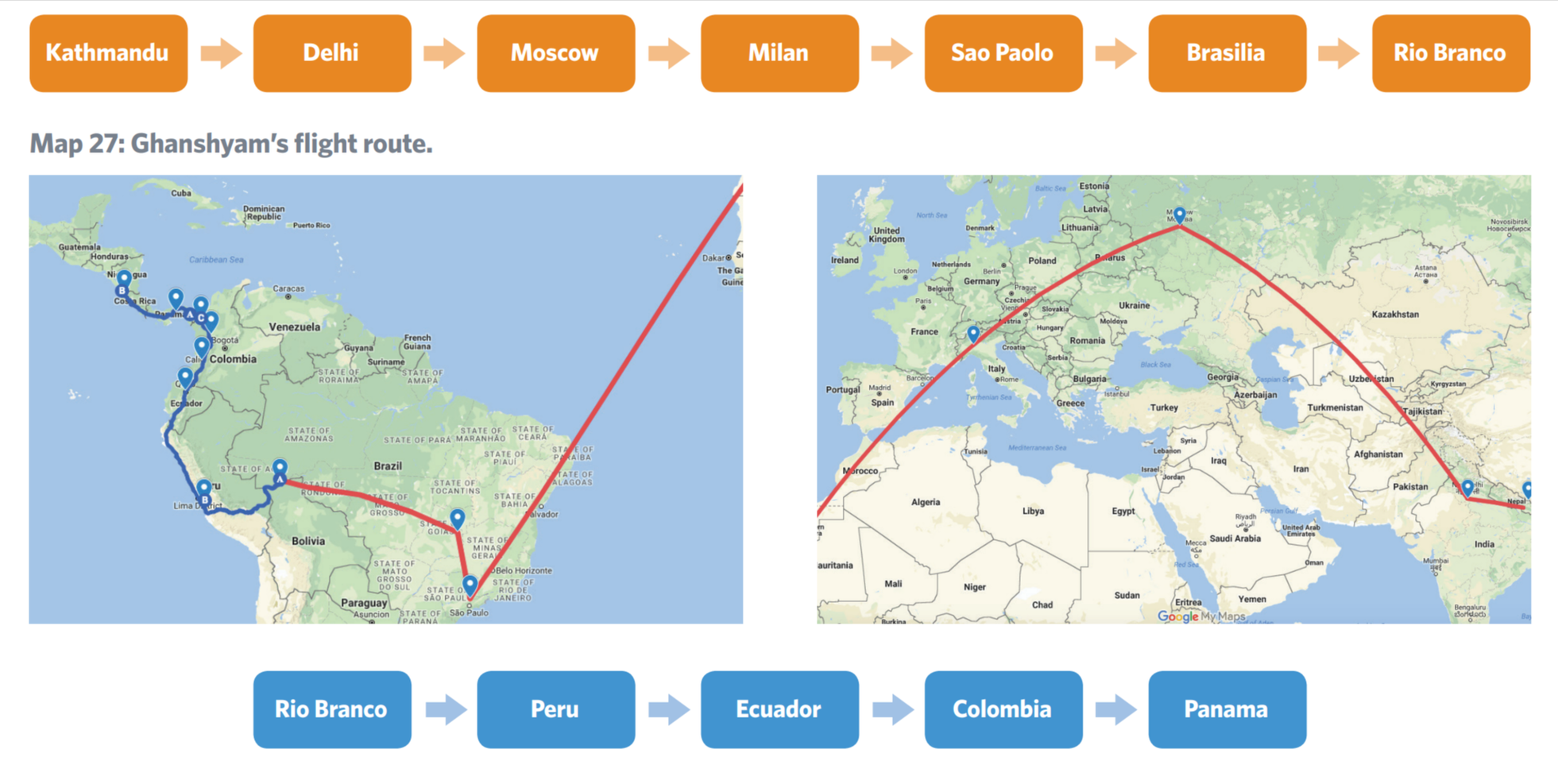
The government had imposed strict standards for the construction of new houses after the earthquake, which made it even more difficult and expensive to build a house. A year after the quake, Ghanshyam finally received the first installment of the earthquake relief money: $3,000. With this, he built a temporary shelter for his family. He still could not afford to construct a government-standard house. Getting a loan was also next to impossible, as the financial institutions did not provide loans against land in the earthquake-affected areas.
The elections soon followed. Local elections had not taken place for almost twenty years, and all parties wanted to win. All three major parties coerced non-partisan citizens, including Ghanshyam, to vote for their respective party. Some party members even threatened to harm Ghanshyam and his family if he did not vote for their party. There were frequent incidents of fighting and conflicts between party members. The unsafe political environment and the absence of any economic means to earn a livelihood made him want to leave the country.
Many people in his village were leaving for the US, and some had been doing really well there. He got in touch with a person in the village who had helped others go to the US. Soon he found out about an agency in Kathmandu that helps people get to the US. He approached them and got his ticket to Brazil. He found out that it would cost him $30,000. Since he could not get any loan, he sold his land. He was told that he had to pay the total amount for the journey in different installments to the agent's bank account in Nepal. His family would be required to pay the money while he was traveling after reaching certain destinations. The agent also instructed him to carry around $2,000 for the road and an equal amount for extra, unexpected expenses.
He had no idea how difficult the journey would be. After flying to Delhi, he met other fellow migrants and was grouped together with them. There were six Bangladeshis and four Nepalis. He flew to two more cities (Moscow and Milan) and finally São Paulo. He had not been told how many flights he would have to take to get to Brazil, but he knew what he needed to do when he got there. His passport had the visa stamp of Bolivia, but he still flew to São Paulo and managed to exit there. As instructed by the agent, he then claimed asylum and shared his story with the immigration authorities at the airport. They detained him and others in his group for eighteen hours and finally granted them asylum. They had the papers they needed to be mobile in Brazil but had no intention of staying there. After reaching Rio Branco, a city in western Brazil, they got in touch with another agent, who took them to a hotel and gave them a proper Nepali meal. The agent appeared to have their pictures in his phone and thus could identify them when they exited the airport in Rio Branco.
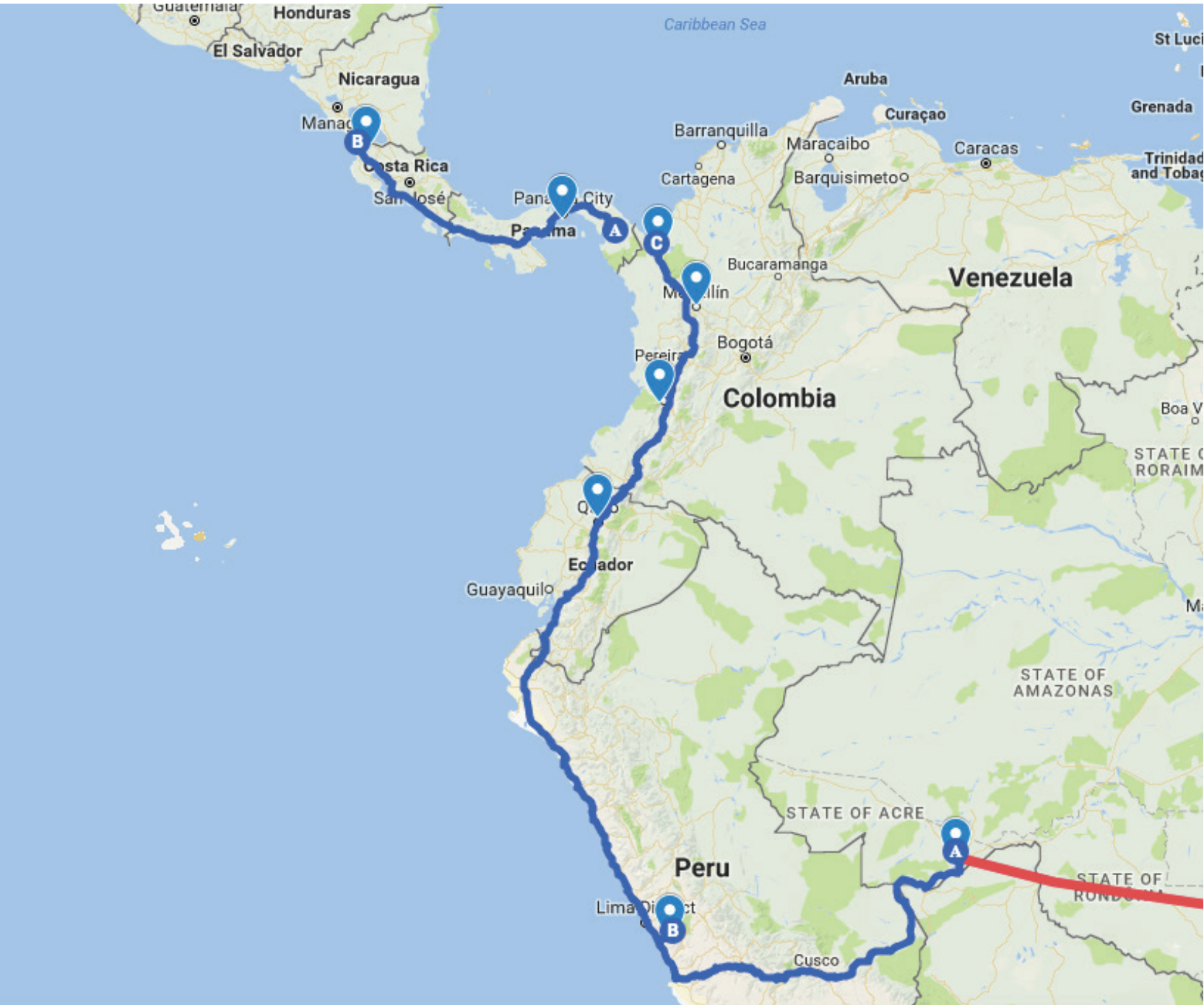
The next part of the journey was all by road, and the first obstacle was crossing the border to Peru. Close to the border, the agent put them on the bus and left them. During the journey, the Peruvian police stopped them in a few places and extorted money from them, and they had to pay the police the amount they asked for in order to get through. They made a stop in Peru and were again fed a proper Nepali meal in the hotel. They did not have to pay for the hotels or the food. These expenses were taken care of by the smugglers and were part of the package.
The next hurdle was crossing the Peruvian border into Ecuador. They were traveling in a microbus. The agent had instructed them to bribe the border police if stopped. The agent left them just before the border and told them to meet the other agent just after. Right after they got to the Ecuadorian border, they were stopped by the immigration officials and subsequently detained. In the detention center, they had to give statements, and a formal case was registered against them. They had been detained for four days, and during that time, their agent came to the detention center to try to convince the officials to let them go. Inside the cell, they were told that "the mafia" had been involved, and for them to be let free, their agent needed to give some money to the mafia. The authorities threatened them that if found guilty, they would be imprisoned for two years. Ghanshyam did not even know what crime he had committed and worried only about his family. On the fifth day, he was taken to the district court in Loja. He was asked why he came to Ecuador, and he replied truthfully. The interview went on for thirty minutes, and the judge finally decided to let him free.
After the travelers were released, a few policemen approached and offered them food. They treated them really well and offered to get them the asylum documents of Ecuador for $200. They decided against taking this offer and headed to Colombia. Crossing the Colombian border was not difficult, as an agent dropped them close to the border so they could walk across. But then, they had to face the menace of the Colombian police. While trying to reach Turbo by bus, they were stopped by the police in three places and had to pay $20 each to get through. Even though the police knew that they did not possess passports, they still asked for their passports.
After arriving in Turbo, they were put in a small boat with 30 other migrants. After traveling for an hour, an empty boat of equal size approached. They were told to transfer all their bags to the other boat. Thinking that they were being transferred to the other boat, all of them threw over their bags. However, the boat absconded with their bags. Ghanshyam had put some of his money, his passport, and other legal identity documents in the bag.
After reaching Capurganá, he was put in touch with another agent, who took him across the Darién Gap. It took seven days to cross the jungle. Each traveler was charged $20 per day by the donker. They had to pay an advance of $70 that also covered the fee for the first two days, and from the third day on they had to pay $20 every morning. After getting to the first camp, he got to the second camp by taking a boat, for which he paid $25. Then he took two different buses to get to the Costa Rican border. The first bus cost him $20 and the second $25.
Ghanshyam and his traveling companions had already paid $25,000 to the agent back home and were confident about getting to the US within the next two weeks. They thought that the hard part of the journey was over and a better life awaited them in the US.
📝 This article was originally published in a collection of biographies by the Henry J. Leir Institute at The Fletcher School of Law & Diplomacy and Tufts University.
You can Download the original collection below ⬇️