
Written by: Kenza Ben Azouz, Jeremiah Gaitlin, Ingrid Magalhaes, Jayshree Venkatesan, and Kim Wilson
Table of Contents
Abstract
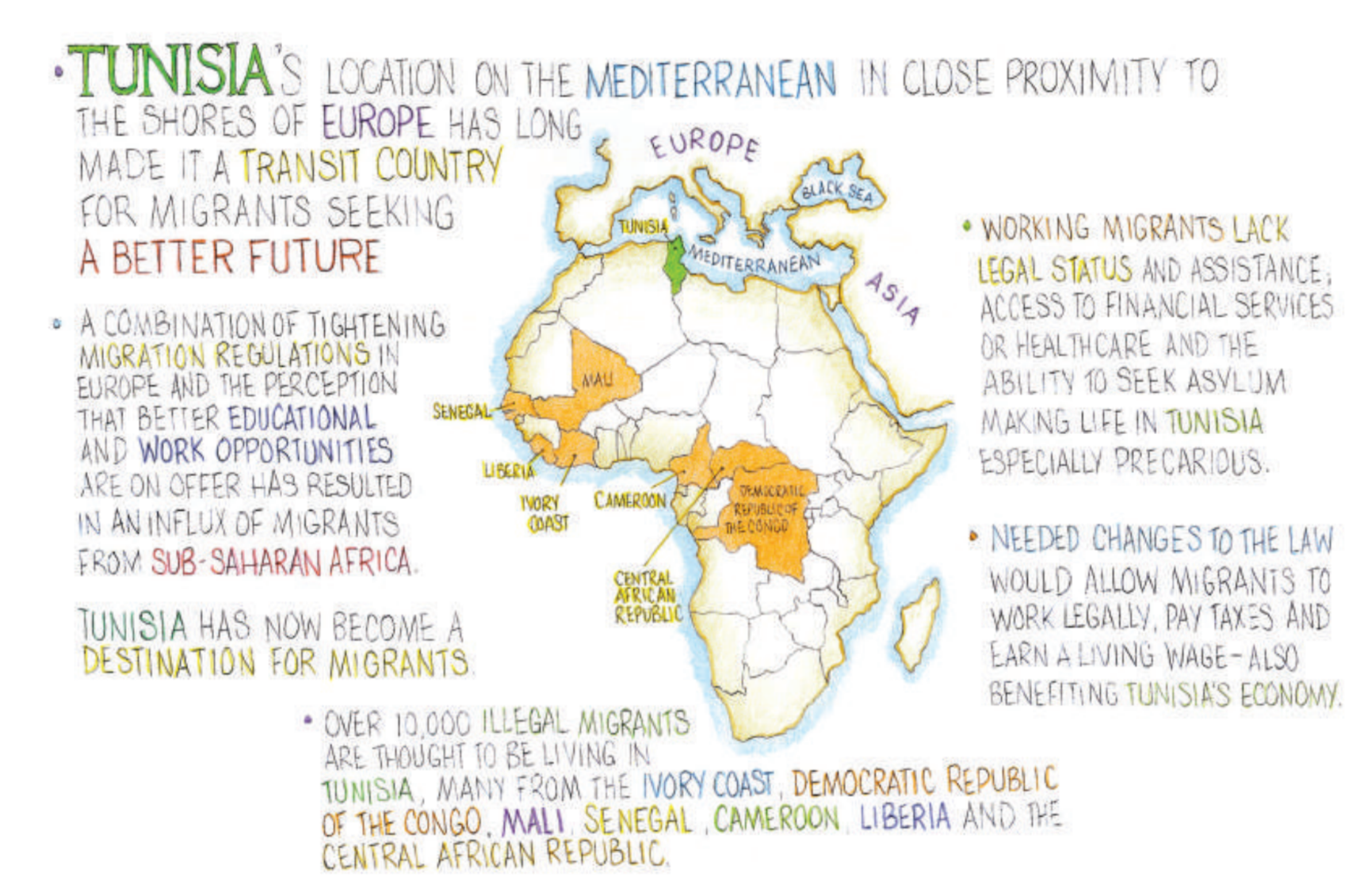
Located between Libya and Algeria, the small nation of Tunisia has played a key role in shaping the migration policies of the European Union. Tunisia is currently both a destination and transit country, attracting migrants from sub-Saharan Africa for education, work, and hopes of a better future.
In this case study, we explore the various financial strategies that migrants to Tunisia are forced to adopt in the face of stringent laws, unavailable legal assistance, and poorly designed financial products. Through twenty-four interviews conducted with economic migrants and students who moved to Tunisia, we explore the challenges these individuals faced in Tunisia, strategies they adopted to survive, and the impact their legal status has had on their financial health. We use a three-tier pyramid to analyze the various challenges faced at three levels—foundational, meso, and financial services—and use this model to provide recommendations to Tunisian policy makers as well as the international humanitarian community. Interviews were carried out prior to the COVID-19 pandemic.
Our recommendations include strengthening legal mechanisms, enabling new capacities and infrastructure, and making existing financial services affordable, accessible, and convenient for use, which would benefit migrants and Tunisia’s economy in the long run.
Background
Nestled between Algeria and Libya, Tunisia is a frequently overlooked but important destination and transit country for migrants traveling from sub-Saharan Africa.¹ Unlike its neighboring countries that are seen as pays-étape² (stepping-stones), Tunisia’s migrant community includes more than people in transit. It includes refugees and asylum seekers, economic migrants seeking improved livelihoods, environmental migrants seeking relief from poor harvests, as well as victims of trafficking. It also includes unaccompanied minors (children traveling alone) and stranded migrants.³ Tunisia’s geographical location and proximity to Europe make it an attractive destination, both for those who might like to settle there or to treat it as a jumping-off point to Europe. As this report is being written, the political situation in Tunisia has begun to deteriorate, producing a fragility that may have repercussions throughout the region.⁴
Introduction
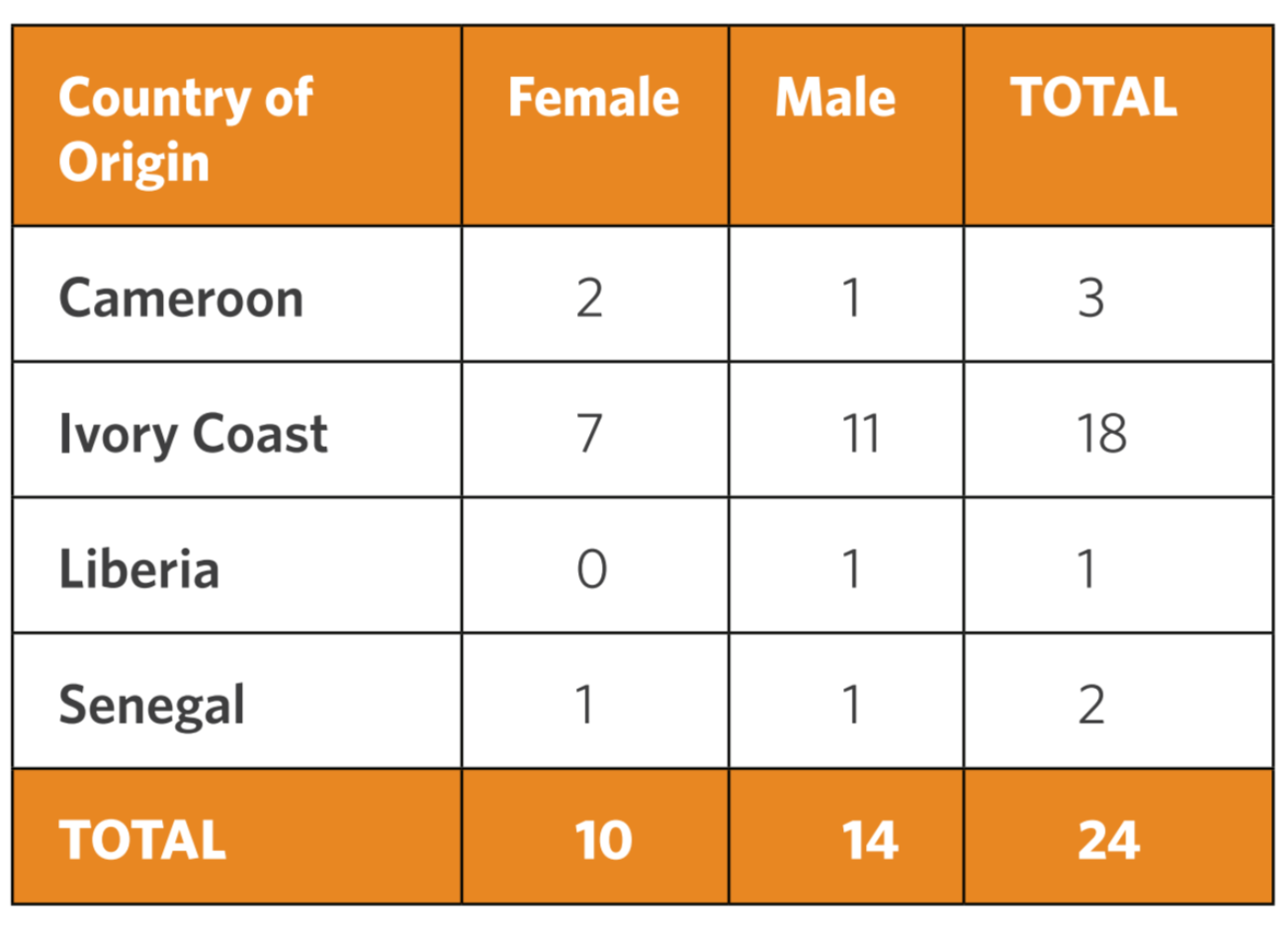
This case study analyzes the well-being of sub-Saharan migrants who perceive Tunisia as a destination for better opportunities—whether economic, professional, or educational. Thirty interviews were conducted between May and July of 2019: twenty-four sub-Saharan migrants and six individuals who worked in formal institutions within Tunisia.
The motivations for each migrant varied, reflecting the complex migration profile within Tunisia. Respondents, however, reported migrating to Tunisia for two primary reasons: employment opportunities and education. Several migrants had an interest in continuing their journey to Europe. The table below contains general demographic information of our respondents. Consistent with overall migrant profiles in Tunisia, most respondents come from the Ivory Coast.
Tunisia has historically been a country of emigration.⁵ It is only within the past few decades that it has seen a large influx of sub-Saharan migrants. Data collected from Tunisia’s National Institute of Statistics show that between 2004 and 2014, non-Tunisian populations residing in Tunisia increased by 66 percent, increasing from 35,192 to 53,490 individuals.⁶ Additionally, more than 10,000 sub-Saharan migrants are said to be living in the country without permission. These individuals are not included in these statistics. Originally headed for Europe, these migrant flows have slowed considerably, stymied by the “externalization” and “securitization” of European borders through bilateral agreements with third countries.⁷ While these migrant flows remain complex and varied, the general trend in Tunisia indicates that an increasing number of sub-Saharan migrants are settling and building their lives in Tunisia’s major cities—Tunis, Sfax, and Medenine.⁸
*Note: Some names throughout this report have been changed to protect the privacy and safety of interview participants.*📝 This article was originally published as a report by the Henry J. Leir Institute at The Fletcher School of Law & Diplomacy and Tufts University.
Download the original report below ⬇️
3. Where You Come from Shapes What You Do
3.1 Migrant Backgrounds and Their Chosen Financial Strategies
This study analyses two different segments of sub-Saharan migrants in Tunisia: 1) migrant workers who come to Tunisia in pursuit of better economic opportunities; and 2) student migrants who seek better educational opportunities. Social divisions between migrant workers and students resulted in different financial strategies and reaffirmed the existing socio-economic divides. We explore these disparities in the following sections. However, there are also common themes for both sets of migrants, explored in detail below.
Socioeconomic backgrounds, along with family practices and norms, influenced the financial strategies that participants in our interviews used, which impacted their financial health. Migrants with a higher socioeconomic status appeared more equipped to deal with financial challenges and debt by developing strategies that circumvented costs related to housing, transportation, and money transfer fees.
3.2 Tunisia as a Destination for Work
The lack of regular status or work permits posed the biggest challenge for migrant workers. Without any legal avenues to pursue work in Tunisia, migrant workers tended to view the country as a transit to better opportunities, making them susceptible to trafficking from their country of origin, albeit often without their knowledge, and other forms of smuggling. Informal networks are sources for most information about working and housing conditions. However, these networks can be inaccurate and unreliable, leaving migrants vulnerable to abuse and exploitation in the immediate aftermath of arrival through cross-country trafficking rings. The longer they stay in Tunisia, the more opportunities they have to improve and strengthen personal networks locally, which in turn could contribute to improved well-being and better financial health.
Daniel, a confident migrant worker from the Ivory Coast who returned to Tunisia after studying there a few years prior, provided examples of how he and his peers learned from living in Tunisia.
First, Daniel quickly learned that Tunisian landlords overcharged non-Arabic speaking migrants for utilities they did not use by charging a single shared utility bill for the whole house. His first lesson was that securing separate utility lines for electricity, water, and gas helped prevent such exploitation.
Second, Daniel realized that there were several restrictions on sending money abroad. This limited his ability to send money back home. Further, channels available to remit money were limited and expensive. He addressed this challenge by engaging his personal network. Daniel and his friends would rely on friends going back home to the Ivory Coast to carry money for them. This strategy provided a double benefit: first, it helped Daniel and his friends get around restrictions that prohibit migrants from sending money abroad; and second, it helped circumvent the high fees associated with money transfer services, such as Western Union or MoneyGram.
Irregular Legal Status Limits Migrants’ Access to Employment & Services
The Tunisian legal system does not recognize or support foreign workers. To stay lawfully in the country, individuals must acquire a residence permit, which is no easy task.⁹ Tunisian law¹⁰ requires overstayers to pay a penalty fee of 20 dinars per week (7 USD) upon departing the country.¹¹ Residence permits are only issued on a temporary basis to migrants who meet specific criteria. Permit restrictions have a cascading effect. Without a residence permit, migrants cannot obtain a work permit.¹² Similarly, work permits are usually temporary and only issued when the migrant or their advocate proves that a Tunisian national cannot fill a particular position. Francesca Garofalo, the Migration Assessment Officer at REACH¹³, identifies the precarious position migrants often find themselves in:
“Even with the UNHCR asylum ID, migrants don’t have the right to work. Migrants just can’t work legally. I don’t know how they manage this…. It’s really, really hard to know how they deal with their livelihoods. How are they coping?”
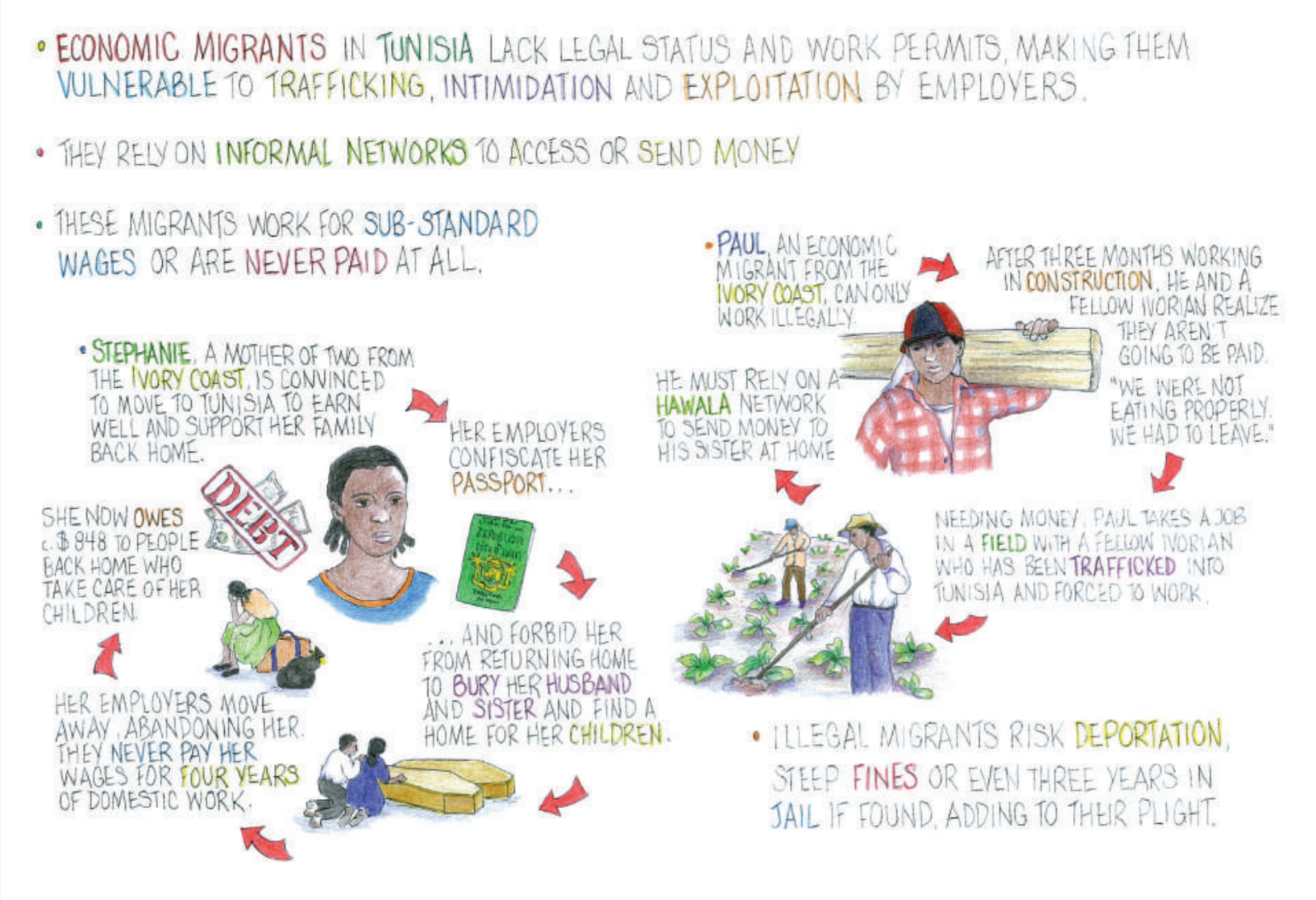
To meet their basic needs, migrants are driven to work informally, meaning they lack the protections afforded to others under the Labor Code.¹⁴ Ensuing exploitation was common for many respondents, including Stephanie, a migrant from the Ivory Coast:
“They had told me they would pay me 173 USD per month, but once I got here, they said that they would keep half of the salary to cover for penalty fees for whenever I would leave the country…. In the following four years, they never even gave me a salary. Now, I owe a lot of money to many relatives and friends in Ivory Coast who have been taking care of my children, so that they don’t end up as a cleaner, like me. I owe about 848 USD back home.”
Compounding these effects is a 2004 Tunisian law that forbids organizations and individuals from assisting irregular migrants in any capacity.¹⁵ The law establishes a harsh penalty for those who provide any form of assistance to irregular migrants, which includes a fine and up to three years in jail.¹⁶ While not strictly enforced, this law has severely limited the ability of formal actors to provide the legal or financial support that migrants need. As one of our respondents, Baptiste, said:
“I have to say I’m a bit stressed by this penalty thing. I really hope some organizations can help us to pay this, or that the state will stop this. It’s really expensive…, We hope that this law will change.”
Tunisia lacks an asylum law and can deport migrants to their home countries without process if found. The International Organization for Migration (IOM), however, provides some support to migrant communities in Tunisia if migrants can access it. Their service includes assistance with healthcare and paying hospital bills. A couple, Ilya and Khadija, acknowledged IOM paid for Khadija’s hospital expenses associated with the birth of their first child. While helpful, IOM did not have the resources to help with other needs, such as securing visas. The weekly overstay penalties under Tunisian law are cumulative, leaving migrants feeling trapped: they cannot regularize their status, and thus cannot work to pay down their debt. Claude and Victoire, migrants from the Ivory Coast, explain their dilemma:
“The penalty (80 dinars per month, or ~30 USD) debt that we accumulate—it’s really, really worrying… You can only pay at the very end of your stay when you leave the country at the airport, before getting on your flight back home. The flight that you have already paid for…. These penalties really cause us problems and push some of our brothers to go to Europe… I’ve been here for two years myself so imagine what I need to pay?!”
“We haven’t been able to make any savings here. It’s not realistic. You know, right now if we manage to save money and put it aside, we don’t do it with the objective of paying the penalty, it’s to support our family or pay for our return back home.”
Exploitation of Sub-Saharan Communities is Rife in Tunisia
Without legal status, sub-Saharan migrants working informally in Tunisia lack worker protection remedies afforded under Tunisian law.¹⁷ As a result, sub-Saharan migrants are unable to report chronic exploitation by Tunisian employers. Wage theft, long working hours without breaks, and wages well below the national minimum wage are just a few of the abuses experienced. Employers often refused to pay migrants at the end of the month and forced them to continue working with the promise of future pay. Paul, a construction worker originally from the Ivory Coast, explains the moment he realized his boss was not going to pay him or his friend:
“After three months, my Ivoirian friend and I realized this situation was too bad. We weren’t going to be paid, we weren’t eating properly; we had to leave.”
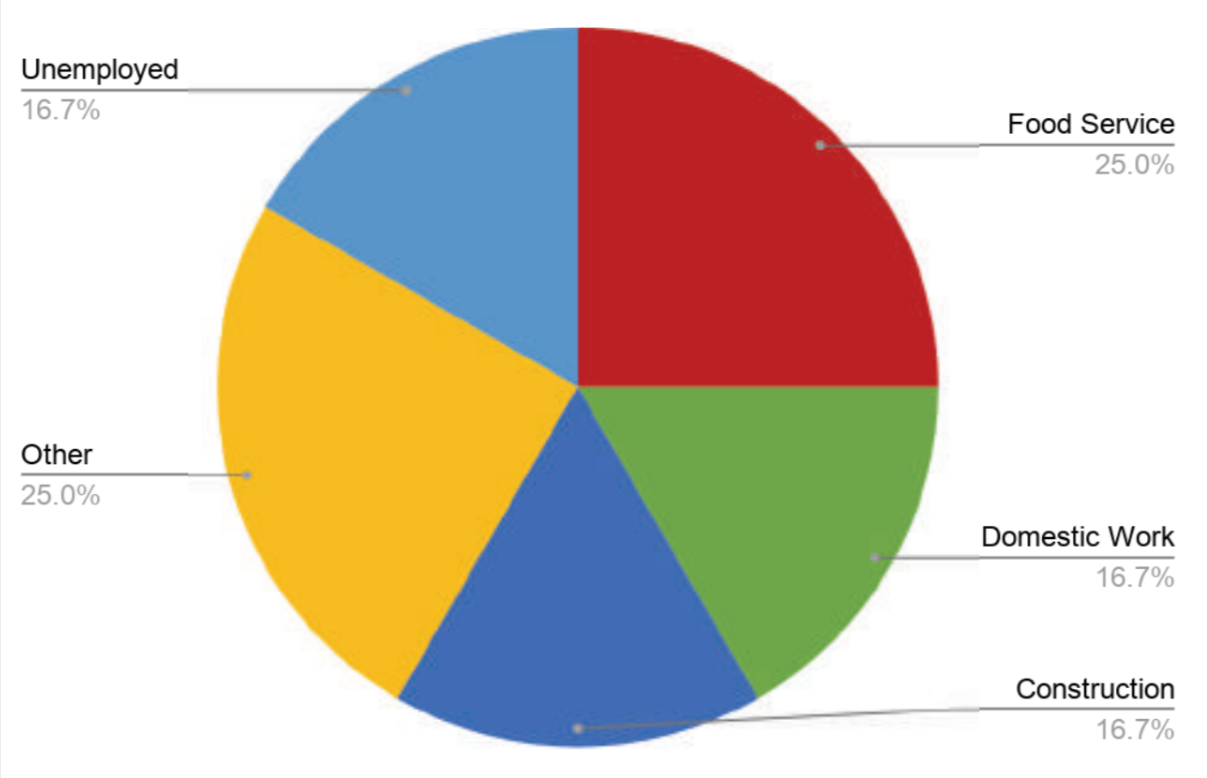
Migrants usually find employment in food service, domestic work, and construction. These sectors are among the least regulated in Tunisia¹⁸, and thus the most prone to abusive employer tactics toward migrants. While Tunisians also often work irregularly in these sectors (a huge portion of Tunisia’s economy is informal), they are relatively less prone to abuse and exploitation due to their citizenship, legal status, race, networks, and familiarity with local processes.
The chronic trafficking of domestic workers from sub-Saharan Africa, particularly the Ivory Coast, is the result of poorly regulated industries.¹⁹ Migrants who leave for domestic work, mostly women, rely on their networks to facilitate travel. Neither the migrant nor members of their network have knowledge of the risks of this kind of employment. Once they arrive, the employers often confiscate their passports along with any cash they might have carried with them on their journey. Sara, an Ivorian migrant worker who was trafficked in Tunisia in 2015, explains how the network of Tunisians and Ivoirians who brought her to Tunisia forced her into slavery:
“My employers had already paid Sonia [the broker], so she had no intention of paying me. When I arrived, they took my papers, and they said I couldn’t leave before I finished the six-month contract. They’d say, ‘We’ve already paid for you, if you want to leave, then you have to reimburse us…. I worked and worked and cried.’”
In some cases, employers will use a migrant’s irregular status to intimidate them. Sara went on to explain how her employers used fear to scare her into staying on in Tunisia at her job.
“One time I said, ‘I want to leave. I want to go home please,’ and they said they’d call the police. I was blocked. I was trapped into this.”
Stephanie, also a migrant from the Ivory Coast, explains how her employers manipulated her into believing no other options existed.
“[My employers] left me… stuck in the house for a whole week while my husband and sister were being buried back home, and they just went on a holiday! I never ever left the house. They’d told me that if the police found me in the streets I’d get into big trouble. They said that if I ever got caught, I should never say I was working for them. I didn’t understand. I said, ‘Why can’t I get a work permit then?’ They said it was very complicated and that it was just easier if I stayed quiet.”
Tunisian policies have changed to provide protection to victims of domestic work exploitation²⁰, but domestic workers don’t know about these policies and therefore cannot take advantage of them.
3.3 Tunisia as a Destination for Education
Tunisia is a popular destination for students, especially those coming from countries like Côte d’Ivoire, DR Congo, the Central African Republic, and Mali.²¹ In comparison to their own countries, Tunisia is perceived to have a better quality of education. Tunisian universities advertise in these countries to attract students, and getting a visa in Tunisia is easier than in European countries.
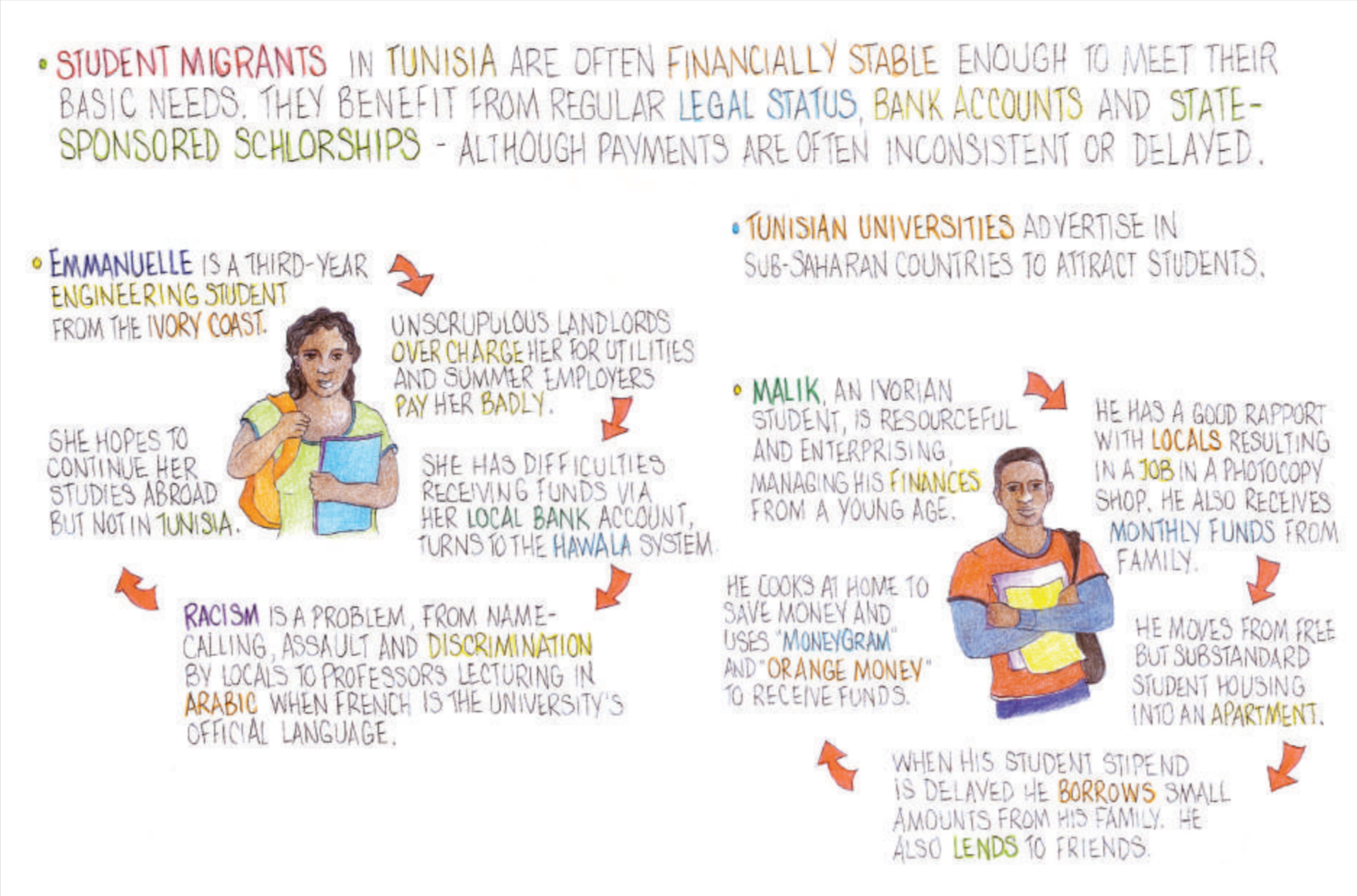
Students tend to work in the informal sector and are often employed “under the radar.” This informal employment creates opportunities for exploitation in the form of wage theft and overtime without pay. These conditions are exacerbated by students’ lack of prior work experience, combined with an ignorance of local labor laws. Emmanuelle, one of our respondents who had never worked prior to arriving in Tunisia, explained how she was paid below Tunisian minimum wage (22.416 TND/day in 2016, approximately 8 USD) and worked more than the 26 maximum weekly hours (60 hours/week) without additional compensation.
However, this was not true for all students who moved to Tunisia. Most students appeared to be more financially stable when compared to migrants who moved for employment—they at least had the means to meet basic needs. We attribute this to students’ regular legal status in Tunisia, which allowed them to open bank accounts and access financial support from friends and family, in addition to their generally less precarious socio-economic backgrounds. By legally residing in Tunisia, they were able to receive remittances from their families and gain access to familiar financial services.
Students with prior work experience tended to utilize a wider set of financial strategies than those with no work experience. Malik, another respondent, said that he learned to be “financially responsible” from a very young age. While working for his brother selling phone credit in the Ivory Coast, Malik set aside a portion of the profits as savings. He explained that this experience helped him properly manage his finances in Tunisia. However, it did not translate to higher financial independence. To cope with consistent delays in receiving money from his Tunisian scholarship, Malik managed his finances by borrowing small amounts of money from family and friends to pay for immediate expenses. Malik would also ask his relatives at home for an increase in the financial support they sent when his scholarship funds ran low.
In general, student migrants were more likely to have access to resources and networks than migrant workers, enabling them to achieve higher levels of financial health (see box 2). They have access to scholarships granted by the Tunisian government, money from relatives back home, and the ability to borrow from other individuals within their immediate network. Typically, their socioeconomic background contributes to a wealthier and more robust network than networks of migrant workers.
Racism Limits Migrant Financial Strategies and Financial Health
Racism in Tunisia impacts the daily lives of sub-Saharan migrants as well as Black Tunisians. A study conducted by the Department of Migration of the Tunisian Forum for Socio-Economic Rights reveals that more than 50% of the sub-Saharan migrants in Tunisia have been exposed to “acts of racism” and to “the hatred” of Tunisians.²² The study found that 89% of sub-Saharan migrants had experienced racism through name-calling, in addition to 33.9% who experienced physical assault.²³ This reality is corroborated by many of our respondents who also reported facing racist behavior in some form, either through language, behavior, and practices such as tricking migrants to overpay for services and goods. One example of racist behavior is the inflated rate for taxi fares.
Clara, a student migrant from the Ivory Coast, recounted how she was overcharged at times and was even refused a ride because of her skin color.
“With the taxi, it’s easier but it can cost me 5-7 TD (1.7-2.4 USD) when traffic is bad, when it’s good it’s 3.5 TD (1.21 USD). Some taxis aren’t honest at all and overcharge you… One time a taxi said he wouldn’t take me in because he didn’t take in Black people.”
To circumvent extra expenses generated by these high prices, some students adopted a strategy of avoiding certain places during specific hours of the day when taxi drivers tend to overcharge sub-Saharan migrants. Zoe, another Ivorian student, avoids going downtown because she knows that taxi drivers routinely charge migrants a 20 TD fee for what would be a 6 TD fare. Tunisians also use language to intimidate sub-Saharan students and worker migrants. First, they call them derogatory names, and second, they speak in Arabic instead of French. This is particularly confusing to students whose professors refuse to lecture in French, even when it is the official language of the university.
Information Gaps Exacerbate Exploitation and Instability
Often, inaccurate information influenced migrants’ decision to go to Tunisia in the first place. Relatives and friends who are already working or studying in Tunisia seldom share the truth for fear of losing face back home. When migrants arrive in Tunisia, they understand their new reality, but are unable to provide information to would-be migrants back home for the same reasons. There is a great deal of shame in telling people that life in their new surroundings is a struggle. When they do advise against migration to Tunisia, their accounts are countered and discredited by traffickers’ organized misinformation efforts that actively paint a positive picture of Tunisia through their networks and platforms like social media accounts.
In some cases, migrant workers would receive information about potential employment opportunities with promises of better financial gains. Upon arrival in Tunisia, however, migrant workers realized that such promises were false. Many expressed their disappointment and anger when they discovered they had been deceived. Ilya expressed his frustration:
“[The smuggler] made me believe that Tunisia was good for us. He said, ‘If you are not lazy, you can make big money and build a building back home really fast.’ It sounded great. I thought I’d be able to become a man here—a responsible man who can achieve something in his life. I said, ‘If that’s the deal then I’m going for it.’ But once I got here, I realized that all the money he’d said I’d be able to make, I wouldn’t even be able to make it within 5 or 10 years here! It was all lies!”
In one extreme case, the migrant knew nothing about Tunisia or about the work she would do. She relied on information received from peers who had migrated to Europe, not Tunisia. This suggests that migrant workers perceive Tunisia as similar in opportunity to Europe. Traffickers and smugglers take advantage of this perception. In this migrant’s case, this lack of information led to her being trafficked into Tunisia and enslaved for four years as a domestic worker.
Misinformation about living expenses and scholarships also create challenges for students. The Tunisian government awards scholarships to sub-Saharan migrants as a way to make Tunisia an attractive destination for students. Students are allowed to live in the university halls free of cost and eat at the university restaurant for a fee of 0.07 USD per meal. However, the conditions are precarious and unsanitary, forcing most students to seek alternative housing and thus increasing their monthly expenses. Students realize soon after arriving that the scholarship only covers tuition fees. On top of the lack of information about scholarships and accurate living expenses, delayed stipend payments add to students’ financial woes. They often rely on expensive money transfers or borrow from friends to pay for immediate expenses.
4. Migrant Financial Health and Strategies
To unlock the potential that financial services can provide, certain foundational issues must be addressed. We have adapted a three-tier model²⁴ proposed by two Tufts researchers.
By adapting this model to analyze data from the interviews, we can see the utility of financial services in terms of a hierarchy of elemental building blocks. In short, for financial services to be useful, they must rest on a foundation of welcoming laws and norms as well as an infrastructure that is able to translate those laws and norms into practical skills, knowledge, and services.²⁵
By using this three-tier analytical framework, this study assesses migrants’ overall financial health (or financial well-being), looking at their ability to achieve five key criteria:
- Meeting basic needs
- Comfortably managing debt
- Withstanding financial setbacks
- Investing in opportunities (economic and educational)
- Being able to expand their planning horizons over time.
These five criteria intersect at all levels of analysis, reflecting the complex, interconnected factors that impact the financial lives of migrants in Tunisia.
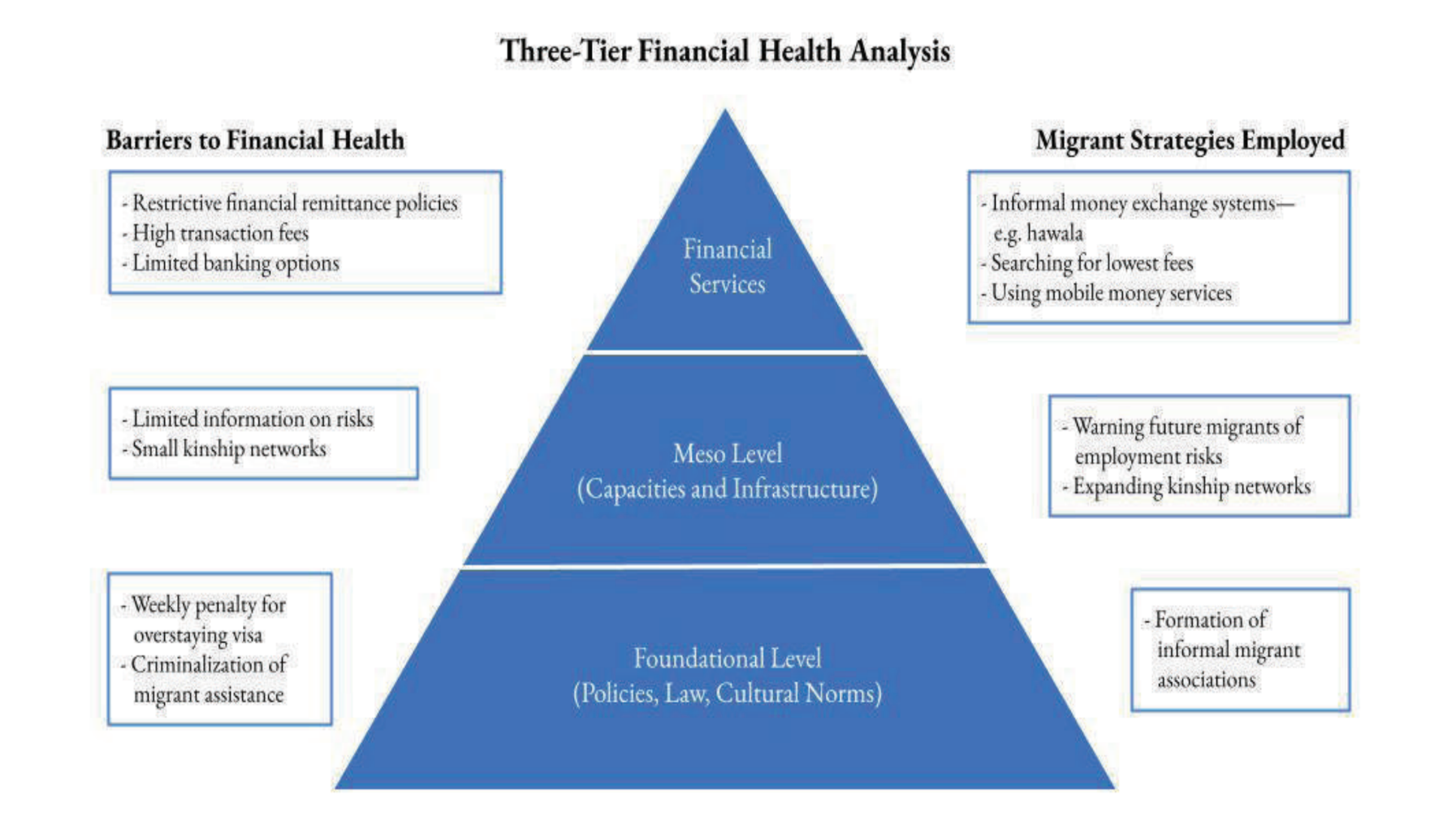
In the absence of foundational structures that a state might supply, such as laws, our respondents created a kind of shadow system of coping mechanisms. Three strategies appeared consistently throughout this study: the formation of informal migrant associations, a reliance on social networks, and the expansion of hawala systems.²⁶ At the foundational level, the formation of migrant associations—a social practice that had become a norm—surfaced as the most common strategy. At the meso level, kinship networks allowed migrants to overcome many legal and economic barriers. We emphasize the importance of kinship networks²⁷ and how they help reduce exploitation through offering up financial support and quality information. Finally, financial services available via the hawala allow migrants to manage their finances and control costs.
4.1 Role of Migrant Associations
Informal Associations Provide Key Support for Migrants
Because of the legal and social barriers previously described, migrants turn toward small, informal associations that form around national origin and socioeconomic status. These associations are the main channel of migrant access to financial, legal, and social services.
For example, Baptiste created an Ivoirian association, aiming to offer Ivoirian migrants financial and moral support. Members of this organization lent money for immediate and unexpected expenses of its individual members.
“This association isn’t only for health. We can also intervene, for instance, if someone has lost his job and needs money to pay rent. We can each lend 10 TD (3.46 USD), so that helps him with 170 TD (59 USD) in total… If someone loses a relative back home and needs some money for the funeral, we contribute. It’s not a fixed amount, but we might give 20-25 TD (6.9-8.6 USD).”
These organizations typically form around kinship networks (family and close friends), in response to the failings of larger, more formalized associations such as the L’AESAT (the Association of African Students and Interns in Tunisia) or organizations like IOM.
4.2 Building Social Networks
Social Networks Used to Respond to Financial Shocks
An expansion in a migrant’s social network, within Tunisia and abroad, results in improvements in financial health. In fact, social and financial support were often mutually-reinforcing. The expansion of social networks through various claims to identity, e.g., origin, ethnicity, religion, family, hometown, socioeconomic status, links migrants to support systems across space and time. Investing in these networks as a financial strategy has helped migrants in Tunisia overcome barriers to financial security, reduce instances of exploitation, and achieve higher levels of financial health. Dhawan and Zademach refer to these as bonding capital, i.e., networks with fellow nationals, and bridging capital, i.e., networks with other nationalities.²⁸
Malik, an Ivoirian student, provides a prime example:
“He [a Tunisian shop owner] trusted me completely…. The benefit for me is that by establishing this relationship, I knew I’d get some discounts. I have never had to pay for photocopies, scans, etc., and even some of my friends can get it for free. He completely refuses to let me pay. So, at the end of the day, it’s in my best interest.”
While not their primary function, social networks allow migrants to transform social capital into short-term, discrete financial gains. Migrants invest in long-term “social savings” to increase their overall capacity to generate financial returns.
Almost all students reported receiving money from their social network, and all migrants borrowed or lent money to pay for immediate expenses. Most migrants expressed lax attitudes when borrowing from or lending to people within their network. Jaafar brags:
“I only ask close friends…. They never give me a date to reimburse them. It’s really whenever I can. Usually, I take up to two months. I would also lend to them if they needed money in the same way.”
Borrowing outside of this network was less frequent and often carried a stigma. Migrants appeared more pressed to pay back Tunisians than they did with other sub-Saharans in their social networks.
“I had to borrow from some Tunisian classmates to pay for printing and felt compelled to repay them within 2 days…. I would have taken longer if they were not Tunisian.”
These examples suggest that sub-Saharan migrants feel more comfortable sharing financial resources among their social networks. This system works on an understanding of reciprocity and trust that individuals within their network will support one another in times of need.²⁹
Bonding and Bridging Capital Revolve Around Nationalities
Networks typically build upon initial contacts made before or upon arrival in Tunisia. Shared language, culture, and values are conditions that shape the levels of trust migrants place in their social networks. As Clara highlights in her interview³⁰, she has not made meaningful connections with Tunisians. She does, however, feel part of a community of sub-Saharan migrants whom she refers to culturally as “brothers.”
Social networks were also helpful in housing searches. Sara relied on her network before she arrived in Tunisia, securing housing through her distant cousin:
“When I first came to Tunisia, I got in touch with a cousin from my extended family whom I had heard was here. She [moved] to Tunis where she had started establishing a network with our Ivoirian brothers and sisters. She told me she had a place for me to stay.”
Other migrants have similar stories. A rotation of migrants coming and leaving these networks is common practice. When one of the respondents decided to move out of his shared apartment, he “quickly found another brother,” who was willing to take his place. Another said that his friend’s sister helped him find a room with another Ivoirian student.
Traffickers & Smugglers Can Co-opt Social Networks, Undermining Migrant Trust
It is important to note that the reliance on social networks fundamentally impacts the perspective migrants have about the circumstances by which they arrive in Tunisia. Migrants often knew the person who brought them to Tunisia and saw them as part of their support system.³¹ As a result, many believe they are not victims of trafficking.³² Instead, they speak about themselves as falling into unfortunate circumstances. Paul, a migrant from the Ivory Coast, reports:
“After three or four nights at that man’s house, he told me he got me a job working in a field in a village near Gromballia—an agricultural and industrial zone forty minutes from Tunis. So, I just went, I didn’t feel I had a choice, I was already stuck here with no money; I needed to work…. There was another Ivorian with me, but his situation was different—he had been trafficked into Tunisia, and he was forced to work for that man now.”
Migrants not only speak about themselves outside of the conventional narrative of victim-trafficker, but they also challenge the notion that the people who bring them to Tunisia should be found criminally responsible for smuggling or trafficking them. Since they often come from the same families, hometowns, and have other connections to their identity, migrants tend not to perpetuate blame on their handlers.³³ Baptiste explains this mentality well:
“No, we didn’t think of calling the police. We don’t want to do that to her, [Baptiste’s wife’s trafficker]. It’s her niece after all. All my wife wanted was to escape from that situation.”
Several migrants also explained how they have warned others in their social networks. However, most of these warnings are provided after migrants land in Tunisia, rather than before. In the case of student migrants, it seemed to be based on hearsay. Student migrants often cited the dangers of working in Tunisia, without having worked themselves, suggesting that social networks effectively spread this information and that migrants use it to reduce the risks of labor exploitation. The dangers of employment exploitation seemed to dominate stories shared on social networks. Victoire shares her experience:
“You know, we chat with one another, and we compare our pay and everything. We are underpaid, seriously…. We spread the word among one another. We help each other out to find jobs, and if we know a family [of employers] is bad, we tell others in the network, so they don’t go there.”
Paradoxically, several labor migrants’ long-term goals involve reuniting with their families by bringing them to Tunisia. There are a few potential explanations for this discrepancy. First, some migrants value the social and emotional benefits associated with having loved ones near; second, by bringing family and friends to Tunisia, they expand their social capital; and third, bringing individuals to Tunisia provides some sort of financial benefit.
4.3 Access to Formal & Informal Financial Services
Formal Financial Services Remain Inaccessible for Most Migrants
Lack of a residence permit limits migrants’ ability to access formal financial services. Out of twenty-four respondents, seven reported opening a bank account, almost all of whom were students. Students who receive resident permits on their visa, are eligible to open a local currency bank account for a 27 USD annual fee. Cyril, one of our Ivorian student respondents, acknowledges that he stopped using his e-dinar account because of the 0.70 to 1.00 USD fee per withdrawal.
Even though the majority opened an account, when they learned of the high fees, they all resorted to alternative financial services. High fees and access barriers notwithstanding, formal financial services also do not meet the requirements of migrants. Jaafar, a former Senegalese student in Tunisia, recalls his frustration with the Tunisian banking system, where he was only allowed to receive remittances from abroad and unable to make domestic deposits. Mehdi, a manager of a major bank, acknowledged that Tunisian laws do not allow international monetary transfers to other countries.
“If you take someone from Ivory Coast who comes here and gets paid in Tunisian dinar, he won’t have the right to send money out of the country—that’s logical, right?! I mean, they don’t even have the right to work here technically, so… [the] account can only receive money from an offshore company and in a foreign currency… They could also open a Tunisian account if they got a local contract and all the right papers in order, but since all of them are working informally and without any contract, that just can’t happen.”
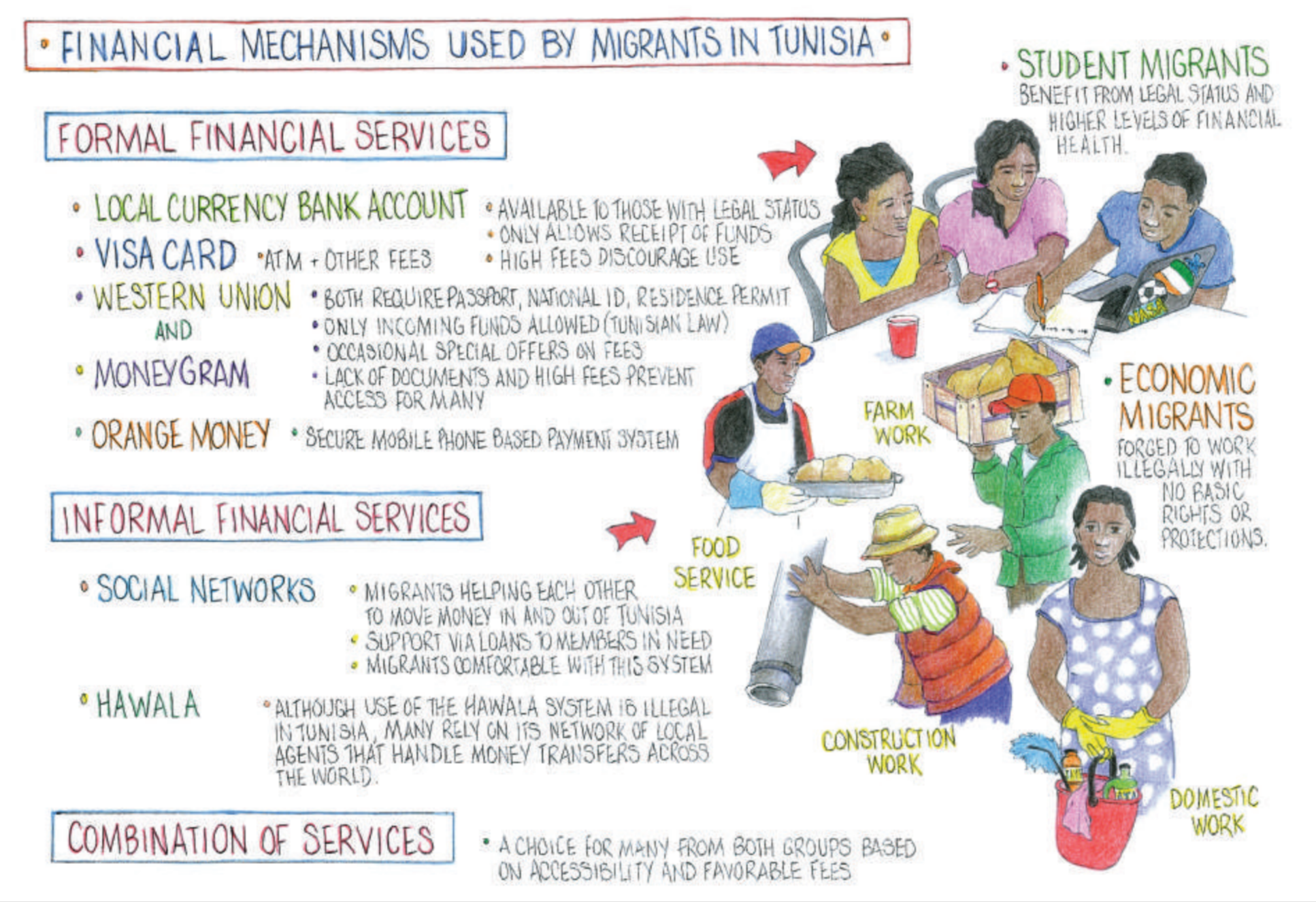
Sending money through MoneyGram or Western Union requires a valid photo ID such as a passport, national ID, or residence permit. Even with these documents, Tunisian law only allows for inward remittances, and the fees can be as high as 12-13% per transaction. Unobtainable documentation and high fees have pushed migrants to resort to informal financial services, such as hawala.
Migrants Window-Shop Financial Service Fees to Get the Best Option
Migrants exchange information through their social networks to pick financial services with the lowest transfer fees. Fee rates can further strain limited financial reserves of migrants, and Tunisian laws prevent outward remittances. The most popular platforms used by migrants are Western Union, Visa, and MoneyGram. Orange Money is used for hawala transactions as shown in Figure 3 above. They also use multiple services at the same time based on which fees are the lowest, as shown in the chart below.
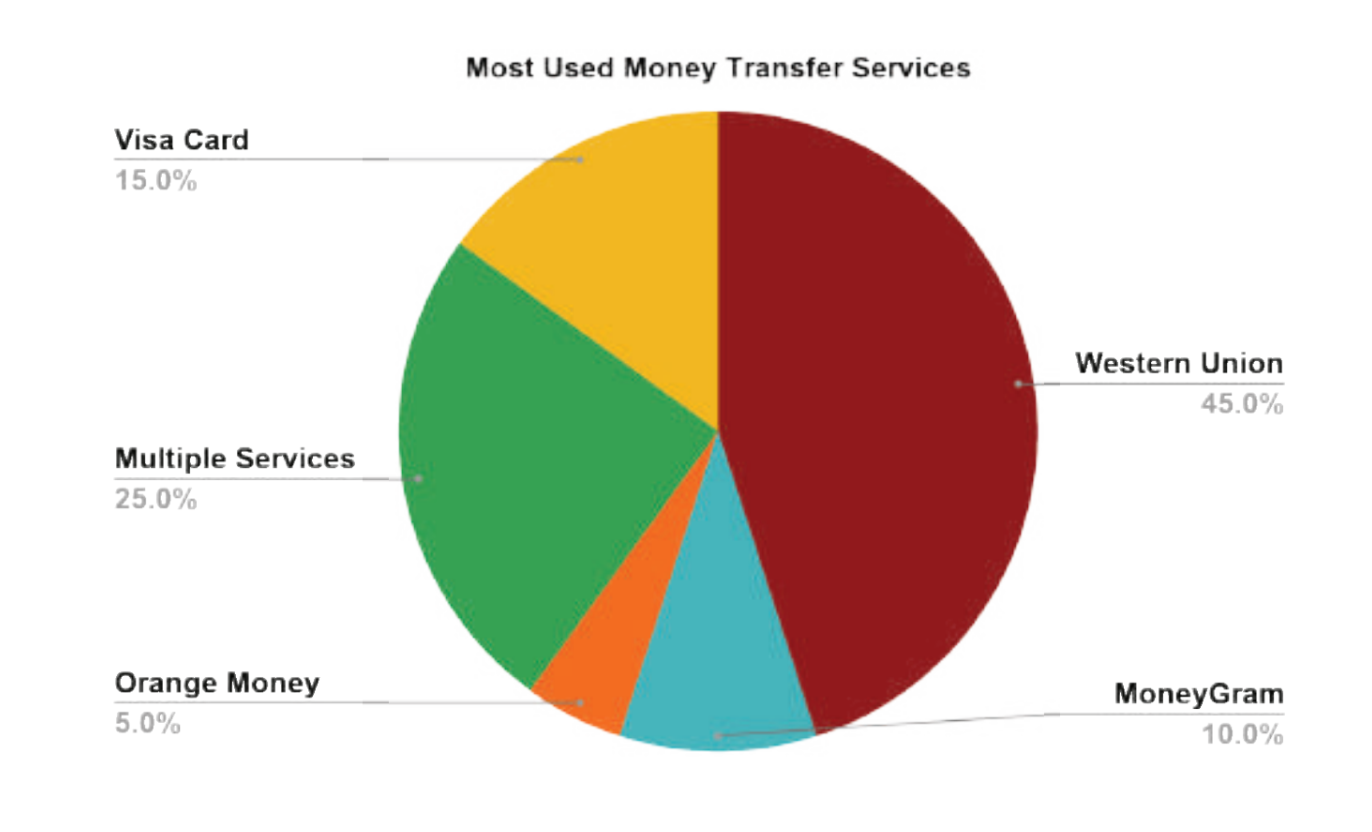
Information is exchanged at two levels—internally between networks within Tunisia, and externally when students inform their relatives in their home country about which service has the lowest rates at that time. Philippe’s interview illustrates internal exchanges of information:
“These days, Western Union fees are a bit lower. When there are promotions on fees—for example, Western Union can announce that for a specific period they will only charge 10 instead of 25 dinars—we inform one another.”
Student migrants often share information with their relatives about which financial services impose low transfer fees and advise their social networks in their native country to use either Western Union or MoneyGram based on current rates.
Emmanuelle, a third-year Ivoirian student, identifies several barriers to accessing money through formal financial services:
“I asked my brother to send me money through MoneyGram. At the time, there were network problems in Siliana, so I had to go to Al Fass – 60 kilometers away to retrieve the money he had sent… In August 2017, I opened a bank account at the Zitouna bank. I was told that my brother would be able to send me money directly into that account, but that didn’t end up working.”
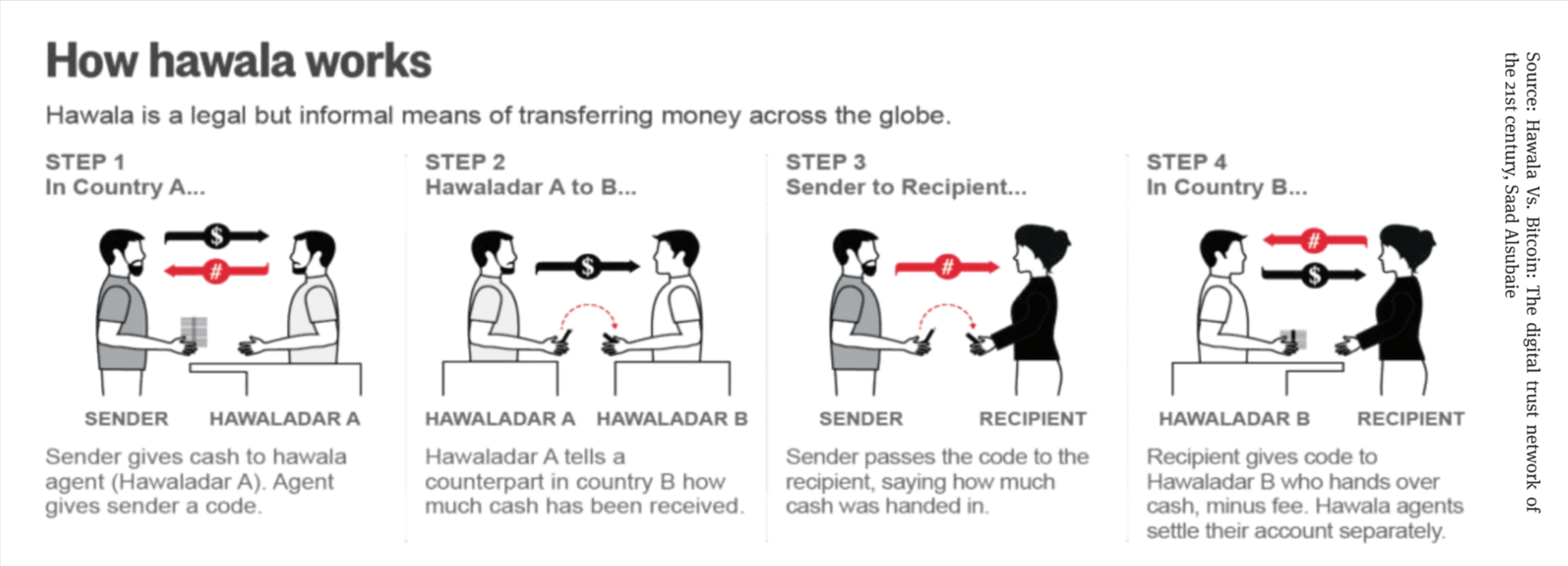
These barriers often limit migrants’ abilities to make appropriate financial decisions, forcing them to pay higher fees or incur additional costs to access financial support. As a countermeasure, migrants frequently use the hawala, an informal system of agent banking, which often, but not always, engages social networks.³⁴ Emmanuelle explains how a friend asked her to participate in a hawala exchange to receive financial support from her family in the Ivory Coast. Emmanuelle’s friend paid her 69.2 USD, and Emmanuelle’s brother transferred the same amount via Orange Money to her friend’s brother in the Ivory Coast. This mobile money service within a hawala transfer signifies the importance of hybrid systems—formal and informal—to get the job done.
Hawala Networks Remain a Prominent Financial Strategy Among Migrants
For most migrant workers, their networks do not allow them to transfer funds directly. In such instances, migrants seek out hawaldars (brokers), who maintain a vast network within Tunisia and their country of origin. Paul explains his experience when he had to send money to his sister back home in the Ivory Coast. He had a friend in Tunisia, who had funds available in the Ivory Coast, and asked a person to pay Paul’s sister in person, while he paid the friend.
Migrants who send remittances habitually were split into two categories: those who relied on the same broker every time and those who changed brokers based on the fees they charged. This implies that migrants make financial decisions based on the calculated risks associated with using an unknown broker with a lower fee versus paying a higher fee with someone they trust.
For Baptiste, broker fees determine whose services he uses. He also explains how kinship networks determine prices: your relationship with the broker determines the fee you pay. Stephanie, however, decided to use the same broker every time, fearing another broker may take advantage of her, a strategy routinely employed by illiterate populations.³⁵ One time, a broker—the same person who brought her to Tunisia—ran away to Libya with her money.
Migrants themselves also often double as brokers for other migrants. These individuals must have cash reserves in their country of origin or access to money through friends and family there. Access to excess funds seems to imply a higher level of financial health, potentially attributed to a higher socioeconomic status at home or in Tunisia. Jaafar served as a hawala broker for a transaction originating in Senegal to enable access to funds in Tunisia without having to pay exchange fees. As a broker, he gets paid a fee and profits from such transactions.
While migrants like Jaafar might make use of their additional funds and social networks, they are also in a precarious position as irregular migrants. At the time of the interview, he had depleted his financial reserves and lost his job.
5. Conclusion
This case study provides insights into the challenges posed by Tunisia’s laws, capacities, and infrastructure and financial services, and the impact this has on the financial health of legal and illegal migrants. Migrants’ lives that are already complex are further complicated due to the strategies they are forced to adopt to access financial services, live, and work in Tunisia.
As migration flows continue to increase into Tunisia, and migrant communities establish themselves across the country, Tunisian policies have proved insufficient in bolstering a robust and well-integrated migrant framework that ensures safety and well-being. As a result, migrants have had to respond to systemic barriers by relying on and expanding informal financial strategies, most commonly informal associations, social networks, and hawala systems.
We provide the following recommendations for the international community and Tunisian policymakers to consider, to prevent situations of precarity for migrants and avoid humanitarian disasters as the influx of migrants increases.
- Legal mechanisms: The international humanitarian community needs to focus on three things that could help strengthen the legal system. First, Tunisia has a draft asylum law that could allow foreigners to claim asylum, which is yet to be approved. Second, the agreements on migration between the EU and Tunisia, besides various bilateral agreements between Tunisia and countries like Italy, Germany, France, and Switzerland need to be re-examined. These agreements outsource migration management operations to Tunisia. Combined with the fact that Tunisia does not provide asylum, this endangers the lives of migrants, strengthens the perception of migrants as criminals, and effectively violates human rights.³⁶ Third, Tunisia could consider providing work visas easily. Easing access to work visas would benefit Tunisia economically as migrants can work formally, pay taxes, and get paid legal wages. Migrants fill in an existent labor gap in Tunisia both for agricultural and service jobs (working migrants) and those that require more education (students) due to brain drain.³⁷
- Capacities and infrastructure: Migrants are forced to rely on inaccurate information or on informal social networks to get information on various issues. Legal assistance or information about basic rights should be made easily accessible through non-government organizations. The IOM seems to be playing a significant role in enabling this and other similar organizations need to be identified. Finally, migrants can be asked to acquire or provided training on crucial skills that would help the Tunisian economy.
- Access to financial services: Tunisian financial laws prevent outward remittances and charge high fees on inward remittances. Remittances are an important tool for international trade and have a positive impact on poverty reduction in recipient countries.³⁸ Making inward and outward remittances affordable and convenient can contribute positively to Tunisia’s economy in the long run through trade and development. Migrants are forced to use informal financial services due to the high costs and paperwork associated with opening a bank account. Simplifying these processes and making savings bank accounts accessible and affordable can have positive benefits for both migrants as well as Tunisia’s economy.
As the only country in North Africa that is still a democracy, albeit a fragile one, Tunisia presents an important geopolitical and economic challenge to the world. With the COVID-19 pandemic, Tunisia's economic growth has been affected. With a large, young, and well-educated workforce, Tunisia needs to focus on developing new industries that will employ its young population. Tunisia’s position as a destination and transit country for migration can help it play a strategic role in shaping the EU’s migration policies to make them more sustainable and humanitarian, while working on a path to economic rebuilding.