
Written by: Marisol Hernandez, Heather Odell, Shane Sullivan, Rosemary Ventura, Kim Wilson
Table of Contents
In 2022, a team of Fletcher students, accompanied by their professor, set out to understand the financial lives of Venezuelans living in Colombia.1 The team interviewed 88 subjects in Medellín and Cartagena, as well as another twelve respondents in Santa Marta. We interviewed Venezuelan migrants in various stages of resettlement, as well as Colombians. Our aim was to better understand the financial lives of people representing different economic classes and education levels. This information was then passed along to practitioners for programmatic use.
We decided many of our respondents shared key characteristics that, depending on their environment, allowed them to flourish or struggle. We created composite profiles of seven different types of respondents, dubbing them “Financial Archetypes.” We believe that NGO and government training programs might benefit from using these archetypes in several ways. First, they offer workshop instructors evidence-based refugee profiles that are grounded in extensive research. Second, they provide practitioners attending such workshops with examples of refugees facing different challenges, allowing practitioners to brainstorm programming that can solve specific challenges. Third, they may serve as a kind of baseline for later evaluations, where evaluators check in on program participants that share characteristics with a specific archetype to learn whether new programming has helped or hindered them.
📝 This resource was originally published as a guide by the Henry J. Leir Institute and the Fletcher School of Law & Diplomacy at Tufts University.
Download the original resource below ⬇️
Description
The seven Financial Archetypes range from migrants who are succeeding against all odds to those who are faltering, despite having certain advantages. They include women, men, people with families, and people resettling alone.
Below are brief descriptions of the seven archetypes.
- The Born Entrepreneur. This person focuses on a single business, often relying on previous skills or experiences that lend themselves to a solid business venture. They often need a larger tranche of seed and working capital or subsequent tranches. When struggling, they are unable to reinvest in their business; when successful, they derive a meaningful portion of their income from the business, which could eventually be formalized.
- The Future Planner. This person strategically plans for the long term, even when struggling financially in the present. This may mean juggling multiple jobs in hopes that one leads to formal employment; leveraging multiple sources of debt to cover quotidian costs or to finance entrepreneurial activities; or proactively navigating bureaucratic processes to obtain legal documents, validate professional credentials, or enroll in educational institutions. This person–and their immediate family–is likely to have, or be in the process of obtaining a “Temporary Stay Permit” – Permiso por Protección Temporal (PPT),² as they recognize its importance.
- The Social Capitalist. This person is a gregarious extrovert and excels at making new friends. They instinctively prioritize connections with Colombians rather than other Venezuelans, but also maintain extensive social networks with Venezuelan family members and friends. This person often gets “lucky” breaks when people open doors or lend a hand in times of need, but on the flip side, they have less predictability in their livelihood strategies.
- The Side Hustler. This person juggles multiple part-time jobs at the same time to make ends meet. These diversified income streams help them weather financial storms, particularly when one gig falls through. However, their gigs often tend to be irregular in timing or profitability, contributing to high levels of daily volatility.
- The Blended Household. This person has combined forces with other nuclear units in their family. Multiple adults contribute to monthly household income, and they can reduce expenses through splitting costs like rent and utilities. Additional family members can also be a liability when they are another mouth to feed without income streams or if they limit the person’s eligibility for NGO or government assistance.
- The Barely Scraping By. This person is living day-to-day, and their financial trajectory has stagnated in the survival phase. Because their livelihood strategies barely suffice to make ends meet, they engage in a wide range of coping strategies, both negative and positive. They are unlikely to have the migration documents and status that would allow them to work formally. These people tend to be single moms, very young couples, recent arrivals, or people who recently experienced trauma. Often, they are living in extreme precarity and are highly food insecure.
- The Single Mother. This single parent runs a household from a single livelihood stream, often combined with occasional cash gifts from relatives or the father of the children. Childcare and medical expenses are significant barriers to financial health, and these women often face difficulties in securing educational opportunities for their children. When struggling, childcare often prevents her from finding stable work. Accompaniment through the processes of getting PPT and enrolling in Sisbén³ can make significant impacts in her household. When successful, she often depends on family and non-family social capital.
The purpose of the above archetypes is to help practitioners accomplish the following:
- Brainstorm ways to improve or add new programming targeted to Venezuelan migrants and refugees.
- Sensitize staff, particularly new staff, to various profiles of program participants.
- Help staff to visualize potential participants who are not in served in their program just yet, but with some effective recruitment strategies, could be.
Using the Financial Archetypes
We recommend using these archetypes in workshops and training sessions. Our suggestion is to choose no more than two archetypes per three-hour session.
As an example, a three-hour session focused on how to improve seed capital programming might look like this:
Each attendee receives a copy of two archetypes (for example, “The Born Entrepreneur” and the “Side Hustler”) as a handout; the trainer has on hand flip chart paper, colored dots, and several markers in dark colors (for visibility purposes).
Minutes 0-20
The workshop facilitator opens by introducing the purpose of the session and reading the archetypes aloud. The introduction could go something like this: “Welcome, everyone. Today we are going to work on how to make our seed capital programming even more effective. To do that, we are going to examine two profiles of different types of common Venezuelan migrants, “The Born Entrepreneur” and “The Side Hustler.” We are calling these profiles Financial Archetypes, as they are intended to represent two different segments of our participants: the business person who dedicates themselves fully to one enterprise and the person who is juggling multiple livelihoods. I’d like to take a moment and read each example aloud. Please follow along.”
“Any questions about these archetypes? Good, let’s next brainstorm how we might reconfigure our seed capital programming to best serve these two examples. Let’s split into two groups, each focusing on a different archetype. Appoint someone in your group to write your thoughts on a flipchart. We welcome men as flipchart scribes.”
“As you brainstorm, think about the following:
- Good uses of seed capital
- Number of tranches of seed capital and appropriate intervals
- Amount of seed capital for each tranche.”
Minute 20–70
Debrief the brainstorm, followed by a 10-minute stretch break.
Minute 80–140
“The workshop facilitator leads attendees into the final brainstorm.
- How do we best recruit both men and women into the seed capital program?
- What is the process for applying for seed capital and approving seed capital applications?”
Minute 140–180
Debrief again and create actual plan of action.
“The Born Entrepreneur” Archetype
Summary
This person focuses on a single business, often relying on previous skills or experiences that lend themselves to a solid business venture. They tend to be businessminded, with an intuitive sense for how to succeed in the market and grow their business.
As born entrepreneurs look to scale quickly, they often need a larger tranche of seed and working capital. When struggling, they are unable to reinvest in their business; when successful, they derive a meaningful portion of their income from the business, which could eventually be formalized. They also tend to share their success by hiring employees to help expand operations.
When thriving...
- Derives a meaningful portion of their income from the business, which could be formalized.
- Plans for the future growth of the business, including offering employment opportunities to others.
- Has a consistent client base that ensures the continued profitability of the business.
- Is able to cover all personal and business expenses and save.
When struggling...
- Has difficulty reinvesting in their business, leading to lower-quality services or reduced output of products.
- Relies on high-interest loans to keep the business afloat by reinvesting in inventory or covering fixed costs.
- Compromises on personal expenditure to maintain the business, including coping strategies such as skipping meals, negotiating leeway on rent payments, or starting a side hustle to supplement income.
Example
Mindset: Innovative and calculating
Financial Profile: Plateauing without access to credit
Status: Has PPT4
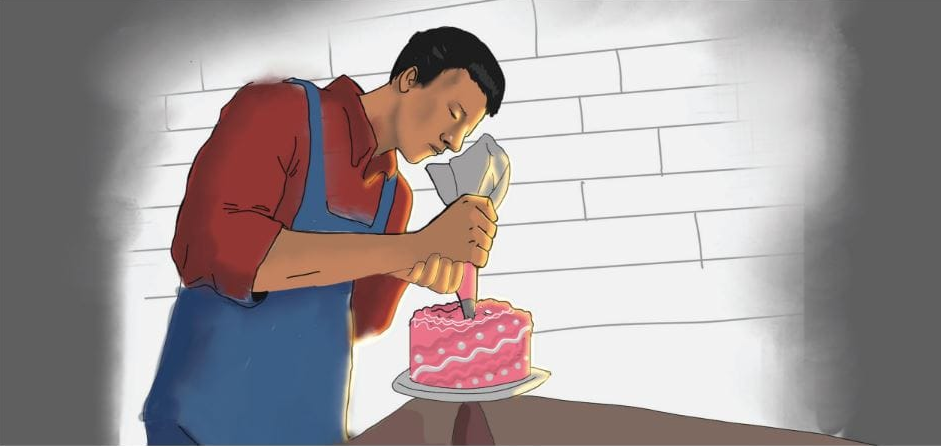
After graduating from high school in Venezuela, Sebastian worked in the fields planting and harvesting crops, including those he cultivated for himself on a small piece of land.
When Venezuela’s economic crisis took hold, however, Sebastian left for Colombia. After crossing the border in Maicao, Sebastian—then 23 years old—settled in La Guajira, where he mounted a small baking operation to finance the rest of his journey to his final destination of Cartagena.
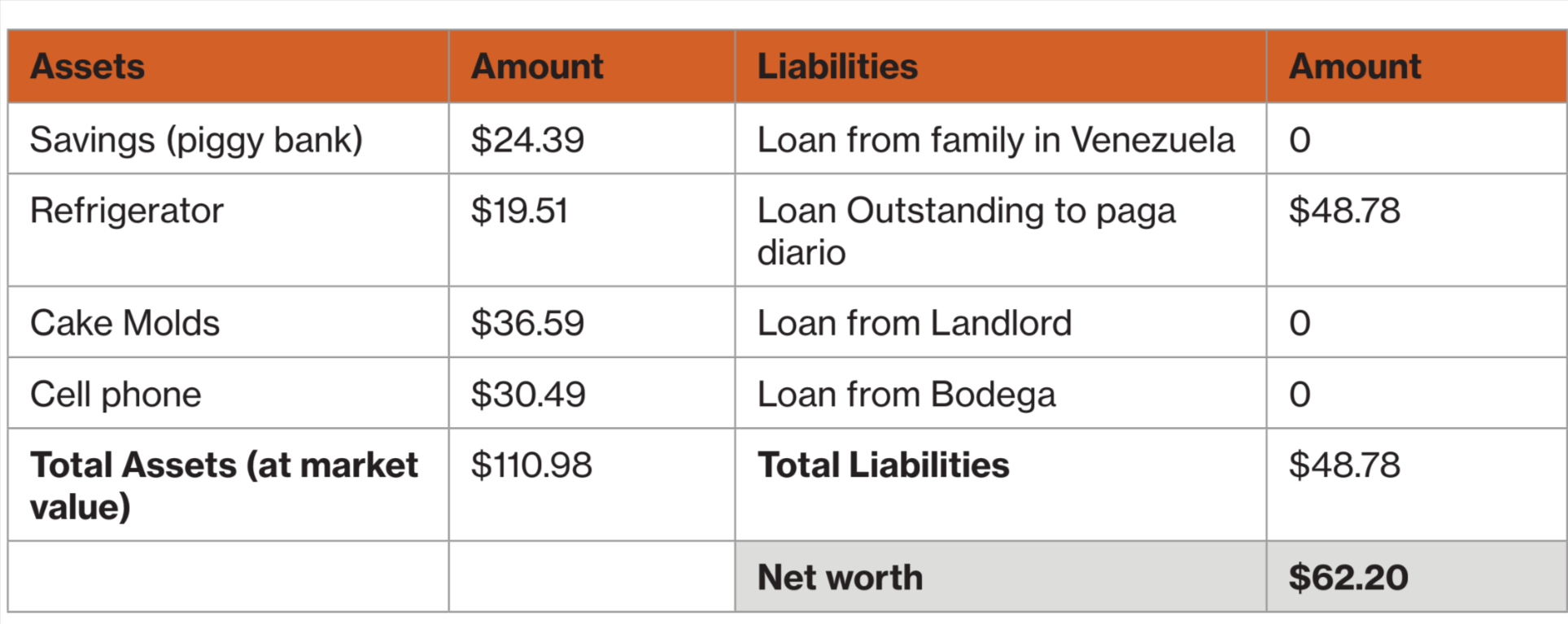
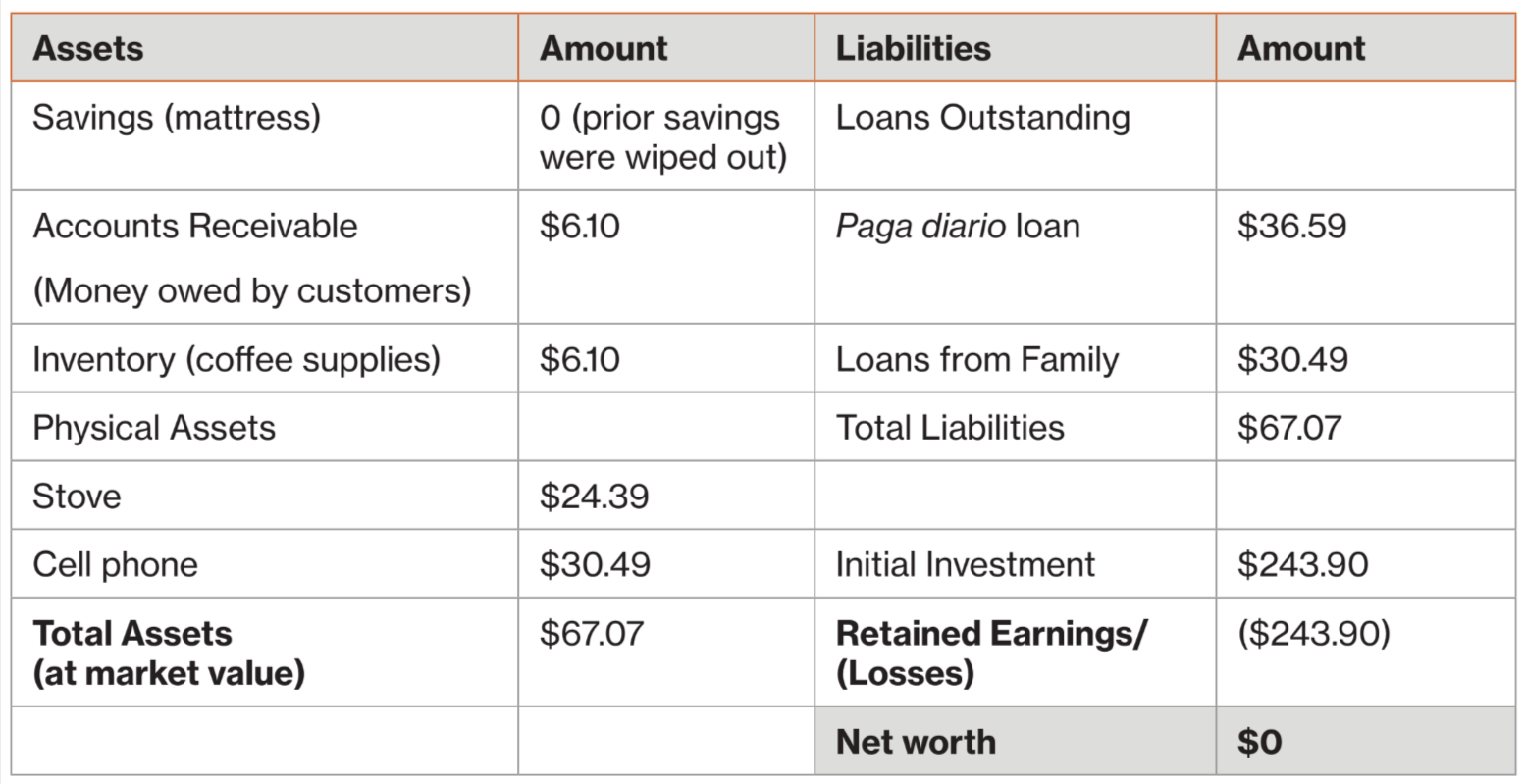
With the last of his funds, Sebastian rented a small room in La Guajira for $58, which was equipped with a simple oven. Despite having no prior experience, save for his second-hand knowledge from his sister, who had studied baking in Venezuela, Sebastian decided that baking was his best chance at generating a consistent income. Having exhausted his funds, Sebastian took out a $24 loan from a paga diario (loan shark) at an interest rate of 20 percent to purchase cake molds and the necessary ingredients.
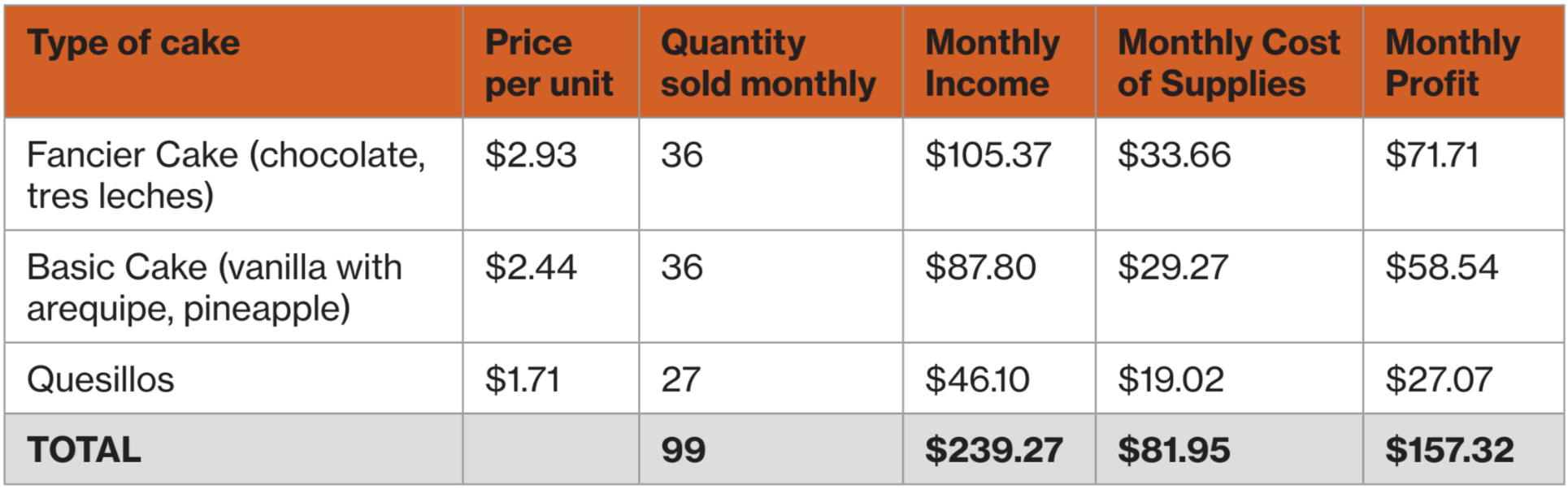
Each day, in La Guajira, he would bake ten cakes, which he initially sold for less than twenty-five cents, before bumping the price to $0.75, which allowed him to earn better margins. Each month, after paying rent and utilities, reinvesting in ingredients, and sending remittances to his family in Venezuela, Sebastian netted a profit of approximately $48.
After three months in La Guajira, Sebastian had saved enough money to purchase a bus ticket to Cartagena, where he joined his sister and began growing his ad hoc side hustle into a true small business. With his sister’s baking knowledge and a larger oven, Sebastian was able to expand both his offerings and his production. Now, each week he bakes 29 cakes, including tres leches, vanilla, arequipe, or pineapple, and quesillos. Prices for each cake range from $1.70–3 depending on the cost of ingredients and the time it takes to produce. He earns nearly $244 in sales each month.
Beyond the quality of Sebastian’s cakes, it is his business savvy that has enabled him to successfully establish a regular clientele. Sebastian’s business model is predicated on credit; each client has five days to pay for the cakes, as Sebastian recognizes that most of his clients are paid on weekends or every fifteen days. To ensure profits, Sebastian complements his credit practice with the precise calculation and tracking of costs. He keeps handwritten notes on exact prices, monthly sales, profits, and margins for each type of cake. He also has a Bancolombia account and debit card, which he uses for business expenditures in hopes of building credit, although Venezuelan migrants cannot currently access bank credit.⁵ Finally, Sebastian went through the process of obtaining a Unique Tax Registry (Registro Único Tributario—RUT)—a document that would allow him to legally register his business with the tax authorities.
Sebastian is a participant in an international non-governmental organization’s program that offers workshops on a breadth of topics, including entrepreneurship, mental health, and discrimination. He is unclear, however, on the program’s criteria for accessing seed capital, vital to growing his business. Without access to affordable credit, Sebastian occasionally relies on high-interest paga diario loans to finance inventory and accounts receivable, though he recognizes that such expensive credit is not sustainable in the long term.
Sebastian's Business Budget6
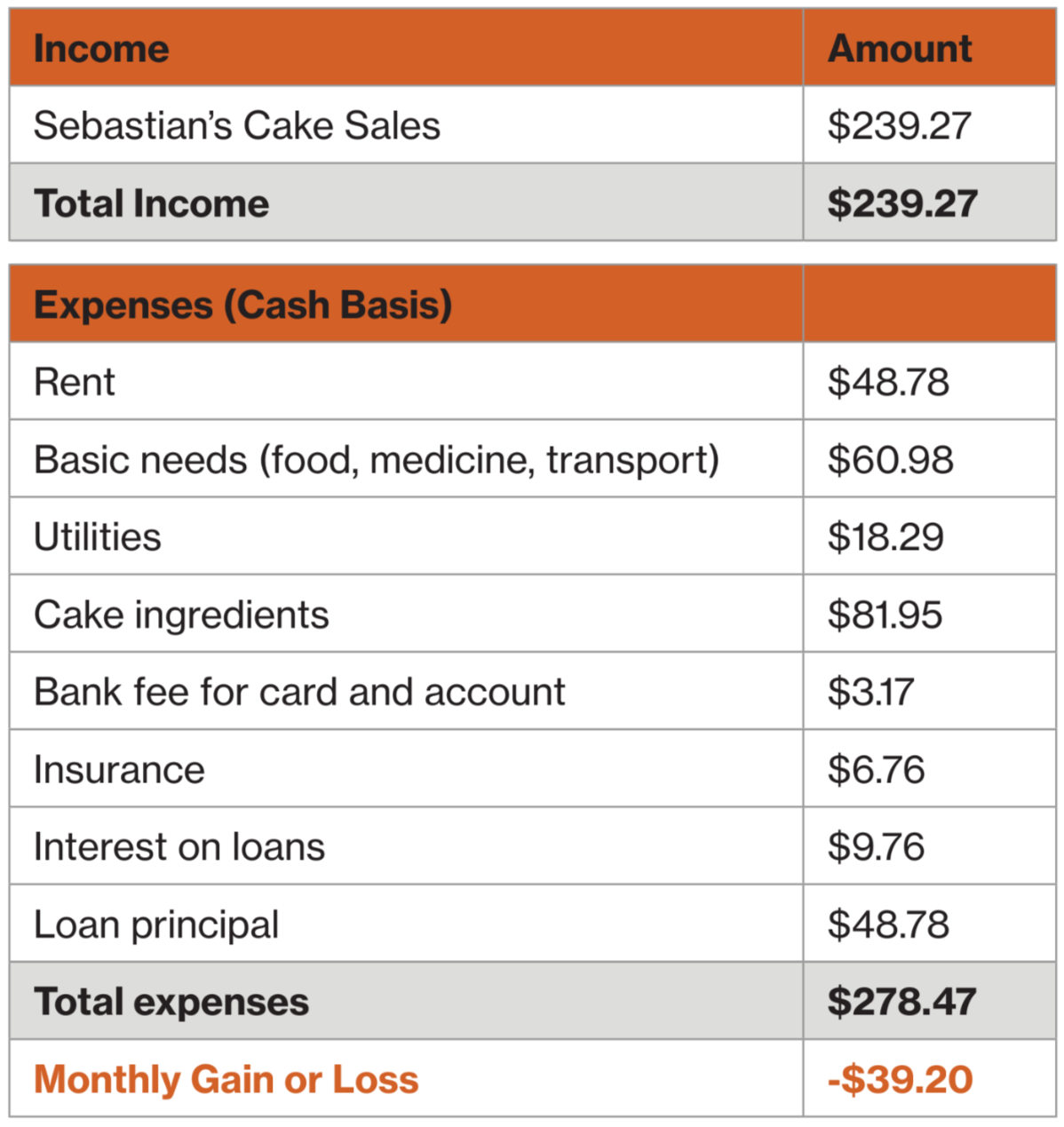
Household budget (approximate)
Messages in this archetype:
- An essential factor for success, even for the most prepared entrepreneurs, is access to affordable credit.
- Successful entrepreneurs are still liable to financial crises, given slim monthly gains.
- Side hustles can be developed into significant sources of income with the potential to be formalized.
- Small business expenditures and profits are inextricably linked to the financial health of their owner.
- Access to information on seed capital and affordable credit is imperative for entrepreneurs in some NGO’s programs.
- Customers owe the entrepreneur money, which is an asset and also a repayment risk.
"The Future Planner" Archetype
Summary
This person strategically plans for the long term, even when struggling financially in the present. This may mean juggling multiple jobs in hopes that one leads to formal employment; leveraging multiple sources of debt to cover quotidian costs or to finance entrepreneurial activities; or proactively navigating bureaucratic processes to obtain legal documents, validate professional credentials, or enroll in educational institutions. This person–and their immediate family–is likely to have, or be in the process of obtaining, PPT, as they recognize its importance.
When thriving...
- They are able to maintain a focus on planning for long-term stability of their livelihoods and financial health.
- Continues to search for means of shoring up financial stability.
- Looks for new employment or educational activities by validating professional credentials, university degrees, or vocational certificates.
- Purchases physical assets or invests in entrepreneurial activities.
When struggling...
- Juggles multiple jobs in hopes that one leads to formal employment.
- Leverages multiple sources of debt to cover quotidian costs or entrepreneurial activities.
- Engages in coping strategies to limit costs or acquire low-cost assets.
Example
Mindset: Forward-thinking and organized
Financial Profile: Stagnant
Status: Waiting on PPT
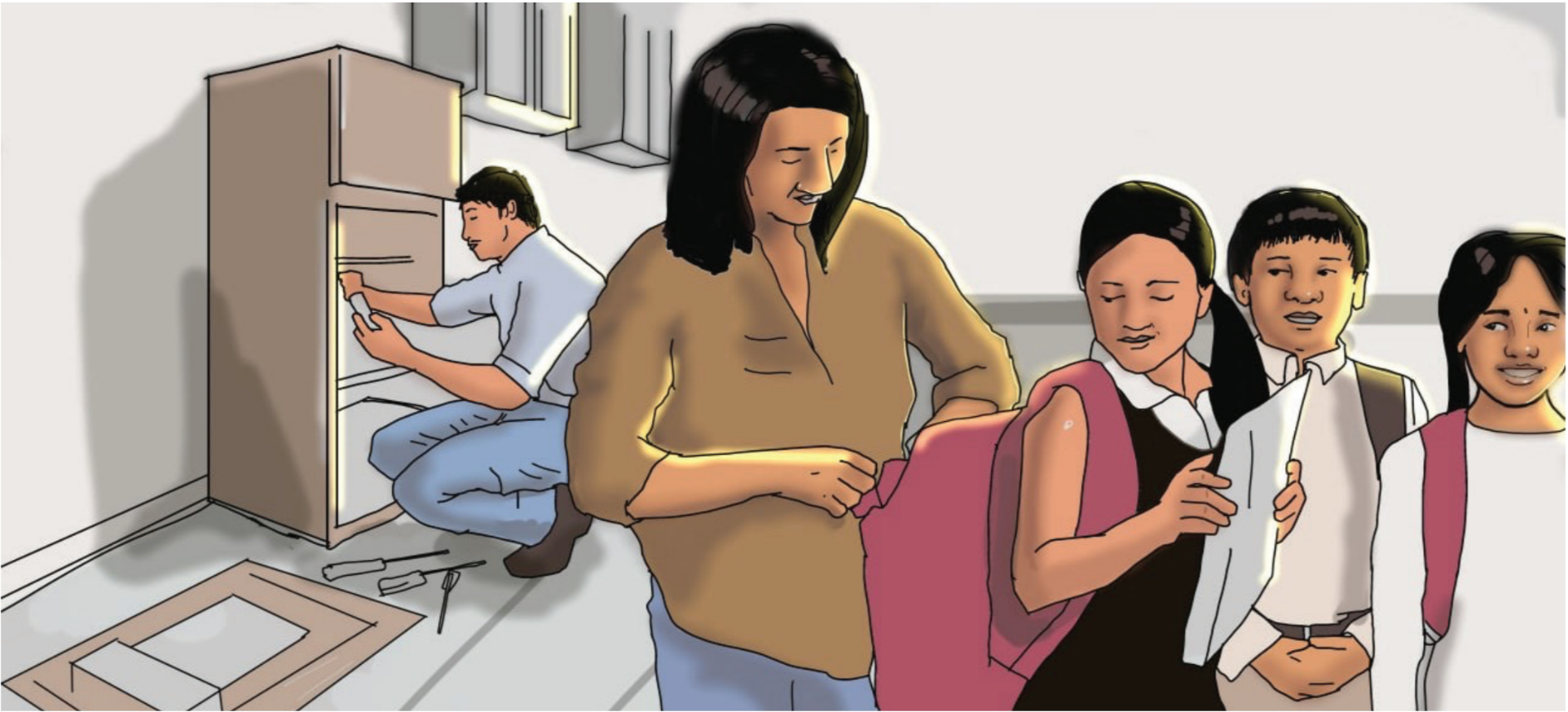
In Venezuela, Luisa sold cosmetics while her husband ran a successful auto repair shop. On weekends, they would drive an hour and a half from their house in Valencia to visit relatives at the beach, giving their three young children a chance to vacation in the sand.
But as business at the auto repair shop decreased in 2017, Luisa received unexpected news.
“My husband and I found out that I was pregnant with our fourth child. Considering how bad the situation was in Venezuela, he decided to put together some money—we sold what things we could—to pay for the journey to Colombia.”
He went alone while she stayed behind with the kids.
Eight months after her husband traveled to Medellín, Luisa and her children left their house in Valencia to join him. Upon arrival, her husband, who, owing to his previous experience, had expected to find work as a mechanic, found himself selling caramels on the street. Initially, the family settled in a small room that cost $2 daily, but when they learned that children were not permitted, they quickly moved to a house for $39 monthly, plus $7 in utilities.
Once Luisa’s fourth child was born, she joined her husband selling caramels, carrying her child with her throughout the day. “We had to start from zero,” Luisa sighed.
“Even with high school degrees and a middle-class life in Venezuela, in Colombia we had nothing.”
Yet, Luisa and her husband, bent on creating opportunities for their children, were willing to do anything to make a start. Collectively, Luisa and her husband earned $10 daily selling caramels. Occasionally, a good Samaritan gifted them groceries or an extra $12, which they would immediately save to make rent.
Eventually, threats from Colombia’s child welfare agency impelled Luisa to give up street sales: “I didn’t know that [welfare employees] would think I was using the baby to make more money. If I had really wanted to use my kids to gain the sympathy of strangers, I wouldn’t have just brought one; I would have brought all four.”
Soon after Luisa got out of street sales, her husband began to work twelve- to fourteen-hour days in any job that he could find—street sweeping, unloading cargo trucks, recycling, and salvaging in a junk yard. Luisa, meanwhile, found work cleaning houses and working at a church on the weekends. Finally, there was enough money coming into the household to cover large monthly expenses. Once the threat of day-to-day survival was lessened, they were able to focus on planning for the future. Luisa registered the entire family for PPT and enrolled the children in school. The family also started to acquire physical assets, like a used gas stove, refrigerator, and television, purchased broken at the junkyard and later fixed by Luisa’s husband.
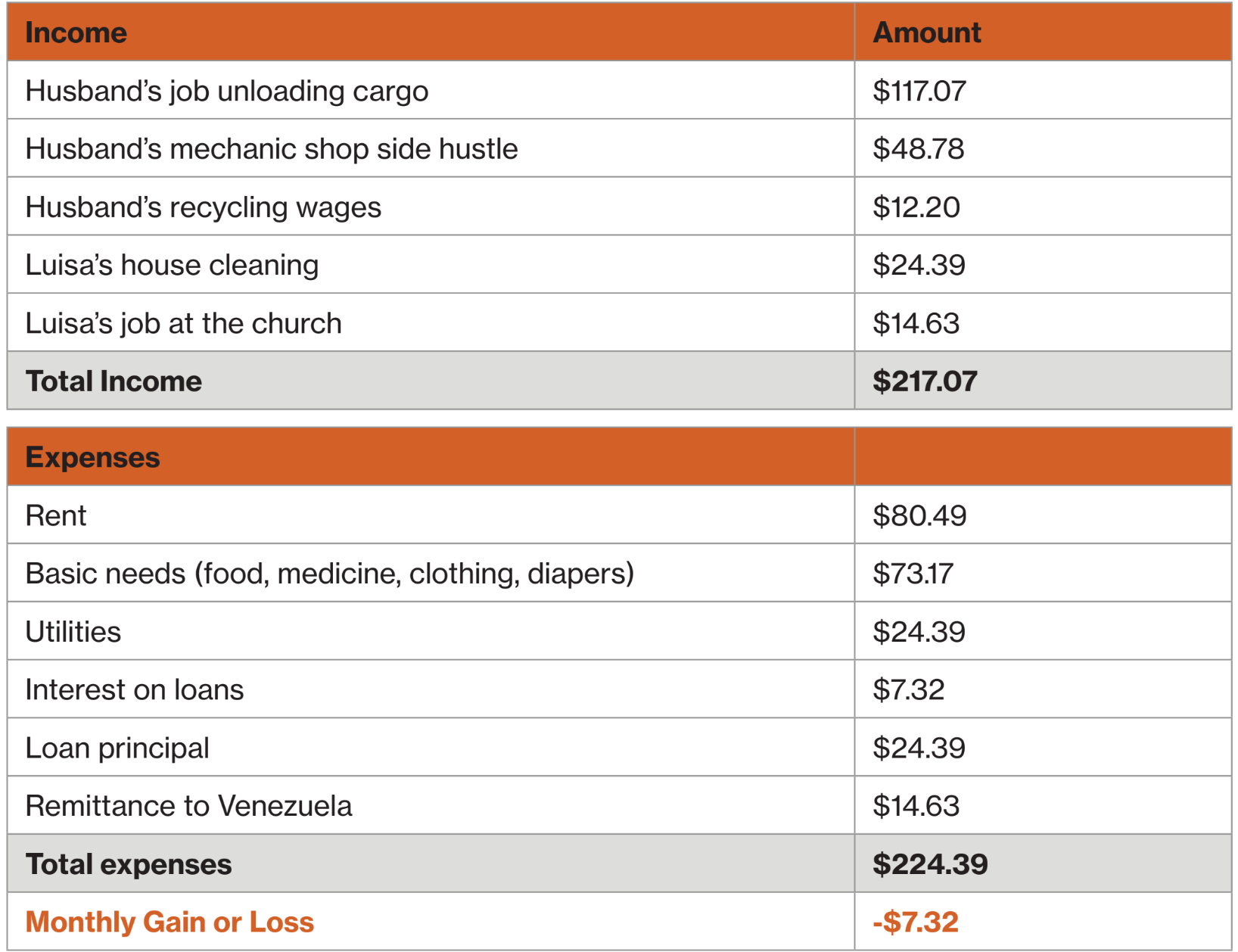
In December 2021, Luisa and her family moved to a new house, where they pay $80 monthly, plus $24 in utilities. Today, in 2022, her husband works four days a week unloading trucks for Postobón, a beverage company. Instead of being paid daily, he earns $29 weekly, as the family decided that it was preferable to receive a lump sum payment. Additionally, he runs an informal repair shop out of their house, where he fixes bicycles and motorcycles. On occasion, he also works at the recycling center near their house. Luisa now has regular clients for her cleaning services and still works at the church, though the Colombian man who hired her has hinted that he might give her job to someone in greater need.
All of Luisa’s children are enrolled in school and after-school activities such as audio-visual media classes, soccer, and English courses. Luisa’s top priority is her children’s well-being, particularly ensuring that they have access to educational opportunities. By diligently managing her family’s PPT process, she hopes that the documentation will arrive in time for her oldest son to apply to a public university in the coming year. Moreover, the residency permit will allow her to enroll the family in Colombia’s national healthcare system, and hopefully help her husband obtain full-time, legal employment from his boss at Postobón.
There are still times, however, when Luisa’s family must negotiate rent extensions with their landlord or rely on high-interest paga diario (loan shark) loans to cover unanticipated costs like those incurred when her middle son had appendicitis. Luisa’s participation in an international non-governmental organization’s savings group has allowed her to save small amounts, but by and large, her family’s financial health and future prospects have been a result of her and her husband’s insatiable search for greater opportunities.
Luisa's Monthly Budget
Income and Expenses (Approximate)7
Messages in this archetype:
- Foresight and planning are necessary but not sufficient conditions for financial health, and certain people are better at this than others.
- Challenges of immediately translting previous expertise into livelihoods in a new country.
- Future planning goes beyond financial planning and is more holistic, such as obtaining PPT, creating learning opportunities for children, and caring for physical health.
- Nobody is immune to legal obstacles (like getting harassed for taking children to work while selling on the streets), nor unanticipated financial crises.
"The Social Capitalist" Archetype
Summary
This person is a gregarious extrovert and excels at making new friends. They instinctively prioritize connections with Colombians rather than other Venezuelans but also maintain extensive social networks with Venezuelan family members and friends. This person often gets “lucky” breaks when people open doors or lend a hand in times of need, but the flip side is that they have less predictability in their livelihood strategies.
When thriving...
- This person builds regular clients or fixed income sources.
- They serve as a hub for information, some of which is directly useful in managing their household finances. For instance, they are the first to find out about charity opportunities.
When struggling...
- This person might turn to people in their social networks when times get tough, though this assistance is not always enough to keep them afloat.
- They might take out a paga diario (loan shark) loan because they are not as fearful of violent reprisals.
Example
Mindset: Hardworking and Hopeful
Financial Profile: Breaking even with Ven Esperanza
Status: Waiting on PPT
Back in Venezuela, Emilia did not have to work at all. Her husband Noel’s income as a mototaxista earned him enough to cover their rent and basic needs. But when the economy spiraled, the couple felt forced to leave, selling the moto to fund their journey to Colombia. Her father also lent her money for the trip.
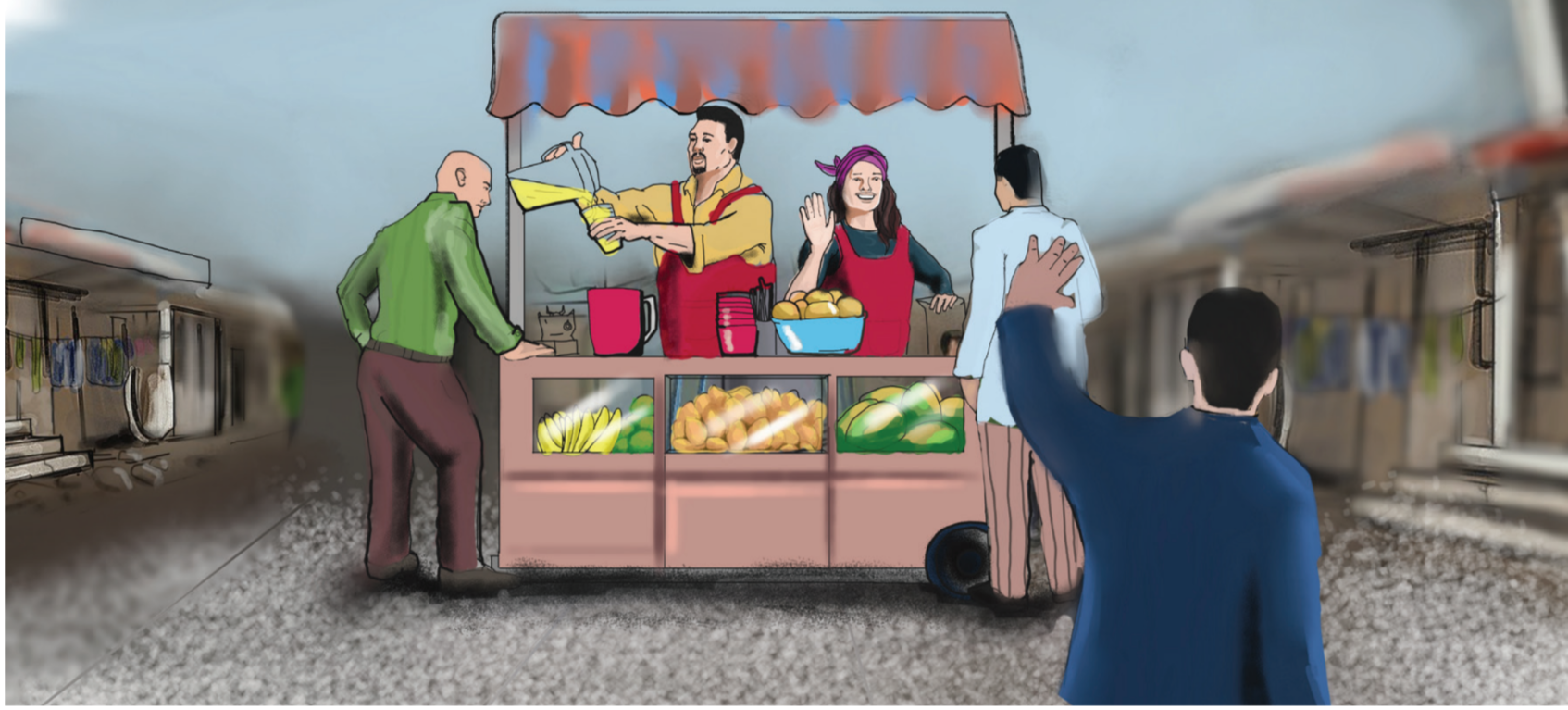
Emilia is proud of what she and her husband were able to accomplish in Venezuela. They arrived in Cartagena with a 10-month-old daughter, and $32 in Emilia’s bra (her favorite place for hiding cash). At first, Emilia and Noel could only earn income selling coffee and juice on the streets. One parent managed the juice stand while the other looked after the baby.
One day, a friend of Noel’s from back in Venezuela connected him to the owner of a hardware store in Cartagena. It was a lucky break. The owner hired Noel on the spot to unload boxes and stock shelves. Today he still works in the store and is paid piecemeal, by the box. Some days he earns nothing; other days he earns up to $24.
Emilia is naturally friendly and outgoing, so she did not mind taking over the juice stand (which was a rough board). She likes meeting new people and always greets them with a welcoming smile. She parks the stand right near the hardware store so she can periodically visit Noel and his coworkers.
Over time, Emilia has developed a regular clientele. Some give her clothing, others food. Some local police officers started to buy from her stand, and now they shield her from the authorities threatening her for bringing her toddler to work. She has developed a robust network of Colombian friends, and though Emilia’s intent is never to profit from social capital, that is frequently the result. Recently, a patron offered Emilia a job working in her bakery, a place she still works at today. Because of her job stability, she is less concerned with obtaining her PPT.
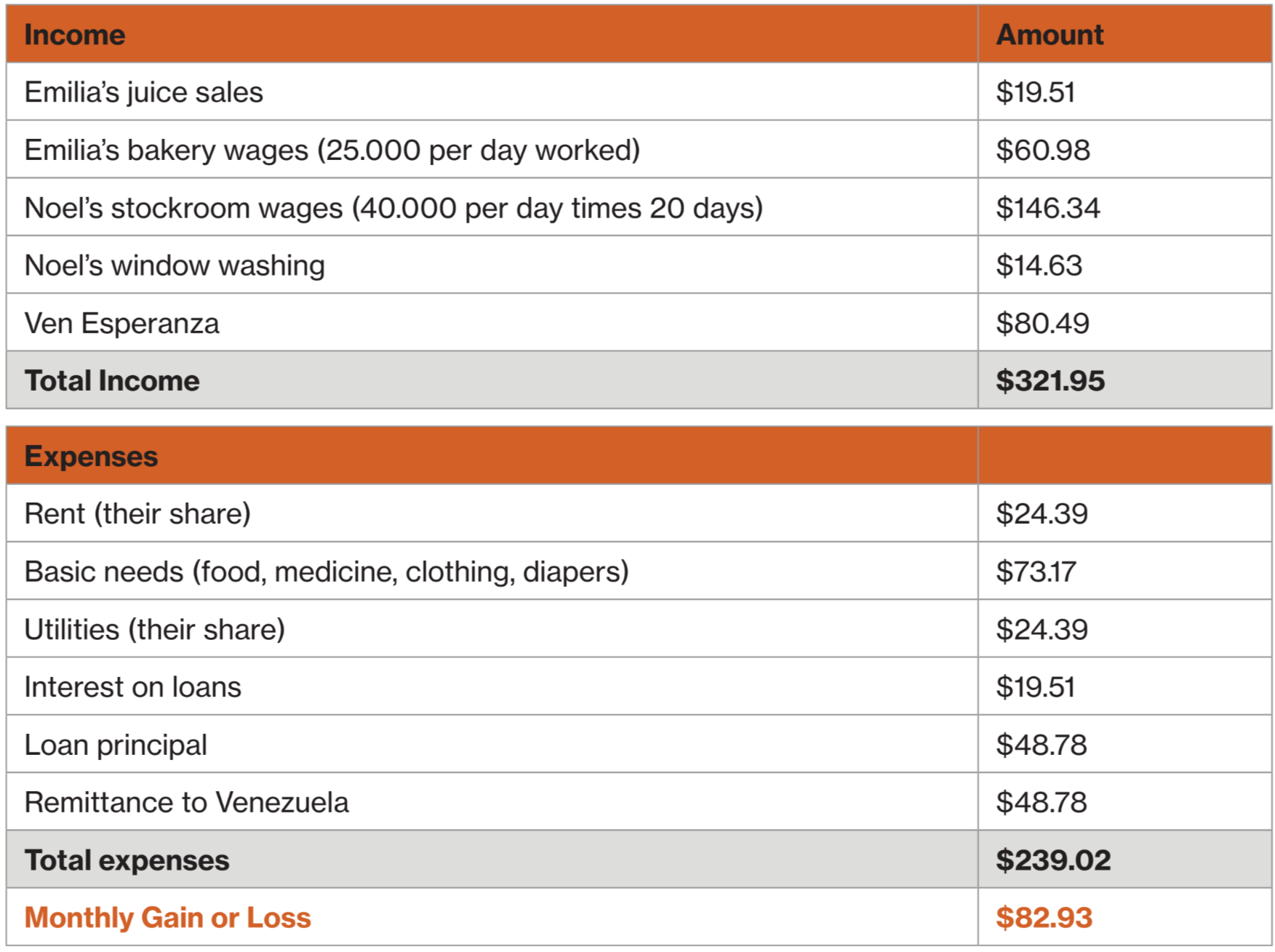
Emilia’s charm earned her a promotion at the bakery where she now directly serves customers at the front of the shop. When she does not have bakery shifts, she sells juice on the street to bring in extra income and to accumulate money to send to an ailing brother in Venezuela. Noel also washes car windows when work is slow in the stockroom.
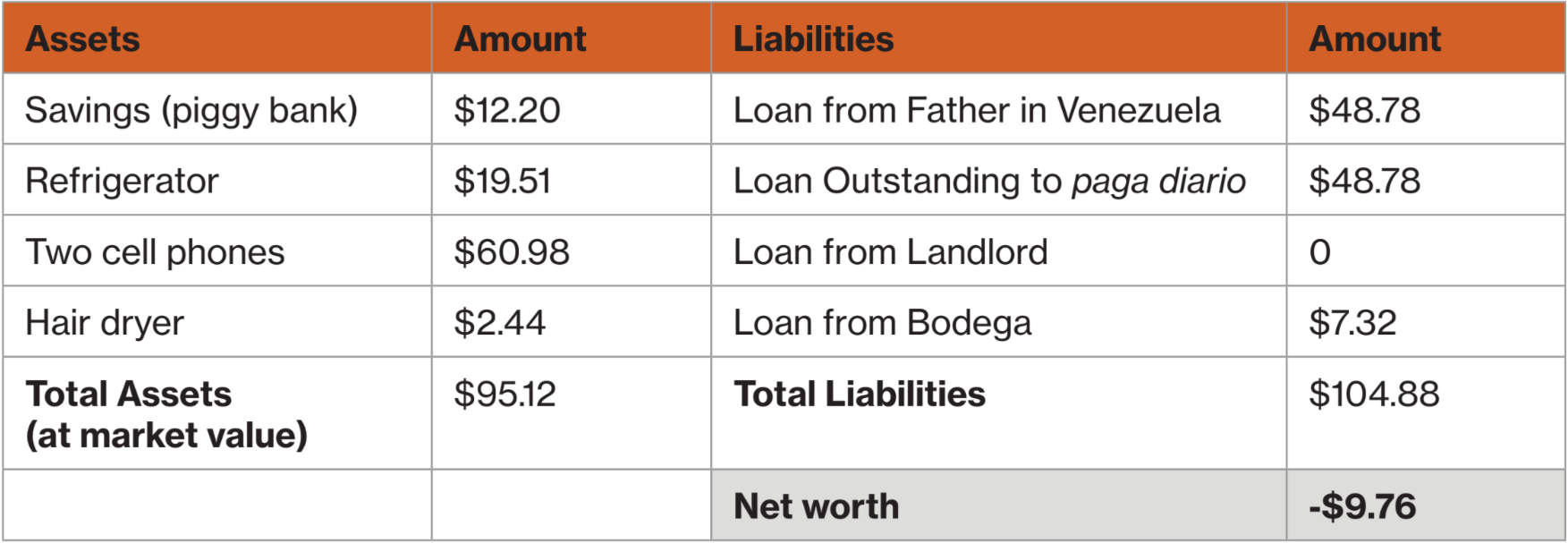
Emilia receives cash from an international non-governmental organization’s program. She has two more months to go before the funds are halted, and she worries greatly about what will happen when the funds run out. So far, she has been able to put the money toward buying a refrigerator in their shared apartment. She said they now need a stove. To fund that, she will borrow from a paga diario at a 40% per month interest rate. In fact, she still owes a paga diario $49 from when she paid for a medical emergency. Plus, she owes the local bodega $7, where, from time to time, she purchases diapers on credit.
Still, she isn’t afraid of the loan sharks because she is friendly with them and believes they would show leniency if push comes to shove.
Emilia participates in one of the NGO's savings groups which she likes, but the costs of getting to the meetings exceed the benefits of participating in the group. She says, “The group members are nice, but I prefer networking with Colombians. They are the ones who have been able to help me by first giving me handouts and then opening doors to find work.” What she would really like to do is help the NGO by connecting participants to important information, skills, and enterprising Colombians.
Emilia's Monthly Budget
Income and Expenses (Approximate)8
Messages in this archetype:
- Once the NGO program’s cash goes away, they are no longer breaking even.
- Social capital from Colombians is highly valued.
- The role of luck and charity.
- Children on the street.
- Mixed attitudes towards loan sharks (some positive).
"The Side Hustler" Archetype
Summary
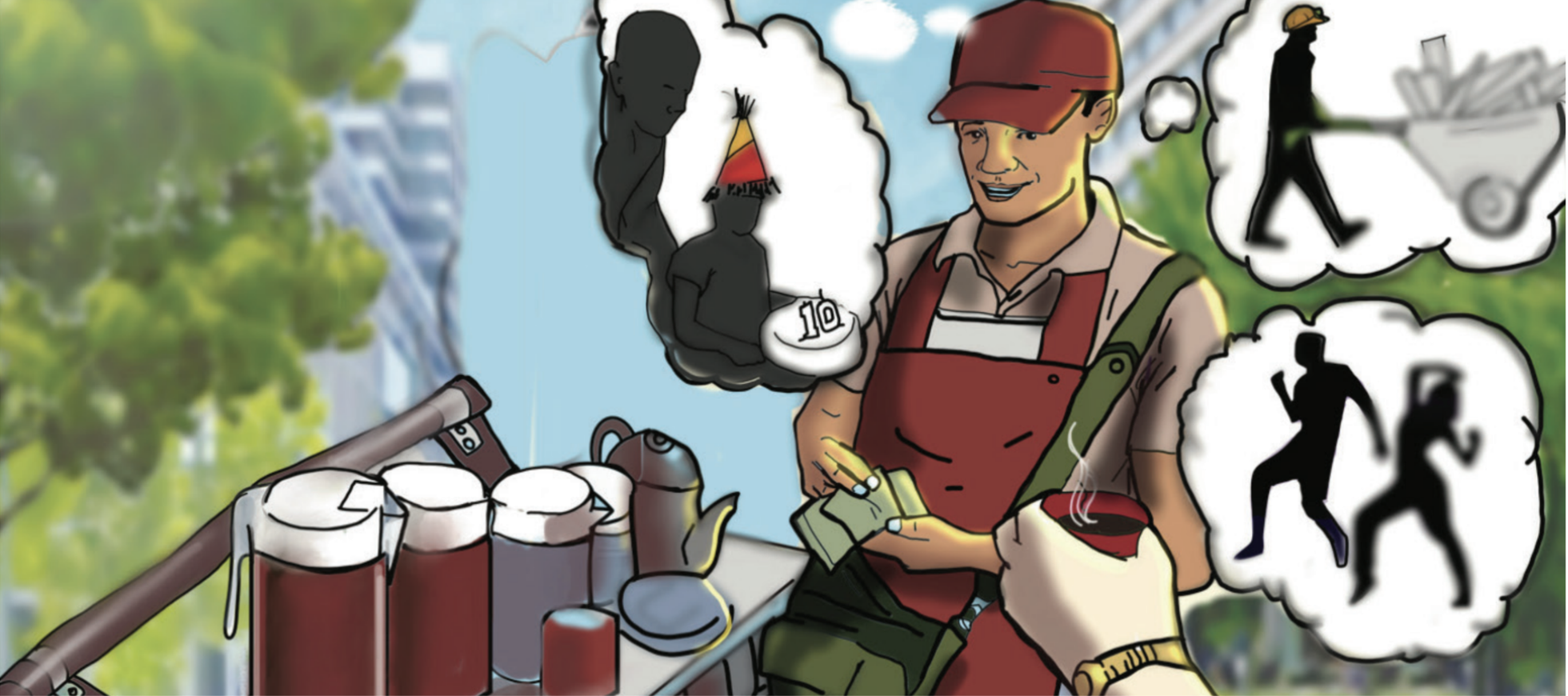
This person juggles multiple part-time jobs at the same time to make ends meet. These diversified income streams help them weather financial storms, particularly when one gig falls through. However, their gigs often tend to be irregular in timing or profitability, contributing to high levels of daily volatility.
When thriving...
- Deftly juggles multiple livelihood streams at once.
- Strategically takes on manageable debt from loan sharks, and pays them back.
- Takes advantage of their most lucrative income streams to save up for big costs, like rent.
- Unanticipated costs are stressful, but not ruinous.
When struggling...
- Side hustles that are irregular in timing or profitability cause instability. For example, construction jobs end when the project is finished, and coffee sales plummet on rainy days.
- When an entire income stream falls through, savings abilities and remittance sending drop off.
- May jump from one short-term side hustle to another, failing to achieve longterm stability.
Example
Mindset: Dynamic and enterprising
Financial Profile: Keeping afloat, with occasional savings opportunities
Status: PPT early-on
In Venezuela, Maikel worked as a primary school teacher and studied environmental education at the university level. Although he hasn’t been able to validate his degree or exercise his profession in Colombia, his resourcefulness and energetic personality have allowed him to constantly stitch together multiple gigs, usually allowing him to get by, month-to-month.
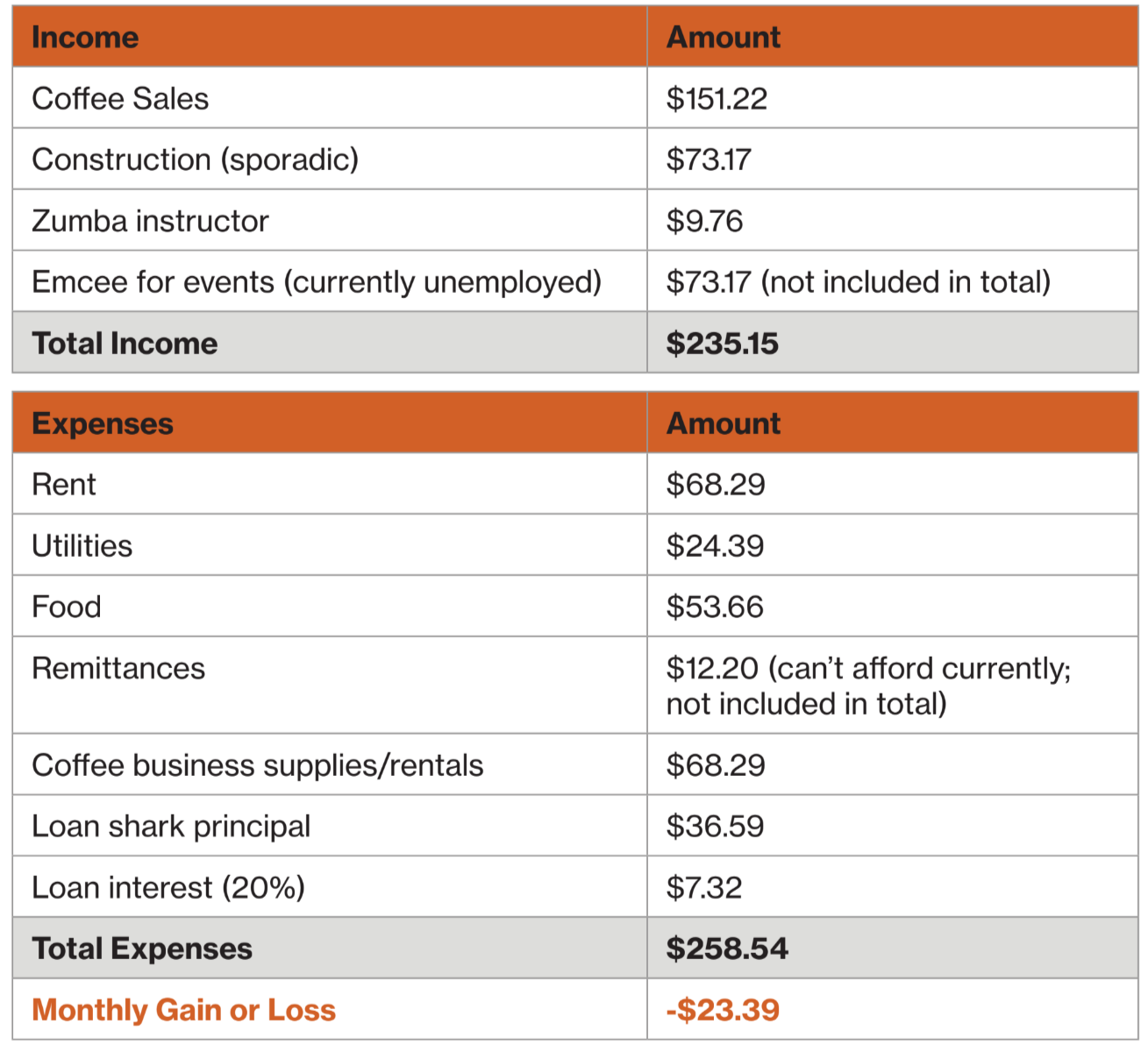
When he arrived in Colombia, he stayed with cousins for a few months and started selling coffee. Eventually, he rented a tiny apartment for $36/month. This year, he moved into a larger place with roommates, thanks to his savings from multiple hustles. On top of coffee sales, he’s picked up jobs in construction, as an emcee, and a Zumba instructor – each with varying frequencies and profitability.
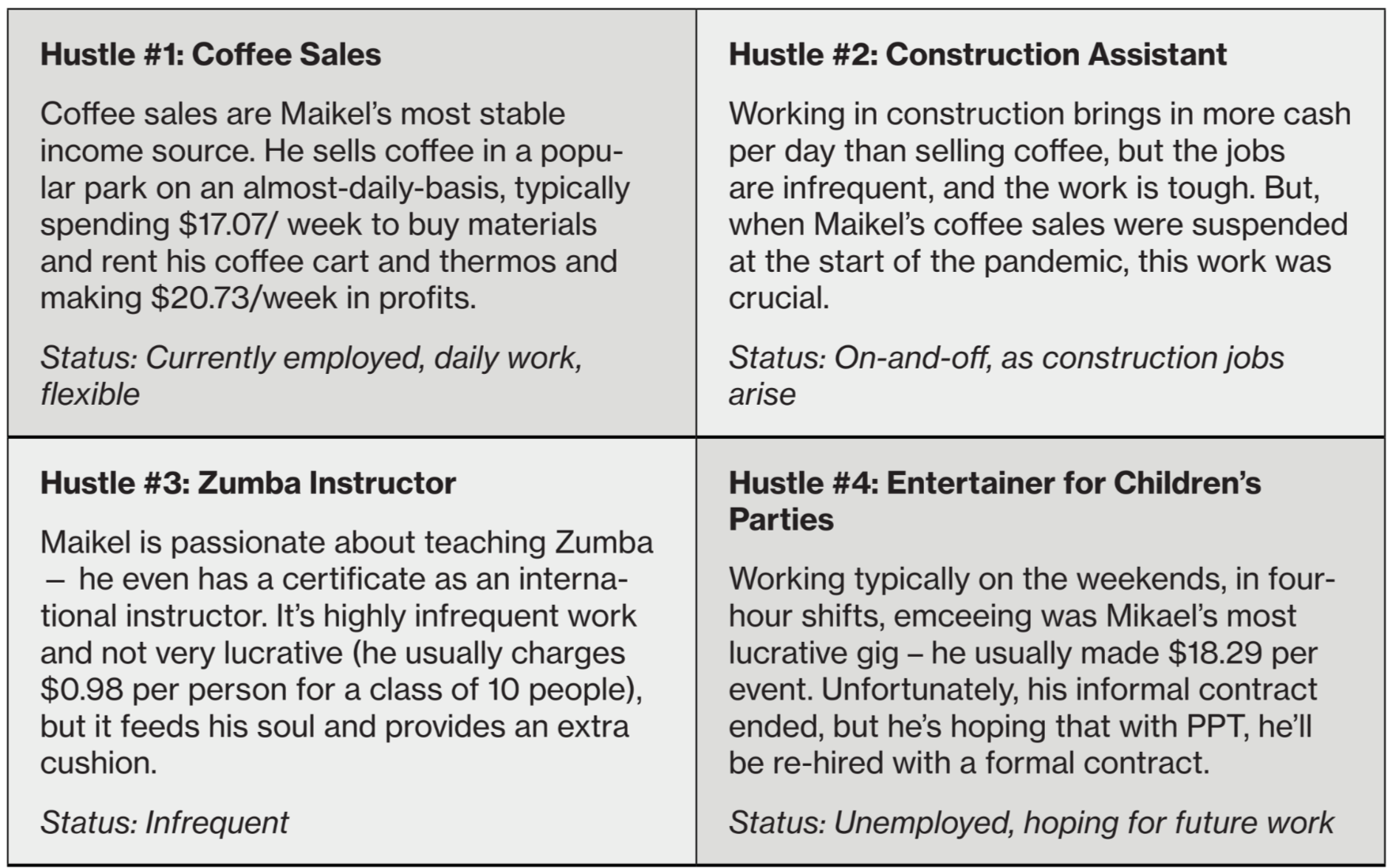
Having multiple income streams has helped Maikel weather some financial storms. At the beginning of the COVID-19 pandemic, street selling and all in-person gatherings were prohibited. Suddenly, three of Maikel’s income streams were wiped out. Fortunately, he was able to continue his construction work throughout that period, just keeping afloat even though things were really tight.
Maikel has learned that not all side hustles are created equal. For example, for a time, he sold internet services. As a solely commission-based job, it was lucrative on good weeks, netting around $29. But there was a catch. To make any money at all, Maikel needed to make a minimum of four sales. So, on bad weeks, even if he made three sales, he didn’t take home a single peso.
Although Maikel’s multiple jobs serve as a buffer, he also takes a big hit when one of them falls through. For example, when his temporary contract as an emcee for children’s events ended, Maikel scrambled to make ends meet. He quickly burned through the $244 in savings that he had been accumulating and had to resort to selling his cellphone and taking out a loan from a loan shark. Although he recognizes the steep, 30% interest rate, he’s found them useful in a pinch – he’s used their services on five occasions.
Maikel is busy juggling multiple jobs, but he also makes time to be an advocate for his LGBTQI+ community. He initially got involved with an international non-governmental organization through his leadership at another organization and continues to volunteer his time to empower other young adults. As an HIV positive man, he applied for PPT status and got his card in just over a few weeks. This has been hugely helpful in accessing state-subsidized health care – critical to getting the antiretrovirals that he needs.
Maikel's Monthly Budget
Income and Expenses (Approximate)9
Messages in this archetype:
- Many people rely on multiple, small gigs rather than a single form of employment; but having at least one semi-constant source of income helps them ride out financial crises.
- Seed capital may be useful in small tranches to prop up side-hustle sales/services and make them more profitable (ex: imagine if Maikel didn’t have to rent his coffee cart and thermos each day!)/.
- People rely on loan sharks to get access to cash in a pinch.
"The Blended Household" Archetype
Summary
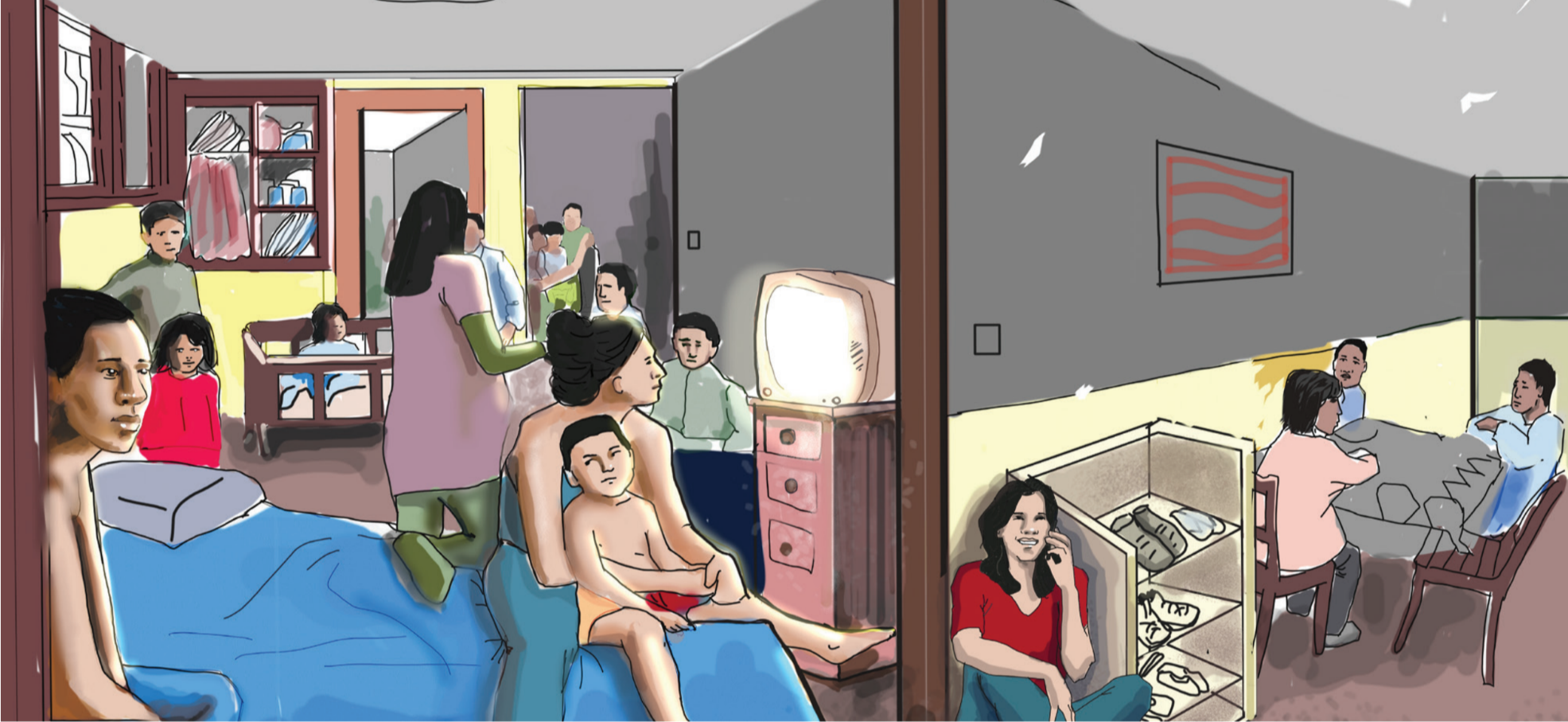
This person has combined forces with other nuclear units in their family. Multiple adults contribute to monthly household income, and they can reduce expenses through splitting costs like rent and utilities. Additional family members can also be a liability when they are another mouth to feed without income streams or if they limit the person’s eligibility for NGO or government assistance.
When thriving...
- Blended household members pool their income with other family member’s income streams.¹⁰
- Together, they split major costs, like rent, and can buy food in bulk. They can access a broader array of credit cumulatively, too. For example, each family member might have an individual cap at the corner store for buying food on credit, which they tap into at different times.
- Together, the family can help each other with childcare needs.
- Having family support can boost migrants’ outlook on the future and mental health.
When struggling...
- Larger, blended households often mean higher costs. This is especially true when a large portion of the family are children. In addition to school-related costs, larger families tend to have more risks, such as medical challenges.
- One, or several, family member’s maladaptive strategies with loan sharks may trap the entire household in cycles of debt.
- Often, blended households’ financial vulnerability isn’t reflected in the classifications and eligibility criteria for humanitarian aid.
Example
Mindset: Positive outlook buttressed by family network
Financial Profile: Broke even with Ven Esperanza, but now just scraping by
Status: Waiting for PPT
As the oldest of ten siblings, Ariely’s family has always meant the world to her. In Venezuela, even after getting married and moving into her own place, she still lived on the same street as her mom, siblings, and nieces and nephews. In her mid-twenties, Ariely worked for several years as a waitress. Her boss invited her to participate in a savings group with other trusted employees at the restaurant. Each week, everyone contributed to the pot, and a different member of the group took the pooled money home. With her savings, Ariely bought her mom and younger siblings a house. Next, she and her husband, Rafa, saved up to buy a motorcycle and a food stand to start their own fast-food business.
At first, their business did well. But, when the Venezuelan economy started tanking, things took a turn for the worse. Someone stole their motorcycle, which they used to deliver food. Eventually, they could no longer afford the inventory for their business.
When one of their young children fell gravely ill, Rafa decided to migrate to Colombia. He arrived in mid-2018 and began working. At first, he crashed on a family friend’s floor.
As soon as he could get together a small sum of money, he found his own apartment. Just a few months later, Ariely followed, with their two young sons. By the time she arrived, Rafa had already made connections with neighbors and a local church, who donated clothes and kitchen supplies to them.
Slowly but surely, Ariely and Rafa worked together to bring their other family members to Colombia. Ariely remembers how painful it was to be separated from her mom, Mamá Anita, for many months. She reminisces on the joy of being reunited. Eventually, they brought all 21 family members to Colombia. Just like in Venezuela, they now live next door, in apartment units in the same building.
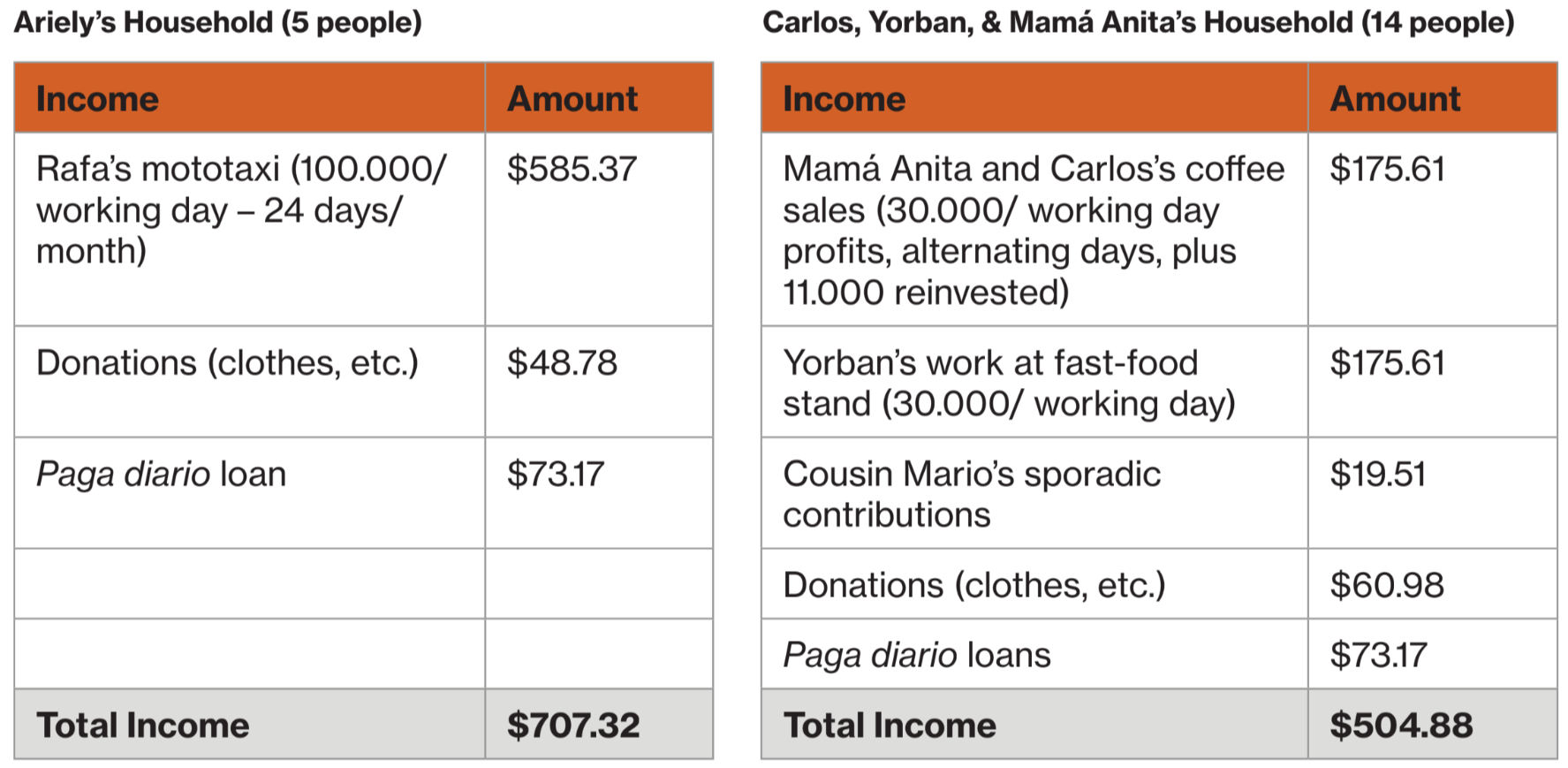
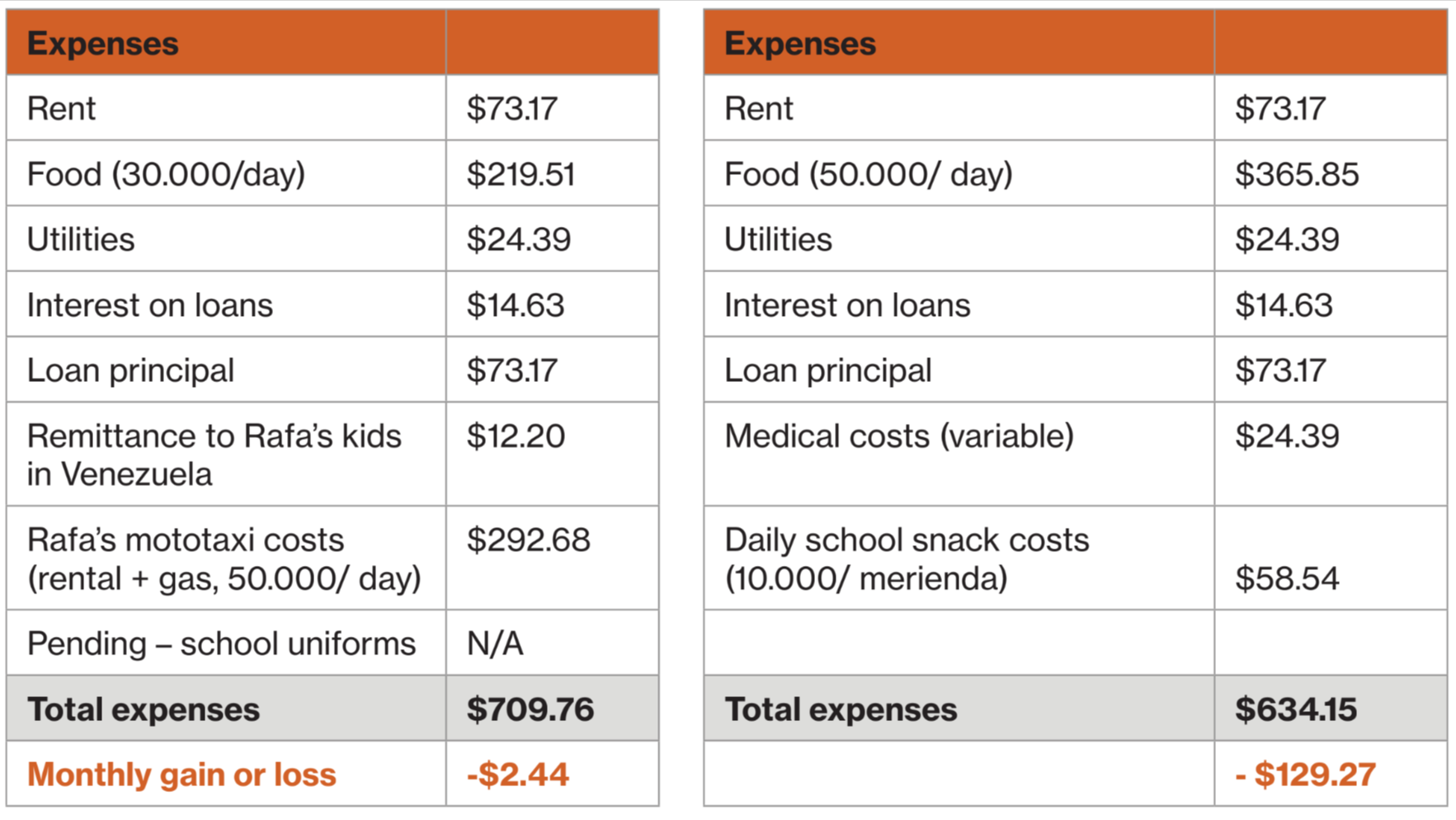
Ariely, Rafa, and their kids make up one “household,” while Mamá Anita, two of Ariely’s younger brothers, Carlos and Yorban, and their partners and children, make up the other “household,” next door. In the beginning, everyone pooled their income and contributed to costs like rent. Over time, as Ariely and Rafa moved into their own nearby unit, they’ve tended to cover their own rent. However, they still often pool resources to buy food on credit – comida fiada – from the corner store. The owner lets everyone buy up to $12 worth of food at a time. It helps that they are such a large family–when Ariely has maxed out her cap, but doesn’t have enough cash on hand for food, another family member with the lowest pending balance buys the food. Ariely explained, “If one person eats, we all eat.”
Although Ariely can split costs with her extended family, things are still tough. Ariely is unemployed and is struggling to find a job. Earlier this year, she received benefits from an international non-governmental organization program, which really helped her to cover basic needs. However, she wasn’t able to use it towards buying assets for a small food stand business, like she had hoped, because she needed it for food and rent. Now, Ariely, her mom, and her younger brother rely on monthly loans from paga diarios (loan sharks) at sky-high 20% interest rates to make rent. At one point, their family was evicted, and they went to a shelter until they found a new apartment. They haven’t been able to save, like Ariely used to do in Venezuela.
Despite these challenges, Ariely’s outlook on the future remains bright – having her family around bolsters her not only economically, but emotionally, too. She believes that her family will “make it” in Colombia because they have one another’s support.
Blended Family's Monthly Budget
Income and Expenses (Approximate)11
Messages in this archetype:
- Blended household members often arrive with a place to land and links to a first job -usually from the family members who went before them.
- Family capital can bolster people’s outlook on the future.
- Blended households often help each other by pooling income towards shared costs, like rent.
- Blended households also tend to have broader access to credit, cumulatively.
- But, blended families can still be highly vulnerable – more mouths to feed and more risks.
- Tip for NGOs: For program eligibility criteria, consider smaller family units that make up part of larger, extended family households (they may be just as financially unstable as if they were living on their own).
"The Barely Scraping By" Archetype
Summary
This person is living day-to-day, and their financial trajectory has stagnated in the survival phase. Because their livelihood strategies barely suffice to make ends meet, they engage in a wide range of coping strategies, both negative and positive.
They are unlikely to have the migration documents and status that would allow them to work formally. These people tend to be single moms, very young couples, recent arrivals, or people who recently experienced trauma. Often, they are living in extreme precarity and are highly food insecure.
When thriving...12
- Their willingness to take on side hustles enables them to cover their daily costs.
- Their coping strategies might include working longer hours, requesting wage advances or bi-weekly pay, or negotiating their rent, perhaps even getting ahead on next week’s costs.
- Their mental health improves with support from their family.
- They often rely on humanitarian assistance combined with other forms of charity.
When struggling...
- They very easily cross the threshold to losing their basic utilities or housing.
- They lean on their social capital to meet their basic daily needs, risking these relationships and possible ostracism.
- They use negative coping strategies like skipping meals or relying on predatory debt, possibly leading to declining health or cyclical debt.
- Their mental health declines, and their outlook on the future becomes bleak.
Mindset: Hopeless and downtrodden
Financial Profile: Unable to afford the bare minimum
Status: Does not have PPT
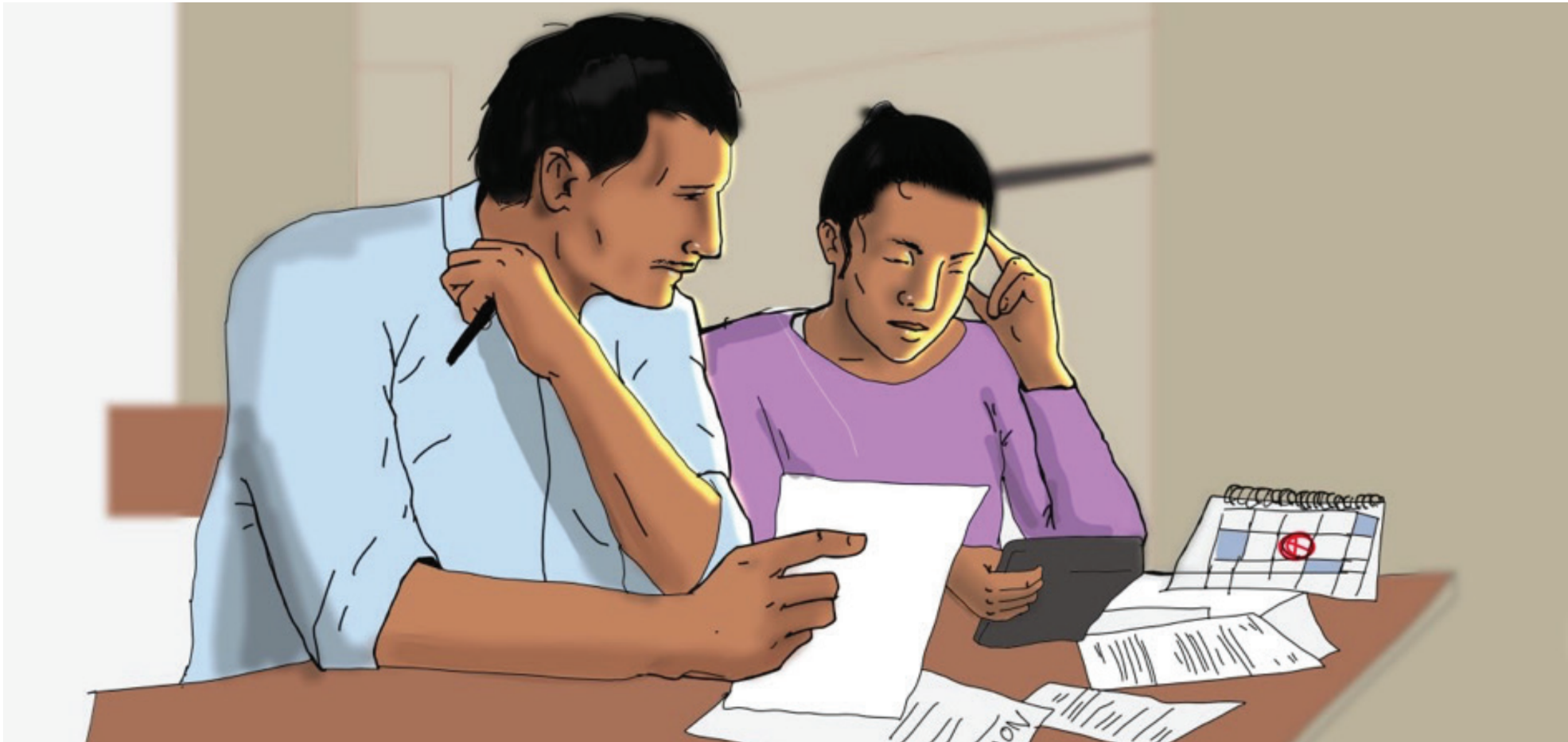
In 2019, young newlyweds Nicolas and Bárbara traveled from Venezuela to Barranquilla, Colombia. Initially, they found it difficult to adapt to Colombia’s culture and their new living conditions. To support them, Nicolas began selling water in their neighborhood but struggled to make rent; He earned less than $5 USD daily, which barely sufficed to cover even the most basic meals.
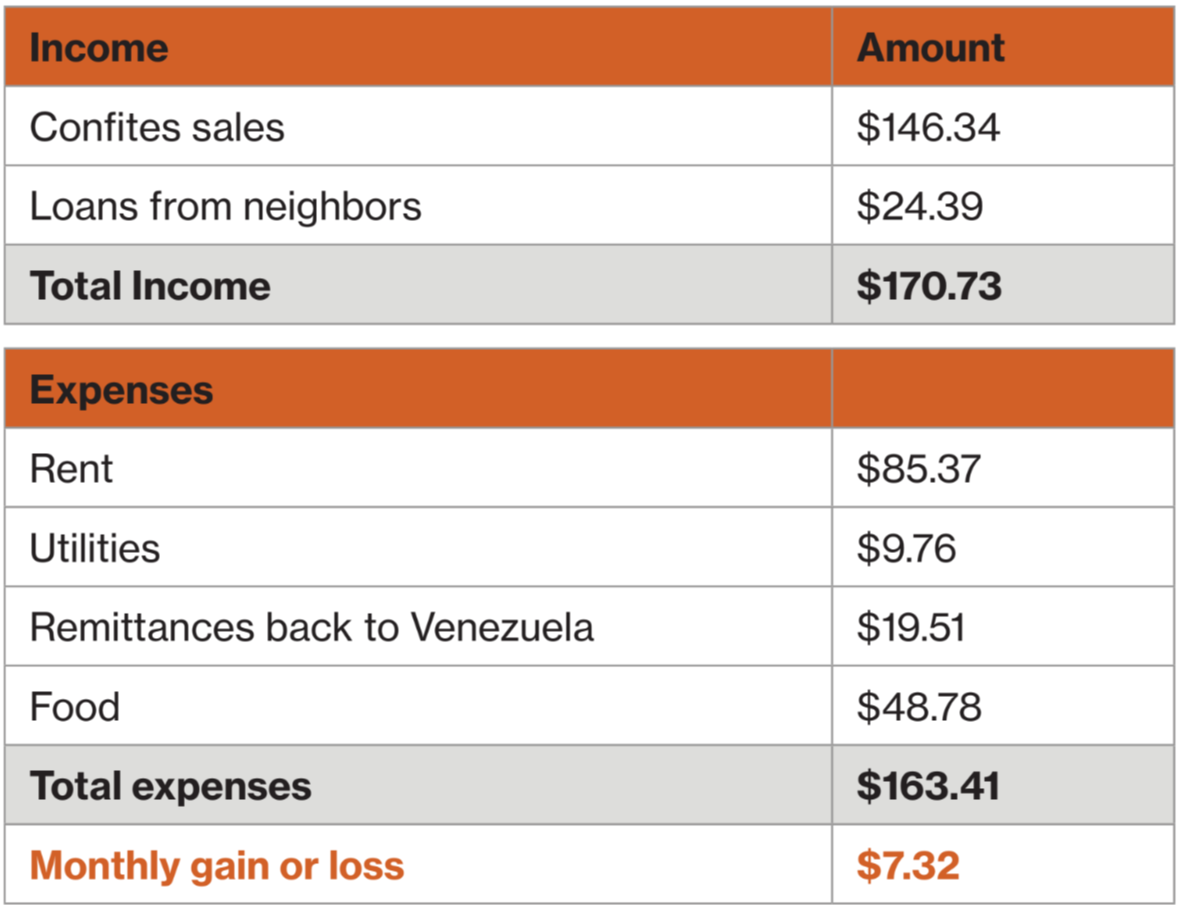
Nicolas and Bárbara relocated to Cartagena a few months later and began selling confites, or candies, door-to-door in nearby neighborhoods. Given the low price of confites, this work amounts to soliciting small charitable donations, typically employed by people with no other option. Selling door-to-door is difficult work. Nicolas and Bárbara regularly face humiliation and poor treatment due to the perception that people engaged in such work are beggars. The couple earn $7 per day on average, the majority of which they diligently save towards rent after purchasing food for the day. Monthly, the couple pays $85 in rent, plus an additional $10 in utilities.
Despite the relatively low cost of utilities, Nicolas and Bárbara struggle monthly to cover the expense, as their top priority is stable housing. After saving all month to pay their rent, the couple is left with minimal funds. In their situation, an unanticipated cost, such as an unforeseen sickness or a family crisis back in Venezuela, can be financially ruinous. When Nicolas and Bárbara are able to cover their monthly expenses, they typically send 12–12–19 in remittances to family in Venezuela. When they struggle to cover costs, however, the couple asks neighbors for loans of $24 to pay for utilities or purchase food, promising to pay back the loan the next month.
Nicolas is also a participant of an international non-governmental organization’s program, an opportunity to pitch his idea for a small food vendor business. As required, he attended all eight educational sessions conducted by the NGO before refining his business concept and presenting it to a panel of judges. Despite their financial struggles, over the past six months, Nicolas and Bárbara managed to save $36 in eager anticipation of investing in his idea. With the financial support of the NGO, the couple hoped that the business would be a chance at a new livelihood, but they have not heard back from the program.
As recent arrivals in Colombia, Nicolas and Bárbara have been forced to adapt to novel circumstances and endure hardship, including violence and discrimination. The trauma from these experiences, in addition to their daily financial difficulties, constrain the couple’s planning horizons. Though Nicolas and Bárbara managed to save in hopes of investing in Nicolas’ business idea, they cannot transition away from selling confites towards more sustainable livelihoods without external support. Nicolas dreams of being an entrepreneur but cannot do it alone.
Other than the NGO’s programs, Nicolas and Bárbara receive little assistance. Nicolas is a newer arrival to Colombia and has had traumatic experiences, all of which are impeding his outlook on life and ability to plan for the future.
Monthly Budget13
Income and Expenses (Approximate)14
Messages in this archetype:
- Those scraping by are too bogged down by their survival mentality and instability to move out of a stagnant financial profile.
- This is a highly vulnerable group that may need both financial and psychological help.
If they are new arrivals, assisting with housing and utilities can determine their longterm financial trajectory. - Many members have successful coping mechanisms. When used correctly, these can adequately manage debt. When used poorly, they can lead to cyclical debt.
- Tip for the NGO: Consider those scraping by for program eligibility criteria, especially with seed capital. While their plan may not be as robust as others, and they may have few financial assets, small investments in this archetype can have an impactful change.
"The Single Mother" Archetype
Summary
This single parent runs a household from a single livelihood stream, often combined with occasional cash gifts from relatives or the father of the children. Childcare and medical expenses are significant barriers to financial health, and these women often face difficulties in securing educational opportunities for their kids. When struggling, childcare often prevents her from finding stable work. When successful, she often depends on family and non-family social capital. Accompaniment through the processes of getting PPT and enrolling in Sisbén can make significant impacts in her household.
When thriving...
- Stable childcare allows her to look for or maintain a regular job.
- A secure yet flexible job permits her to bear sole responsibility for all costs of her household, like rent, utilities, childcare needs, etc. She needs sympathetic and understanding employers for when household emergencies occur, such as kids getting sick at school.
- Social capital helps provide a financial cushion. It enables her to borrow goods, depend on friends or neighbors for childcare, and have a healthy network of individuals she can lean on in emergencies.
- She can rely on the benefits of social programs such as those accessed through PPT. For example, PPT allows participation in Sisbén, which can provide programming to help pay for subsidized daycare or reduce medical costs.
When struggling...
- Single mothers tend to fall behind on all larger costs. This is especially true when they can’t secure appropriate childcare, forcing them to stay home and take care of their children instead of prioritizing a job.
- They may turn to loan sharks that can trap the household in cycles of debt.
Other coping strategies include buying food on credit (comida fiada) or knocking on doors to ask neighbors for help. Single mothers in these debt cycles can move into a status of “barely scraping by.” - Single mothers often have faced moments of trauma. Some become single mothers after leaving abusive relationships.
- Their childcare needs may constrain their options for work, making them more desperate for job opportunities and vulnerable to dangerous situations, exploitation, or unfair pay.
- Mothers in these jobs often tend to make far lower than minimum wage and sometimes less than they pay in daycare expenses.
Example
Mindset: Positive outlook; struggling but motivated by need to take care of children
Financial Profile: Just breaks even with support from an international non-governmental organization’s program; relies heavily on handouts and credits
Status: Waiting for PPT
Thirty-year-old Elena can’t recall ever seeing her parents together. Her parents divorced when she was an infant, and she lived with her mom afterwards. Her mom bought a restaurant, and Elena would help her part-time while she attended school. At seventeen, she finished school and started working fulltime with her mom as her contribution to their household expenses in Venezuela.
After running the restaurant for twelve years, her mother’s chronic back pain got the best of her, and she was forced to sell the restaurant. Elena began working as a cashier at a bakery in town and soon became responsible for making sure all the money was accounted for at the end of the night. One day, she caught another employee stealing money from the cash register and reported it to her boss. In the aftermath of this incident, she was promoted to be the general manager of three bakeries in their town.
Though she loved the role, it added responsibilities for her to juggle on top of increasing household obligations. During this period, she became pregnant and gave birth to a son, who her mother took care of while Elena worked at the bakery. Her sister’s alcoholism worsened to the point that Elena had to take full custody of her young niece. Soon she was managing a household of four, only getting help with childcare from her mother.
When the economic situation in Venezuela reached a boiling point in 2017, Elena lost her job at the bakeries. Suddenly, everyone around her was going through the same experience of scarcity: food shortages, medical shortages, even shortages of basic utilities.
After a few months of looking, she found a new job at a Subway franchise in a mall. It was a stable job, a short commute from her house, and it allowed her to pay rent. Even more importantly, it provided an avenue through which she could use her social capital to buy food for herself, her mother, and her two children at a time when many Venezuelans were standing in line all day to buy a single kilogram of rice. After the weekly delivery truck to the store was unloaded, her boss would let all the employees buy leftover supplies in bulk.
Sadly, neighbors took notice of Elena’s success in securing food for her family and began to target her. She was robbed twice, leaving the family with nothing but the clothes on their backs. The gangs also tried to kidnap her son. Fearing even more violent threats, she used all of her savings to move to Colombia in late 2017 with the two young children.
Elena came to Colombia without any material goods besides one set of clothing and her cheap cellphone. A kind stranger gifted her some clothes and a few kitchen items. Elena considers herself to be a “jack of all trades,” willing to work any job that pays the bills and isn’t prostitution. She began working at a farm outside Medellín, cooking and helping in the fields. She made about $4 daily, but she was able to scrape by because the job provided housing and two meals a day for her, one of which she saved for her kids.
After a year on the farm, Elena got pregnant with her daughter and moved into a lowrent neighborhood in Medellín. She got a job through a friend of a friend cleaning tables at a restaurant, but found it really difficult, particularly what she perceived as the xenophobic attitudes of her co-workers. She recalls how her co-workers would throw her plate of food on the floor during lunch breaks, telling her that Venezuelans are lazy. She was pregnant at this time and suffering vertigo, so when she was eight months along, she decided to quit her job.
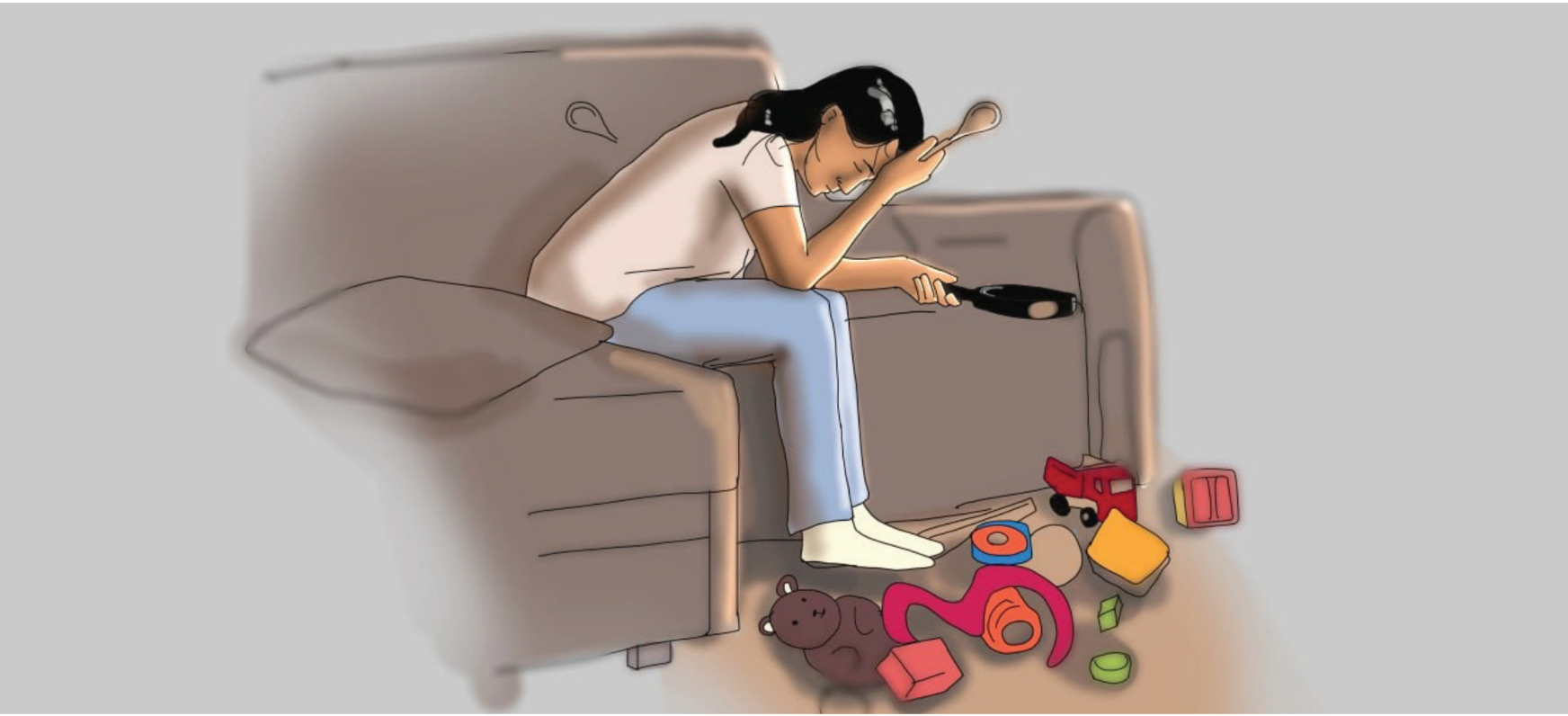
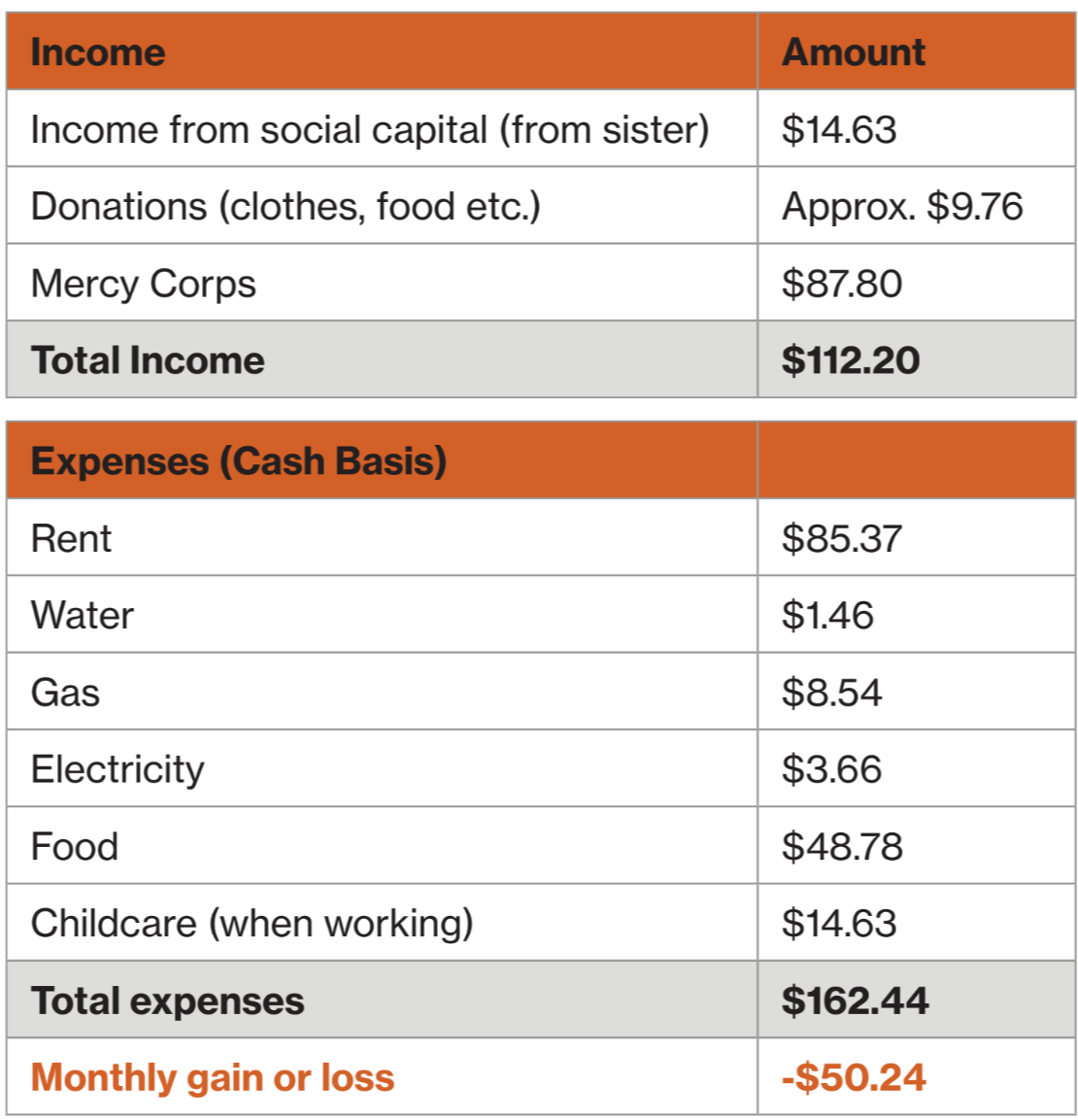
Currently in 2022, Elena is not working. She receives cash assistance from an NGO— $88 monthly—and her sister in Venezuela sends her small amounts, about $15 every few months. Elena’s expenses generally exceed her sources of income, and when these discrepancies build up, she has to get crafty in making ends meet. Each month, she pays approximately $85 in rent, $1.50 for water, $8.50 for gas, $4 in electricity, and weekly food for her family is often $48.
With the money that the NGO gives her, Elena has been able to make rent for the past four months. However, on two occasions she didn’t know what day she would get the transfer, so she had to pay her landlord $2 extra when her rent was late. She also periodically gets $7–$12 in credit from a kind Colombian neighbor. Other neighbors have given her kilos of rice or lentils, which she eventually pays back. The owner of the neighborhood general store doesn’t know her well enough to extend credit. She’s also extremely wary of loan sharks, fearing endless cycles of unpayable debt.
Currently, she says her biggest obstacle besides childcare is getting PPT. Applying for and receiving PPT is a long process. Elena has been waiting almost a year for her documentation to arrive. Initially, filling out the documentation was an obstacle. She had to take time off of her work to fill out the paperwork, some of which she didn’t understand.
She had to find a sitter for her children and pay for transportation to a site to fill out the paperwork. This process can be expensive, especially for a single mother with limited income. However, by obtaining PPT, she would be able to enroll her children in subsidized day care and access medical care for them.
Childcare is another big difficulty for single mothers. Elena searched for someone she could trust, who could be available for flexible childcare hours that matched her work schedule. This has proven extremely difficult; when she was working, her hours stretched from 6 a.m. to 11 p.m., including a one-hour walk each way to work. Eventually, Elena found a neighbor willing to take care of her children. She paid $15 for her three children, not including the three meals the children 5needed to eat while she was at work.
For an extra fee, the sitter would cook for them, but Elena opted to bring the children food. After some time, Elena noticed weight loss in her children and other signs of abuse. Other single mothers have expressed similar patterns and concerns.
Monthly Budget15
Income and Expenses (Approximate)16
Messages in this archetype:
- Single mothers must be diligent about creating social capital in order to meet their daily needs.
- Single mothers would be in a better position to thrive if reliable, safe, and affordable childcare was accessible.
- Single mothers tend to survive because of the necessity to provide for their children.
- Single mothers tend to fall into the “scraping by category” because they lack a stable job, making their financial trajectory stagnant.
- Though single mothers tend to barely scrape by, they are very resilient and often willing to take new jobs.