
Written by: Tamara Bah, Marisol Hernandez, Heather Odell, Shane Sullivan, Rosemary Ventura, Kim Wilson
Table of Contents
Executive Summary
The International Rescue Committee reports that nearly 4 million Venezuelans have crossed into Colombia in search of refuge since 2014.¹
Venezuelan migrants face multifaceted vulnerabilities, including poor access to economic inclusion, formal documentation, and discrimination from Colombians. Migrants are falling off a financial cliff regarding financial health, formal legal documentation, cash assistance, and access to information.
However, some NGOs on the ground are attempting to create programs centered around this financial issue, seeking solutions to help Venezuelans in this period of transition. Following several Venezuelans’ financial journeys as examples, we find that socio-economic status pre-migration and access to information, not time in country, are crucial indicators of financial health. Additionally, Venezuelan migrants prioritize building social capital with Colombians. Financial trajectories continue to vary by context in country.
Introduction
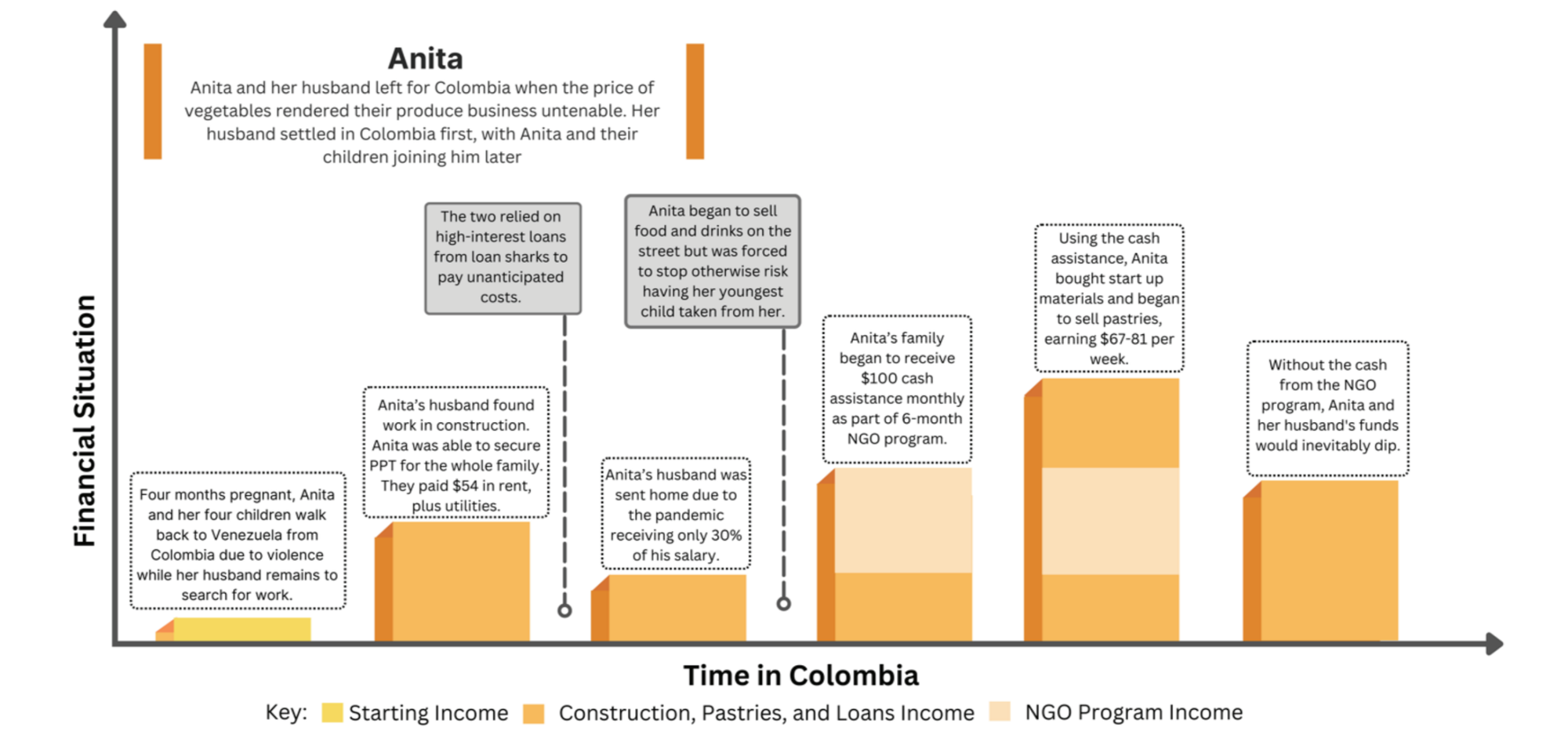
Since moving from Venezuela to Colombia, Anita and her family have faced a series of financial setbacks. Arriving in April 2019, the family successfully established itself just before the onset of the COVID-19 pandemic, which cost Anita’s husband his stable job. Financial assistance from local non-governmental organizations (NGOs) eased the family’s financial burden for a time, but ultimately, the end of the assistance sent Anita and her family over a financial cliff—from which they are still recovering.
Anita is hopeful that her husband will soon obtain a new construction contract. Her dream, she said with a slight smile, is to purchase a small house up in the hills and start a bakery. Restarting the baking business, she estimated, would only require $54 USD of investment.² However, without access to seed capital or affordable credit, the family cannot pull the money together with their current wages.
Anita’s story is similar to many other Venezuelan refugees’ and migrants’ financial and economic journeys, which we delve into below. Migrants are falling off a financial cliff regarding financial health, formal legal documentation, cash assistance, and access to information. Many of these Venezuelan migrants have dreams that are just out of reach for families working to recover from financial struggles.
Background
As of March 5, 2021, an estimated 5.5 million people have fled Venezuela – the majority of whom left the country in 2015.³ According to the Office of the United Nations’ High Commissioner for Refugees (UNHCR), most Venezuelan migrants are considered a “refugee-like population,” requiring international protection. There are an estimated 1.7 million Venezuelan migrants in Colombia (of which 49 percent are women),⁴ accounting for approximately 32 percent of all Venezuelan migrants in Latin America. Between 2015 and 2021, the migrant population in Colombia grew tenfold. Venezuelan migrants are, on average, younger than the Colombian population.
The approval of the Temporary Protection Status (TPS) in March 2021—supported by The World Bank Group’s (WBG) Colombia: Social and Economic Integration of Migrants Development Policy Financing (DPF) Operation—extended temporary protection status for Venezuelan migrants for 10 years. Venezuelan migrants face multifaceted vulnerabilities, including poor access to economic inclusion, formal documentation, and discrimination from Colombians.
Venezuelan migrants are also inherently more socioeconomically vulnerable to climate change impacts than other Colombian residents due to poverty rates, job informality, unsafe housing conditions, food insecurity, lack of savings, and limited access to basic services.⁵
Our Research
This essay is the result of 120 interviews with Venezuelan and Colombian people in Colombia from March to June 2022. In most cases, our research group conducted interviews in the mother tongues of participants and utilized a conversational approach. Some interviews took place over 90 minutes or a series of easy dialogues occurring over several days. Our goal was to understand and investigate the financial lives of Venezuelan migrants and refugees in Cartagena and Medellin. Through a financial health framework,⁶ the financial lives of Venezuelan refugees were better understood. Our team also undertook transect walks to chat informally with landlords, bodega owners, and street sellers. In understanding the specific strategies of adjustment and integration, we can collaborate more effectively with donors, policymakers, humanitarian organizations, and multilateral banking institutions on practical policy and operational programming.
Our key insights from the financial biographies are:
- Obtaining Permission for Temporary Protection (PPT) is vital for financial health, but insufficient for refugee economic and social integration;
- Venezuelan participants were not financially healthy;
- More communication about eligibility criteria for cash assistance and seed capital was in great demand, and the seed capital offerings could be structured more strategically;
- The nature and magnitude of entrepreneurial activities vary, as does the size and pacing of the seed capital needed to catalyze them.
The stories of Anita, Sofia, Maikel, Rosy, Lisbeth, Barbra, Marco, Jaime, and Gloria highlight the necessity of employing a human-centered approach to understand the economic and financial difficulties faced by Venezuelan refugees and migrants in Colombia.⁷
Insight 1:
Obtaining PPT is necessary but insufficient for refugee economic and social integration. To realize PPT’s full potential, more accompaniment is needed.
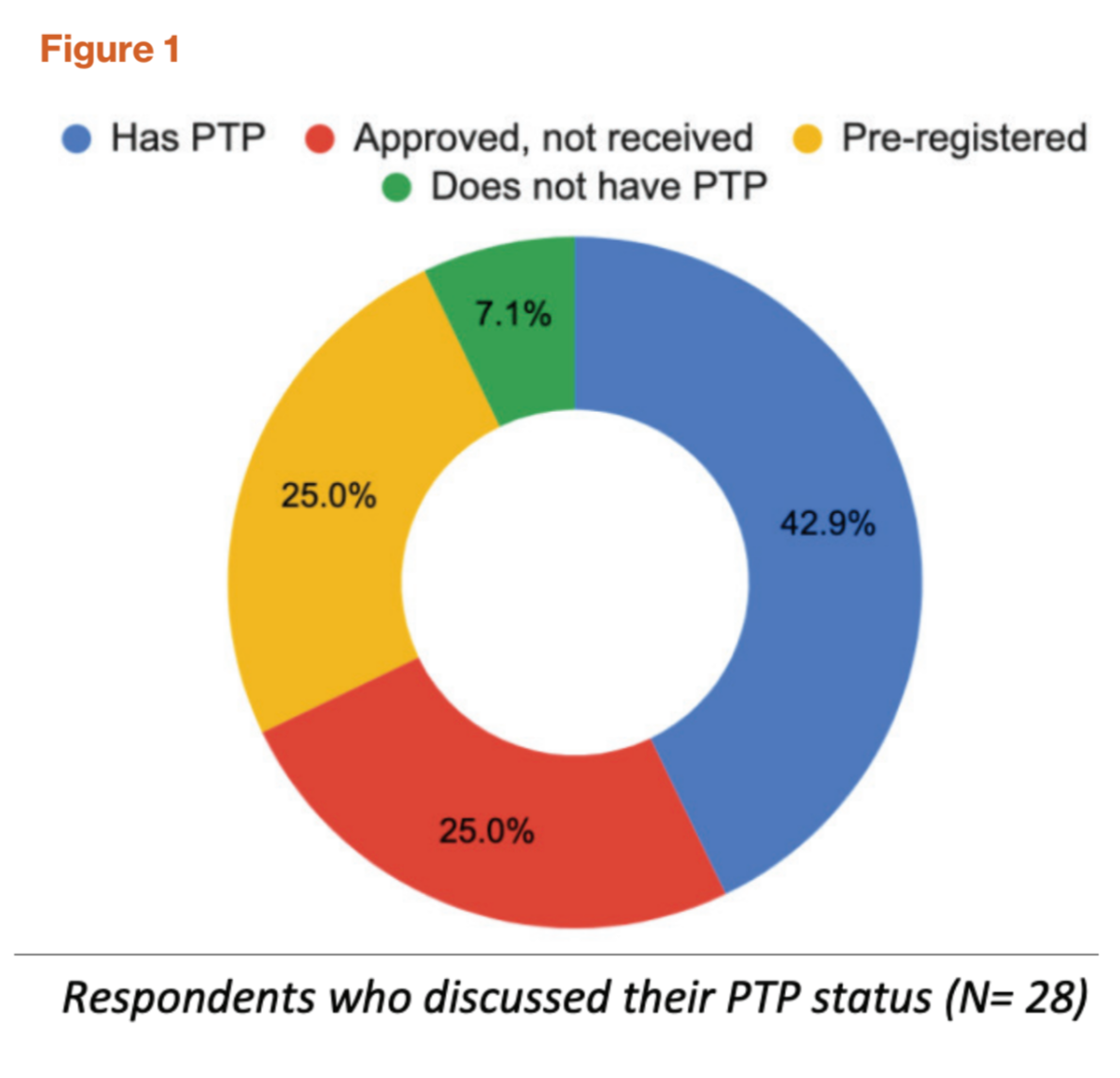
Permission for Temporary Protection (PPT) can be a game-changer for many participants, not merely because it provides a regular migratory status, but because it opens the door to a host of potential benefits. Through our qualitative analysis, we found that 25% have been approved for a PPT but have not received it (fig. 1). With PPT status, migrants are legally eligible for formal employment, state-subsidized healthcare, and certain financial services. From our interviews, we found that migrants facing medical emergencies or living with chronic illnesses stand to benefit the most from the ripple effects of PPT. Getting enrolled in an Entidadas Promotoras de Salud (EPS) (e.g., public health insurance mandatory for every Colombian resident) as a result of their PPT status can significantly reduce medical costs, as well as the long-term health and income-earning impacts of foregoing care.
Other significant advantages that PPT confers are access to formal jobs (although few people we spoke with had yet been able to land such a job as a result of PPT), the ability to enroll in a Colombian university, and the ability to open a bank account. We also learned that obtaining credit from a bank was not available until migrants had established a credit history. Fortunately, with the support of local NGOs, most participants have started the process of getting their PPT cards. Below, we highlight Sofia’s story, a woman whowas able to attain a PPT and proof of graduation through the help of her sister.
Sofia’s Story: The Value of Accompaniment Through the PPT and After
Sofia is a young woman supporting her mother, who has monthly medical costs of about $380.50 USD. Sofia’s mother is not eligible for Colombia’s national health care system, which would make her medication free of charge, as she has not yet received her PPT. Sofia, on the other hand, has PPT and is enrolled in night classes to complete her high school education in Colombia. Although she graduated from high school in Venezuela, she is required to complete her final two years in Colombia in order to apply to the university in Cartagena, where she hopes to study biochemical engineering and law. To matriculate in night school, Sofia needed a PPT as well as proof of graduation in Venezuela. At first, this proof was impossible to obtain, but Casa Afirmativa, a local NGO, and Sofia’s sister in Venezuela, accompanied her through the process of obtaining her Venezuelan diploma.
Our participants who already had PPT at the time of interviews were often positive deviants. They tended to be skilled at navigating byzantine processes or were accompanied through the process by a friend, family member, or NGO.
Many of them went on to take the Sisbén survey and subsequently enroll in public benefits, such as health coverage through an Empresa Promotora de Salud or SENA job certifications. Like Sofia’s mom, many participants are still in the process of getting PPT for health coverage benefits. Many spoke of the value of getting themselves and family members enrolled in Sisbén and an EPS. Two women explained how they are currently postponing necessary medical treatments for family members until their PPT cards arrive.
Insight 2:
In Colombia, financial health is at best elusive for Venezuelan refugees and at worst, nonexistent.
Multiple Side-Hustles and the Spectrum of Formality
Diversified income streams provide a significant form of security against shocks, including COVID-19. For example, when it rains, some livelihood activities are suspended (e.g., car window washing at intersections or street selling).
Diversification of income streams helps people to hedge their bets for future opportunities. However, this process requires huge measures of time and energy. To illustrate, maintaining multiple side hustles often demands continuous effort to balance competing schedules and, at times, is an inefficient strategy. Creating a portfolio of income sources where no single source is focused upon may mean that the entrepreneur cannot build a learning curve in a particular activity or enjoy economies of scale.
Maikel’s Story: Just Try to Knock Me Down – I’ll Get Up Again
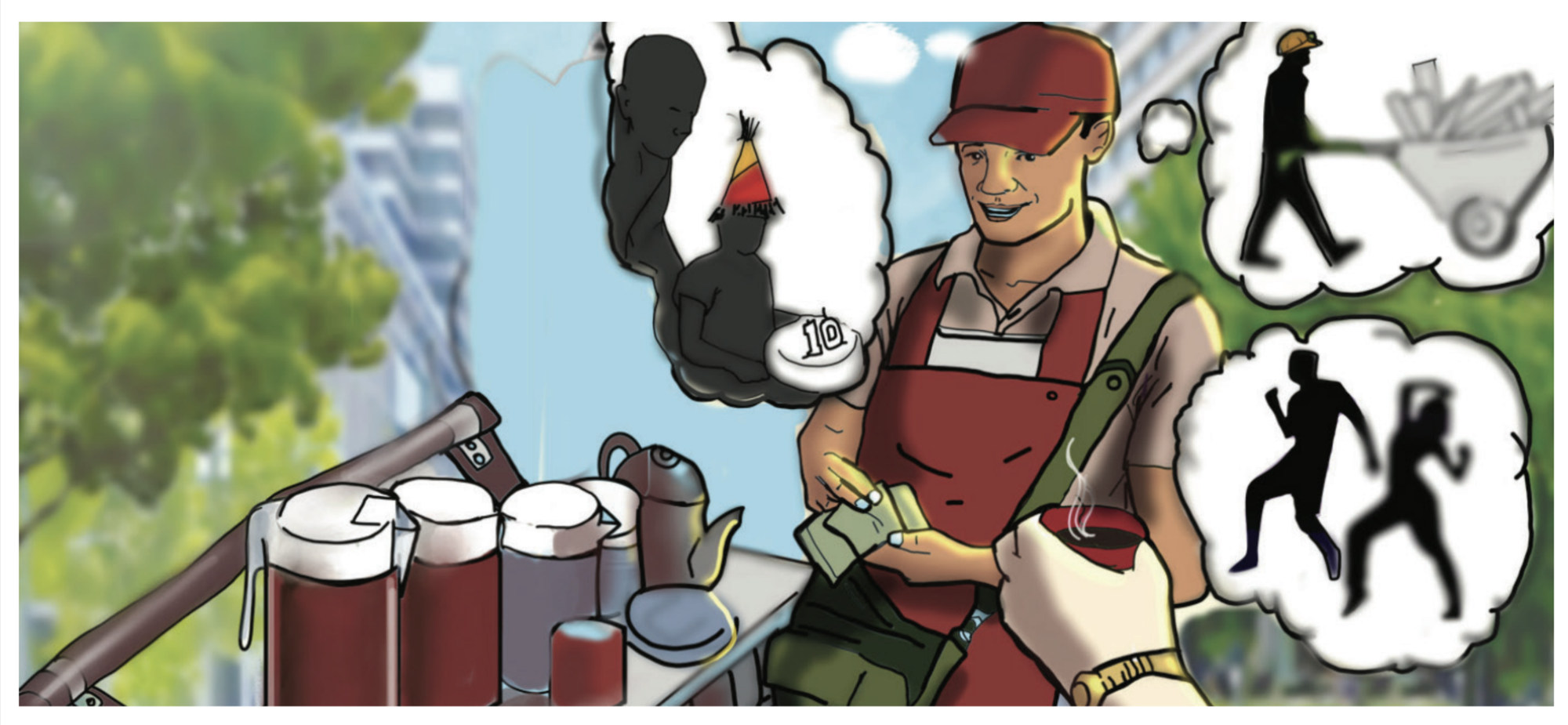
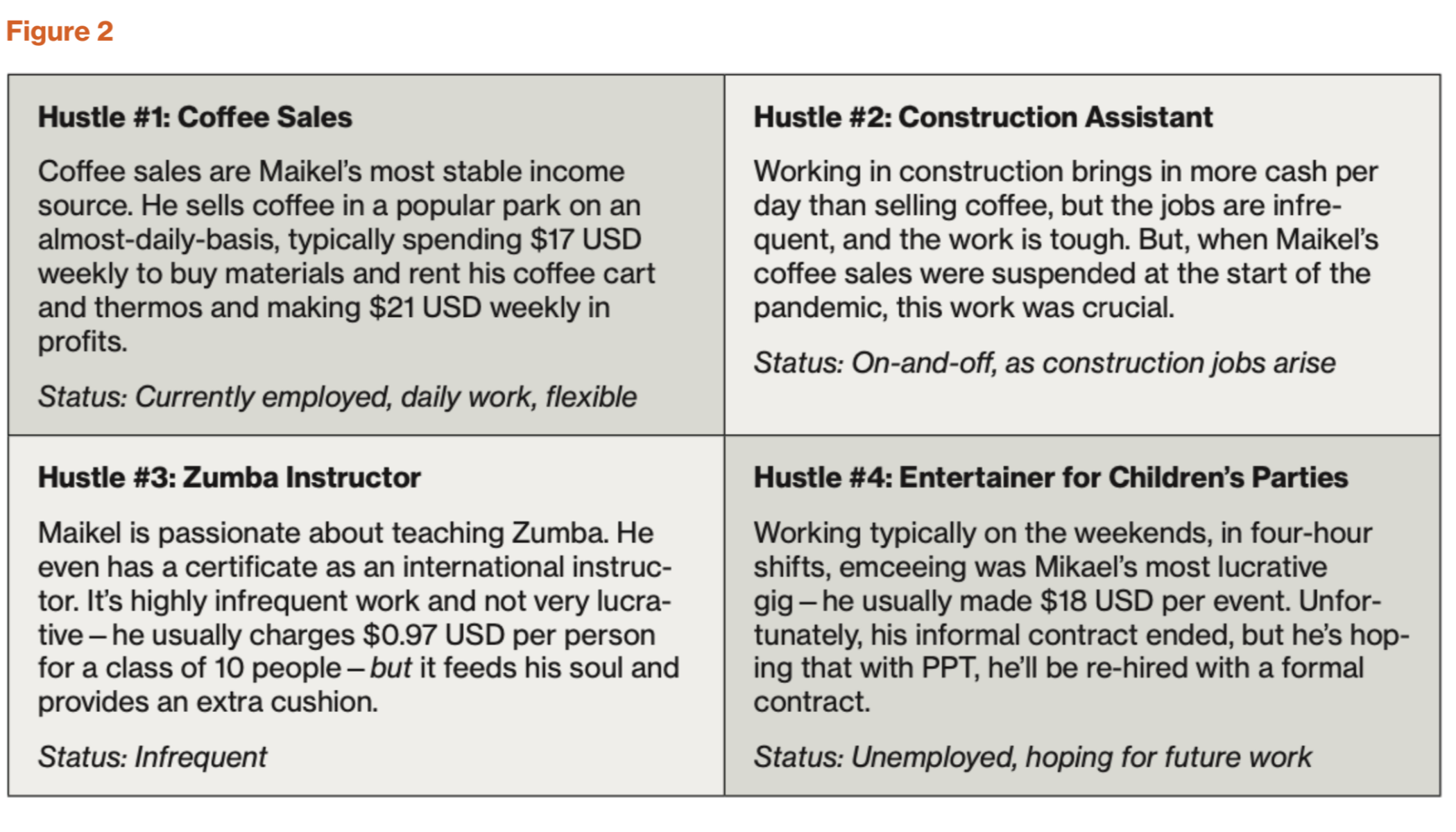
In 2019, Maikel had to leave his home and entire family in Venezuela for Colombia at 29 years old when he could not access antiretroviral medications. Unlike many of his counterparts, Maikel left Venezuela without issues such as harassment or possessions stolen, as he was a part of the Wayúu, the ethnic group that controls the Maicao border. He also already had family in Medellín, where he could stay. Although he was a primary school teacher in Venezuela with a good salary, with $100 USD and a bag of clothes, he was ready to take on any new jobs that could help him start up his new life here in Medellín. Maikel’s side hustles come from selling coffee, hot chocolate, and cookies from a cart, which he borrows from a business owner in exchange for buying all the materials from that person. The business owner then holds his ID as collateral for the cart. He also works as a Zumba instructor, construction assistant, and entertainer for children’s parties (fig. 2).
In our interviews, we found that side hustles typically complemented, and did not replace, other income streams. We also found that side hustles do not need to be lucrative, just as long as the day-to-day needs are met. Small entrepreneurial activities can complement other income streams to create a portfolio of income sources that, taken together, can help stabilize a household. In the case of Maikel, having multiple income streams helped him shift his work schedule as his circumstances or needs change. One year after arriving, Maikel was able to support himself more independently and began to rent a tiny apartment for $37 USD per month. Maikel’s side hustles were not ones without hardship and challenges. He had to report to multiple bosses when the COVID-19 pandemic hit, as his street-selling and in-person jobs were prohibited. Although he had multiple streams of income and continued with his construction job, he was relying heavily on his savings to buffer what he lost. Maikel then had to take out a loan from a loan shark at a 30% interest rate. He knew the interest rate was not fair, but he knew there was no other option for him to get the money he needed. Most participants expressed a preference for a single formal stable source of income. In Colombia, employment opportunities exist on a spectrum of formality, limiting the ability of participants to meet daily needs, as we see in Maikel’s financial story.
Challenges of the Lack of Formal Papers and Employment
According to our participants, the lack of formal paperwork and discrimination against hiring Venezuelans, often in the form of asking for additional paperwork like valid passports or validated diplomas (which are burdensome and sometimes impossible to retrieve), are key factors that make employment harder for Venezuelan refugees. One of Maikel’s biggest dreams is what he could do with formal work authorization. He then would be able to send remittances to his family and build up his savings.
Rosy’s Story: A Knot in My Throat – Resilience in the Face of Violence
In 2015, Rosy lost her job during the economic downturn in Venezuela, just like many Venezuelans at the time. Not only was she pregnant and already had a son to take care of, but she also gained full custody of her niece. Rosy found a job at a Subway franchise, which allowed her to pay her rent and use her social capital to
buy food for herself, her mother, and the two young children. This was at a time when many Venezuelans had to stand in line in the extreme heat all day just to buy a single kilogram of rice. Fortunately, Subway employees could buy leftover supplies in bulk. Unfortunately, people took notice of Rosy’s perceived food security and began to target her and her family. Things were getting very dangerous. She was robbed twice, and local gang members tried to kidnap her son. As a resilient woman, Rosy made the tough decision to make the journey to Colombia to create a new life for herself and her family.
Rosy’s journey was hard. As a woman, she had to sell her hair to pay for her trip. Her brother-in-law sold his car. She endured the journey alone, facing many threats from gang members. When she got to Cartagena, Colombia, she found a job on a farm where she received free food and housing. Similar to Maikel, she had many side hustles, including selling coffee and cooking for people, making up to $5 USD a day. Rosy was able to send money for her son, niece, and mother as the economic situation worsened in Venezuela. For example, even though she has no savings and very few belongings, she sent cash, food, and diapers. After two years in Colombia, Rosy was able to send for her son and niece. Unfortunately, as noted above regarding discrimination from Colombians, she experienced discrimination, threats, and physical abuse from her colleagues at her restaurant job–all while being pregnant. For her safety and the safety of her unborn child, she quit her job.
Without formal work authorization, the only other employment Rosy could find once she gave birth to her daughter was at a bakery. It was an hour’s walk away, and she had to work fifteen-hour days. Isolated from any family member or other social support, Rosy’s main barrier to working was ensuring her children had supervision during her long workdays. Rosy asked a neighbor to watch her three children for $15 USD per week, plus food for Rosy’s children to eat throughout the day. However, the sitter did not feed the children, and the children lost a significant amount of weight. In addition, the sitter physically abused her children and would leave them out of the house.
Similar to Maikel’s dream of getting formal work paperwork, Rosy said her biggest obstacle (besides childcare) was getting her Colombian residency permit (PPT). Rosy has been waiting almost a year for her documentation to arrive. Rosy’s dream is to access a higher-paying formal job, subsidized daycare, and medical care for her children. Though she’s currently out of work, Rosy knows her strength and trusts that she will continue to find ways to support her children, despite the odds.
Marco’s Story: Hacking the Challenges of Starting Anew
As a certified public accountant, 29-year-old Marco had a remarkable leg up in planning his financial strategies. However, in May 2020, he and his partner decided to move to Colombia when hyperinflation made it nearly impossible to buy food or to make ends meet on his government salary. Unfortunately, Marco got turned away from jobs because he was not able to formally prove his certification as a public accountant. Therefore, when Marco first arrived, he worked at a restaurant bussing tables, but because he didn’t have his legal residency card (PPT), they paid him only $9 USD per day, with lunch included. Unfortunately, the lack of the PPT residency card thwarted careful plans.
Without the PPT, Marco could not get the formal paperwork from the Medellín municipality required to legally sell food on the streets. Agents from the municipality showed up to harass him regularly, forcing him to operate on back streets with fewer customers. Marco spent six months actively applying to as many formal jobs as possible, with no luck. Marco navigated state bureaucracies to increase his employability, leveraging his new PPT status in other ways.
As Maikel, Rosy, and Marco’s stories show, side hustles are vital to staying afloat, as the main challenge facing many Venezuelan migrants is the inability to receive formal documents like PPTs promptly to attain the jobs they want to save for their future and financially help their families.
Insight 3:
Steady cash assistance is welcomed and highly appreciated.
Cash assistance programs, run by local NGOs in Colombia, make a significant impact on the lives of Venezuelan migrants. Monthly cash transfers allow migrants to 1) pay for food, rent, and utilities, but often not medical treatment; 2) service existing loans and debts to loan sharks, landlords, employers, and corner stores; 3) cover quotidian necessities (i.e., kids’ school supplies/uniforms, or the price of the school itself in various cases); 4) purchase physical assets (i.e., cellphone, fridge, fan), which could be sold in hard times; and 5) start small businesses to diversify income, often in anticipation of the end of cash assistance.
Our research shows that one downside of using cash assistance to meet basic needs is that very few participants were able to save up funds. This is because basic needs take precedence over longer-term investments, and many of our participants are in a ‘scarcity’ mindset. Participants who could channel a portion of their cash assistance into nascent entrepreneurial ventures could no longer finance their ventures when the cash ended. We found that our participants faced a financial cliff like in Anita’s financial story. This often left them back at square one, primarily due to investment in entrepreneurial ventures coming late in the cash assistance cycle (i.e., in month four or five), and the need to cover essential costs, such as rent, food, and utilities when cash assistance ended.
Faced with a sudden dearth of income, participants like Barbra (whose story is below) reported an inability to continue investing in the primary materials needed for their businesses, resulting in a double shock – the loss of cash assistance and the withering of their newfound income stream.
Barbra’s Story: From Baking to Making Ends Meet
Barbra, a mother in Medellín, used cash assistance to cover rent and food for her family, and with the extra funds, started a small baking side hustle. She purchased cake molds and primary materials, and began baking 50 pastries to sell weekly, earning $61-73 USD. Each week, Barbra would take half of her earnings and reinvest them to purchase supplies to make the next week’s cakes. At the end of each month, she earned $97.56 USD in profit, a significant stream of income for the family.
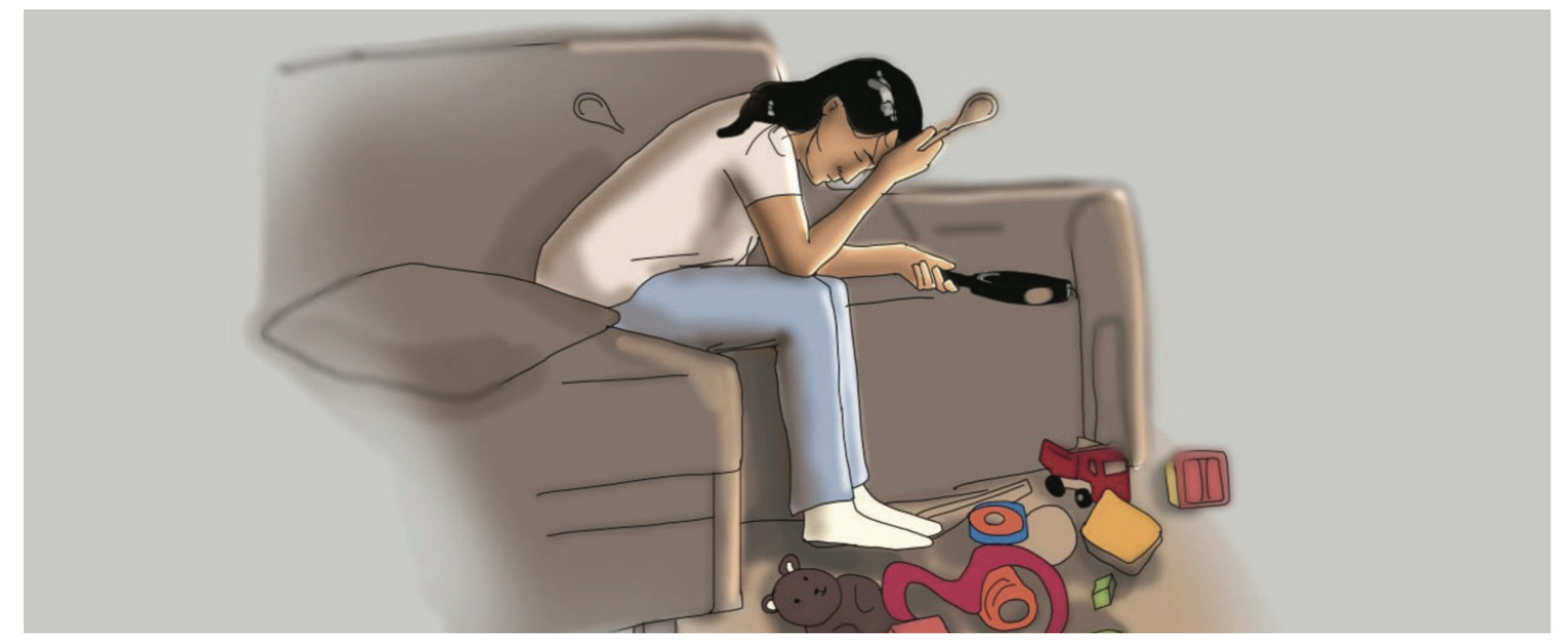
When the assistance ended, however, Barbra was forced to prioritize basic costs like rent and food for her family, which left her with insufficient funds to continue her baking business. She estimates that it would take $37-49 USD to restart the business, but cannot manage to pull the money together in the face of her other financial obligations.
Several participants, like Barbra and Anita, reported confusion around the regular arrival of cash assistance–specifically, via bank cards. Many mentioned there was an irregularity in the cash-delivery date(s), making it difficult to plan time-sensitive payments, such as rent. Several also noted that calls advising them of cash assistance deliveries were inconsistent, arriving one month but not the next.
Insight 4:
The nature and magnitude of entrepreneurial activities vary, as does the size and pacing of the seed capital needed to catalyze them.
Our research showed that entrepreneurial activities varied among participants. Seed capital can be an essential financial tool for “born entrepreneurs,” like Jaime and Gloria’s story detailed below. Participants like Jamie hope to invest all their time and energy in making a single business work. Successful examples of strong livelihoods looked like: barbershops, cake-selling businesses, moto-delivery services, and online sales businesses (e.g., clothing or cosmetics).
Jaime and Gloria’s Story: The Born Entrepreneur
Jaime and his sister Gloria have four dependent children. Gloria studied cake-baking in Venezuela and taught Jaime how to make tres leches, flan, brownies, and other types of pastries. He sells them in his neighborhood in Cartagena using an innovative credit model, where his clients have to pay within five days. His current oven only bakes five cakes at a time, limiting his profitability. Jaime needs $244-293 USD in seed capital to purchase a larger oven, mixer, and scale, allowing him to purchase bulk supplies to save costs and expand his business. He would also like to hire three to four people to help him sell cakes and collect payments, expanding his route to different sectors of Cartagena.
We saw other examples that preferred incorporating entrepreneurial activities as a side hustle to complement other livelihood activities, as we have heard in Maikel and Rosy’s financial biographies. Often, these businesses tended to be much smaller and did not provide most of the households’ income, like in Libseth’s story below. Even being able to net an additional $5-7 USD per day from selling street food would provide families with additional financial stability while flexibly accommodating other household needs. This small additional stream can help smooth income streams and weather setbacks.
Lisbeth’s Story: When the Ground Falls Out from Under You
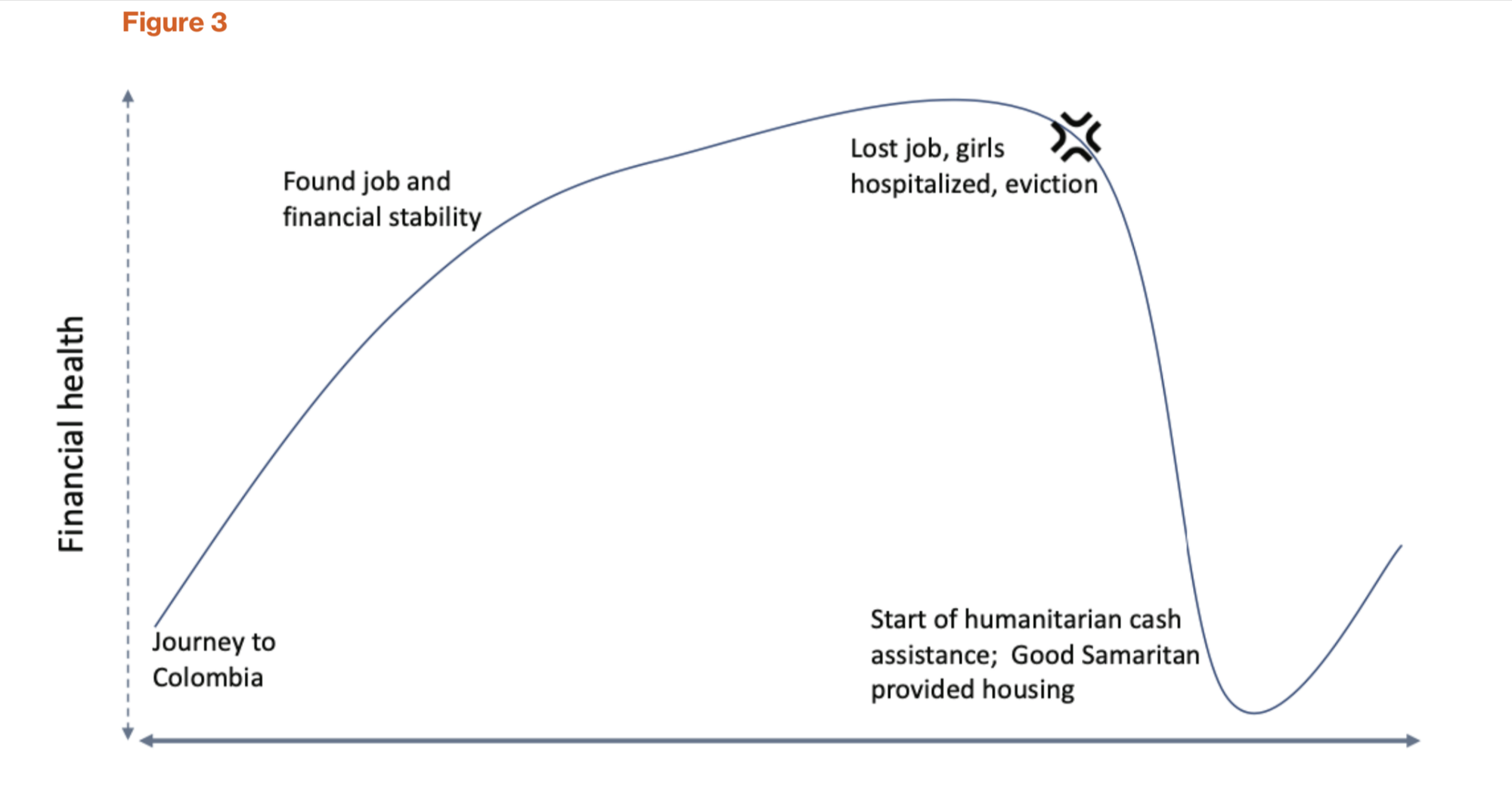
As a young, single mother of two sweet girls, Lisbeth worked tirelessly to achieve financial stability (fig. 3). Arriving in Colombia five years ago, she has since found a steady job that accommodated her childcare responsibilities, and she was able to move her family into a larger apartment while effectively saving through the purchase of physical assets like furniture. Everything changed seemingly overnight when she was hit by several combined financial shocks—the loss of her job, emergency medical expenses for the girls, and eventually eviction. When she lost the apartment because she couldn’t pay rent, Lisbeth quickly had to sell off everything she owned to move into a spare room in another person’s house. Still, her tenacity, grit, and self-sufficiency continue to serve her well as she claws her way back from rock bottom.
Lisbeth would like to start up a small food cart business selling empanadas, something she learned to do back in Venezuela. She has priced out each type of empanada she would sell, the different costs, and the profits she would expect. She estimates that she would need about $159 USD in seed capital. With this seed capital, Lisbeth could leave her kids with her cousin during the day and then start to slowly rebuild the financial stability and independence she cares so much about and had, not so long ago, achieved.
The seed capital needed for the larger full-time businesses tended to be much bigger than the seed capital that could enable a complementary entrepreneurial activity. These smaller investments require much lower amounts of seed capital ($122-$195 USD) and do not need to have huge market potential for them to be invaluable to participants like Lisbeth or Barbra.
Seed capital, while highly valued, caused quite a bit of confusion amongst our participants. The research highlighted the fact that participants often lacked clarity about who was eligible and why. Some were left for many months waiting to hear if they would receive the funding. Many did not understand why street food businesses were not funded. While street food businesses may not be viable as a larger-scale, single entrepreneurial business, they can be useful complementary activities that provide a small but flexible income, like in the case of Jaime, Gloria, and Maikel.
Conclusion
Refugees’ prior socio-economic status in Venezuela, legal status in Colombia, family composition, and social capital are important determinants of financial health.
Almost no one from a low socio-economic status in Venezuela has substantially improved their economic position in Colombia. At best, they are no longer experiencing the same daily food insecurity as in Venezuela, but most are still trapped in cycles of poverty, which is not advancement nor economic mobility. Few participants could validate their professional certificates, licenses, or diplomas. Those with more formal education are generally able to navigate complex bureaucratic and legal systems, develop higher-paying livelihoods, and progress more quickly toward financial stability.
Not having an active PPT constitutes a significant barrier to financial health, but having one does not guarantee improved livelihoods. Many participants did not understand the rights they were entitled to and thus did not access services.
When the government announced the PPT option in 2021 through the support of the World Bank Group DPO, some of the earliest people to apply in September got stuck in a bureaucratic loophole. Nearly a year later, many still have yet to receive their PPT and are baffled by the process. Venezuelan refugees are often denied jobs because they do not have their PPTs or other paperwork, as we saw in Maikel, Marco, and Rosy’s stories. Even those with a PPT may be required to show a valid passport (even though that is not legally necessary), representing a form of indirect discrimination against Venezuelans.
While few participants can save up money, many “save” through purchasing physical assets that can be sold in the future.
As we heard in Maikel, Rosy, and Lisbeth’s stories and our other interviews, there are very minimal traditional savings activities among participants. Only one person had a savings account at a bank, in large part because of cumbersome paperwork and documentation. Few saved money. When asked about the possibilities of saving groups or other social saving structures, the majority said that they lack the necessary social connections, trust, and cohesion. Several said they did not know many people outside their families with whom they had enough trust to undertake a savings activity. While people may not report saving in the traditional sense, many are saving through purchasing assets that are a form of physical savings. For example, some people used part of their cash assistance to buy refrigerators, cellphones, “kitchens,” or fans, like in Barbra and Anita's stories.
Financial trajectories vary by circumstance: Upwards, stagnant, and downwards.
Our interviews revealed that financial trajectories rise, stay flat, or decline. These financial trajectories vary depending on factors previously described, such as the participant’s context, livelihoods, and background. Like in Anita, Sofia, Maikel, Rosy, Lisbeth, Barbra, Marco, Jaime, and Gloria’s stories, it is more difficult to move into an upward trajectory than it is to fall into a downward one, given the barriers that they encounter.
Time in Colombia is not a good predictor of financial health trajectories.
Venezuelans who have been in Colombia for longer periods are still confronting similar barriers to those faced by new arrivals. Shocks, including medical emergencies, were major reasons why a financial trajectory would stall out or decline sharply. Other reasons include the inability to find stable income, insecure housing, or loss of income. Those whose financial trajectories climbed usually found stable jobs (or a stable combination of incomes), did not have a medical condition, or did not live with someone who did. Many participants who have been in Colombia for more than six months witnessed their financial health decline or stagnate. Of the people who are progressing upward, very few arrived in the past two years. And even those who had been in the country for more than two years are still highly vulnerable. Several participants described working hard in their first several years to achieve some financial stability, but then later experiencing devastating shocks that left their families extremely vulnerable, like Lisbeth and Barbra.
Venezuelan migrants tend to prioritize building Colombian social capital over making connections with other Venezuelans outside of their families.
Connections and relationships with Colombians are more useful for Venezuelan refugees’ financial health than relationships with other non-familial Venezuelans. An important exception is in the realm of housing–it was not uncommon to find households with multiple Venezuelan families, often who were connected through a pre-existing friendship. Many participants expressed that they shy away from building new relationships with other Venezuelans because they found them to be mistrustful and jealous. Building friendships and relationships with Colombians, on the other hand, is seen as a useful way to open doors and gain social networks in new places.
Access to information is crucial to financial health.
Venezuelan migrants are required to navigate complex legal systems to access the documentation, social protection, and assistance formally available to them. Migration pathways have changed significantly, leading to opportunity, but also mass confusion. In the past year, civil society actors have helped many refugees pre-register for their PPT cards. However, many remain stuck waiting in the migration documentation system or have family members who lack formalized migration paperwork like Sofia’s mother.
Often, these people experience a lack of information about how to navigate the system. Some participants are working as informal connectors and social workers. They are good at it, particularly in accompanying family and friends through the process of navigating bureaucratic systems. Other participants who had successfully coped with a setback often used a combination of strategies, some of which they had learned from other people, like Sofia, who had help from her sister. People can make the best choices about their financial portfolios when they have the most complete information. Uncertainty about when and how much funding they will receive makes strategic financial planning harder.
Footnotes
📝 This article was originally published as a report by the Henry J. Leir Institute at The Fletcher School of Law & Diplomacy and Tufts University.
Download the original report below ⬇️
From Economic Violence to Economic Safety, Venezuelan Migrants.pdf